
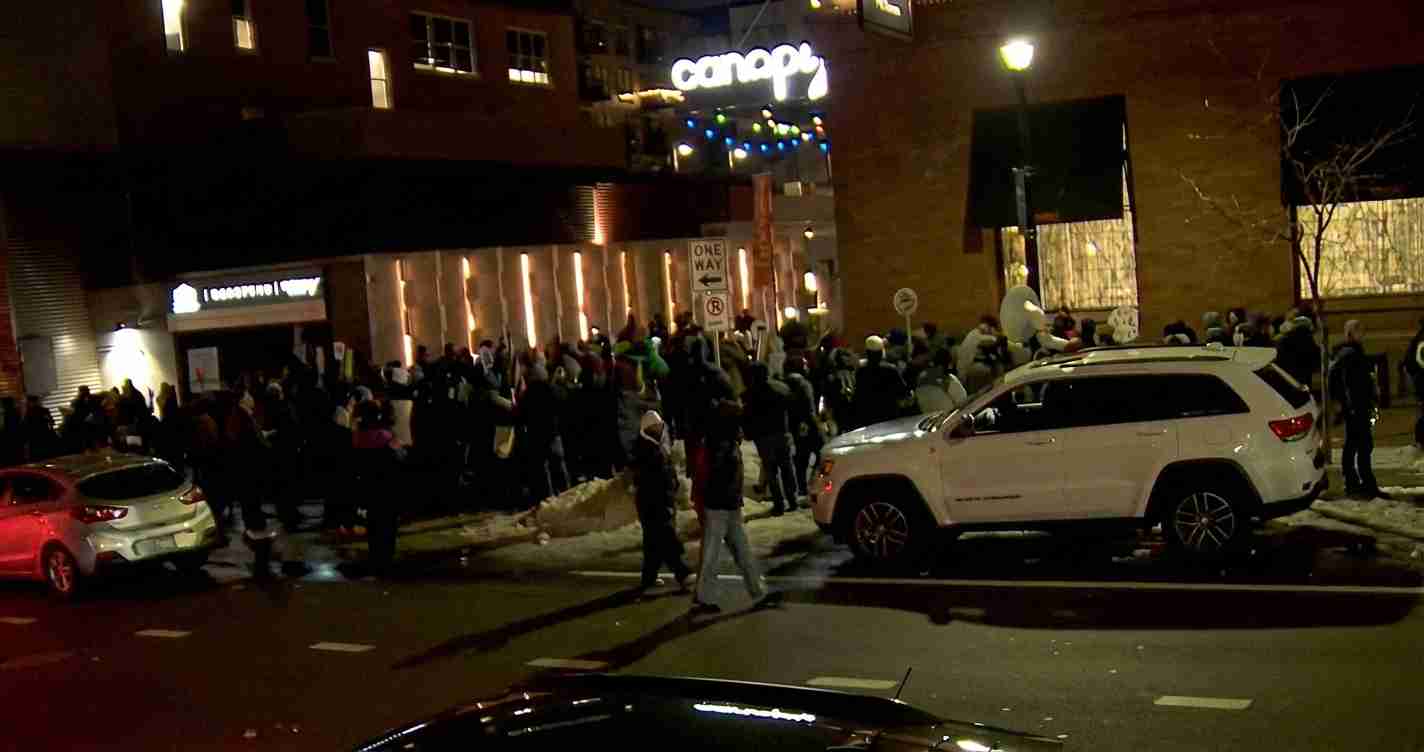
Hundreds descend on downtown Minneapolis hotel amid fury over Renee Good shooting; questions remain about whether ICE agents were staying there
Hundreds of protesters gathered downtown Minneapolis after the ICE shooting of Renee Nicole Good, confronting hotels believed to host federal agents and demanding transparency as officials investigate the fatal Jan. 7 incident amid Operation Metro Surge.
- Community outrage: Demonstrations targeted hotels thought to house federal agents after the Jan. 7 shooting of Renee Nicole Good by an ICE officer.
- Verification gaps: Reports that specific hotels (Canopy by Hilton, Hampton Inn in Lakeview) hosted or canceled ICE reservations remain unconfirmed by multiple mainstream outlets.
- Investigation structure: The FBI is leading the probe while the state BCA has a limited role, drawing criticism from local leaders.
- Broader implications: The events raise civil, legal and policy questions for other cities, including potential economic and social impacts in places like Fresno, California.
What happened: the shooting and the backlash
On Jan. 7, federal immigration agents conducted an operation in south Minneapolis when an ICE officer, identified in reporting as Jonathan Ross, shot and killed 37‑year‑old U.S. citizen Renee Nicole (Macklin) Good. Family and neighbors described Good as a caregiver and mother figure; footage released by authorities shows a rapid sequence of events in roughly 40 seconds before shots were fired, intensifying public outrage and calls for transparency. For coverage, see Star Tribune — “She was an ‘amazing human being’ — mother identifies woman shot, killed by ICE agent” and available video.
Investigation structure and local concerns
Minnesota officials note the FBI is leading the inquiry while the state Bureau of Criminal Apprehension (BCA) has a limited role — a point of contention among elected officials and community leaders who demand greater state oversight. The BCA issued a statement outlining its role in the probe.
Protests grow and target downtown hotels
Anger over the shooting spilled into the streets. Large crowds gathered at multiple sites, including the shooting scene and downtown blocks. Protesters chanted Good’s name, accused ICE and federal leaders of wrongdoing, and at times called federal officers “terrorists.” Some assemblies were declared unlawful as police and federal security managed crowds. Reporting describes loud, tense gatherings that drew hundreds across the Twin Cities; see Star Tribune — ICE raids, protests in Minnesota and on-scene video coverage.
As additional federal agents arrived for what authorities call “Operation Metro Surge”, demonstrators sought to identify hotels where agents might be lodging. Multiple accounts describe protests converging on downtown hotels believed to house federal personnel, with footage and eyewitness reports of heated scenes outside properties and guests watching from windows.
Hotels, reservations and what is confirmed so far
Industry reporting and advocacy analyses document a pattern: when hotels learn federal immigration agents will be lodged there, public pressure can lead to canceled reservations. The American Immigration Council and similar sources note hotels have canceled ICE-related bookings elsewhere following pushback, which makes reports of lodging changes in Minneapolis plausible.
Important verification note: Reporting on specific Minneapolis hotels is incomplete. Multiple mainstream sources describe protesters targeting downtown hotels, but they do not uniformly verify that the Canopy by Hilton was definitively hosting ICE agents on a specific night or that a Hampton Inn in Lakeview canceled ICE reservations and forced relocation. Those claims appear in social media and local accounts and are not yet independently corroborated by multiple major outlets; journalists caution details remain fluid. See Star Tribune reporting and video documentation (video, video).
Voices on the ground and official responses
Family members and community advocates describe Renee Good as compassionate and not involved in extremist activity; they and protesters demand answers and accountability. Videos and reporting show demonstrators calling for ICE to leave the city and pressing for fuller transparency from federal agencies. For profile reporting, see Star Tribune.
The BCA and local officials have expressed concern about the investigative structure and oversight, even as federal authorities manage both the investigation and operational needs to house personnel.
At protest scenes, law enforcement has at times declared assemblies unlawful while trying to protect hotel guests and staff and to balance protesters’ rights. The ongoing back-and-forth underscores tense operational and legal questions as demonstrations continue.
Legal and policy questions
Legal experts and immigrant-rights groups say the family of Renee Good may pursue civil claims against ICE and the federal government depending on facts that emerge; see the American Immigration Council analysis. Observers also note that how agencies house personnel and how private businesses respond to protest pressure raises policy questions about public safety, transparency and private contracts.
Key uncertainties and gaps in reporting
- Which exact hotels lodged ICE or other DHS personnel for Operation Metro Surge has not been systematically confirmed in public records or mainstream reporting to date (Star Tribune).
- Claims that the Canopy by Hilton was surrounded on a specific night, and that a Hampton Inn in Lakeview canceled reservations forcing federal relocation, are currently unverified beyond local and social media accounts (see on-scene video).
- The FBI-led investigation is ongoing; the scope of public disclosure will shape legal and political outcomes (see the BCA statement).
Implications for Fresno, California
Economic impact
Fresno’s hospitality sector depends on steady bookings from business travel, conferences and government contracts. If protests or public pressure lead hotels to refuse government bookings, properties could face short-term revenue losses and federal lodging may shift elsewhere. Hotel managers should review policies and contingency plans; tourism groups may need prepared messaging for guest safety concerns.
Political consequences
The Minneapolis unrest demonstrates how a single use-of-force incident can reshape local debate over federal immigration policy and cooperation with ICE. Fresno officials balancing law enforcement relationships and community concerns may face increased calls for transparency about local ICE activity and policy clarification from constituents and advocacy groups.
Social effects and cultural relevance
Fresno communities with immigrant ties may feel heightened fear and anger in response to national coverage. Service providers, schools and clinics could see increased demand for information and support. Advocacy groups, faith leaders and community organizations may organize solidarity actions, vigils or meetings focused on accountability, humane treatment and policing transparency.
Practical applications for residents
Recommendations for Fresno stakeholders include reviewing crowd-control plans, hotel communication protocols, protections for uninvolved guests and workers, and updating emergency plans and staff training for handling protests outside properties. Community groups can request briefings from officials on balancing public safety and civil liberties.
Sources
- Star Tribune — “She was an ‘amazing human being’ — mother identifies woman shot, killed by ICE agent”
- Star Tribune — ICE raids, protests in Minnesota
- Minnesota Department of Public Safety — BCA statement regarding investigation of ICE fatal shooting in Minneapolis
- American Immigration Council — Analysis on potential civil claims and hotel cancellations
- Video reporting and footage: on-scene coverage and additional video.


