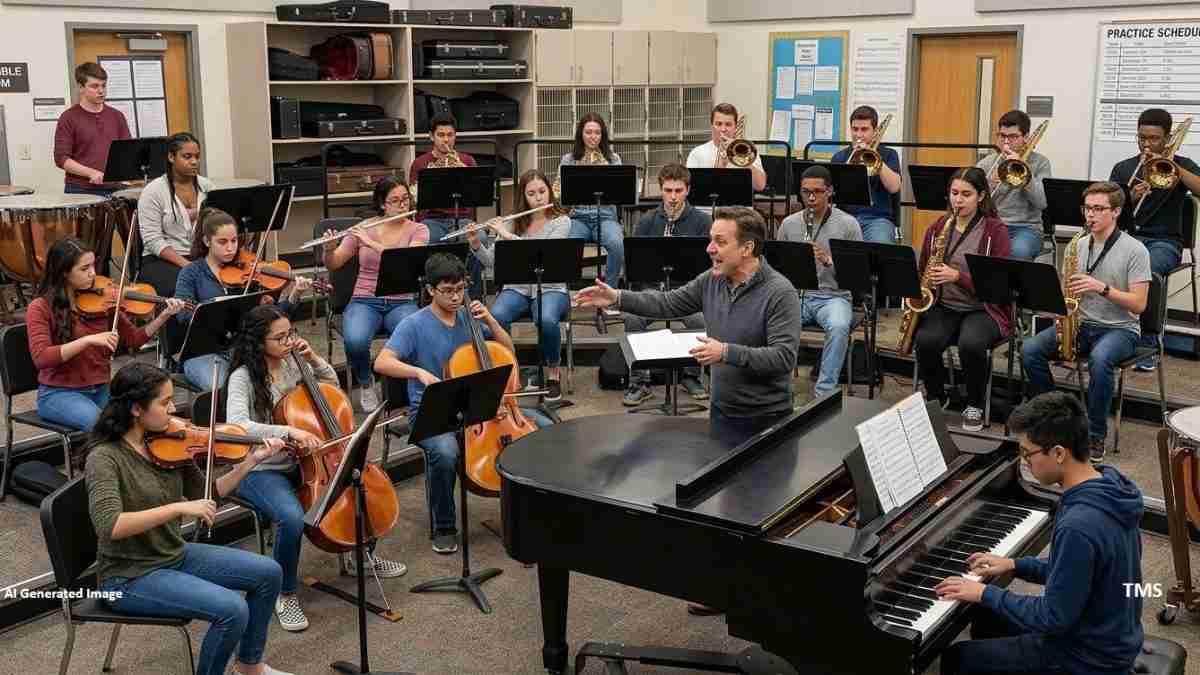
SACRAMENTO, Calif., Aug. 16 (Our California Times) — California schools are returning some money voters approved for arts education because they have struggled to hire qualified arts teachers, interpret the spending rules and meet a three-year deadline.
The issue affects public schools across the state, including schools in El Dorado County. But the statewide amount being returned is not yet known. The California Department of Education has not announced a total, and available reports do not identify every district or school involved.
What did voters approve?
In 2022, California voters approved Proposition 28, which provides about $1 billion each year for arts education in public kindergarten-through-12th-grade schools.
The money is distributed mainly by student enrollment. Schools with larger numbers of low-income students receive additional funding.
The law was designed to expand access to subjects such as music, dance, theater, visual arts and media arts. It requires schools to use at least 80% of their allocation for additional arts teachers or other arts educators. The remaining money can be used for supplies, materials and other arts-related expenses.
The funding must supplement existing arts programs, rather than replace money schools were already spending. That rule is known as “supplement, not supplant.”
Why are schools having trouble spending it?
Hiring is one challenge. Many schools have had difficulty finding qualified arts teachers, according to accounts from school officials. Some districts also have questions about which expenses are allowed and how to use the money when one school cannot spend its full allocation.
The law’s staffing requirement can be especially difficult for smaller schools or districts that cannot hire a full-time teacher for each campus. El Dorado County Superintendent of Schools Ed Manansala said local educators want to use the money properly but need clearer guidance.
“We need clarity and confidence that we’re doing this the right way,” Manansala said.
Manansala also said El Dorado County has a long history of supporting the arts and wants to make sure the new funding is handled correctly. One approach under discussion has been sharing music teachers among schools, according to reporting about the county.
Data compiled by Create CA, a nonprofit that supported Proposition 28, indicated that dozens—and possibly hundreds—of schools spent none of their allocations. The supplied data does not establish a final statewide count.
Other concerns have focused on whether some districts used the money for programs or staff that already existed. Arts organizations and labor leaders have called for stronger documentation to show that districts are following the supplement-not-supplant rule.
Why must unspent money be returned?
Proposition 28 allows schools three years to spend their allocations. After that period, unspent money must be returned to the state.
The first three-year spending period has ended, and schools have begun returning funds. The California Department of Education is expected to use annual spending reports to identify schools that are using the money in line with the law and redistribute unspent funds to them.
That process could move money away from schools that could not hire staff or decide how to use the funds and toward schools that have already expanded their arts programs. However, the department has not announced how much money was returned or how the redistribution will work in individual districts.
Returning money does not necessarily mean a school rejected arts education. It may reflect a vacant teaching position, uncertainty about an eligible purchase or the difficulty of organizing a program before the deadline. The available information does not show the reason for every return.
Could the rules change?
Assemblymember Al Muratsuchi authored Assembly Bill 2440, a proposal reported to have passed the Assembly unanimously in May 2026. The proposal would allow districts to pool funds assigned to individual schools and would create a process for districts that cannot meet the 80% educator-spending requirement to seek a waiver from the California Department of Education.
The supplied records do not establish whether the bill became law, its final language or an effective date. Former Los Angeles Unified School District Superintendent Austin Beutner opposed the proposal, arguing that it could weaken the requirement that Proposition 28 money expand arts education rather than replace existing funding.
For schools, the central question remains practical: how to turn a large, restricted funding stream into classes and programs students can actually attend. Until statewide return totals and school-level spending information are made public, the full effect on students, teachers and families remains unclear.