Appeals court ends SAVE plan, forcing more than 7 million borrowers to pick new student loan repayment options
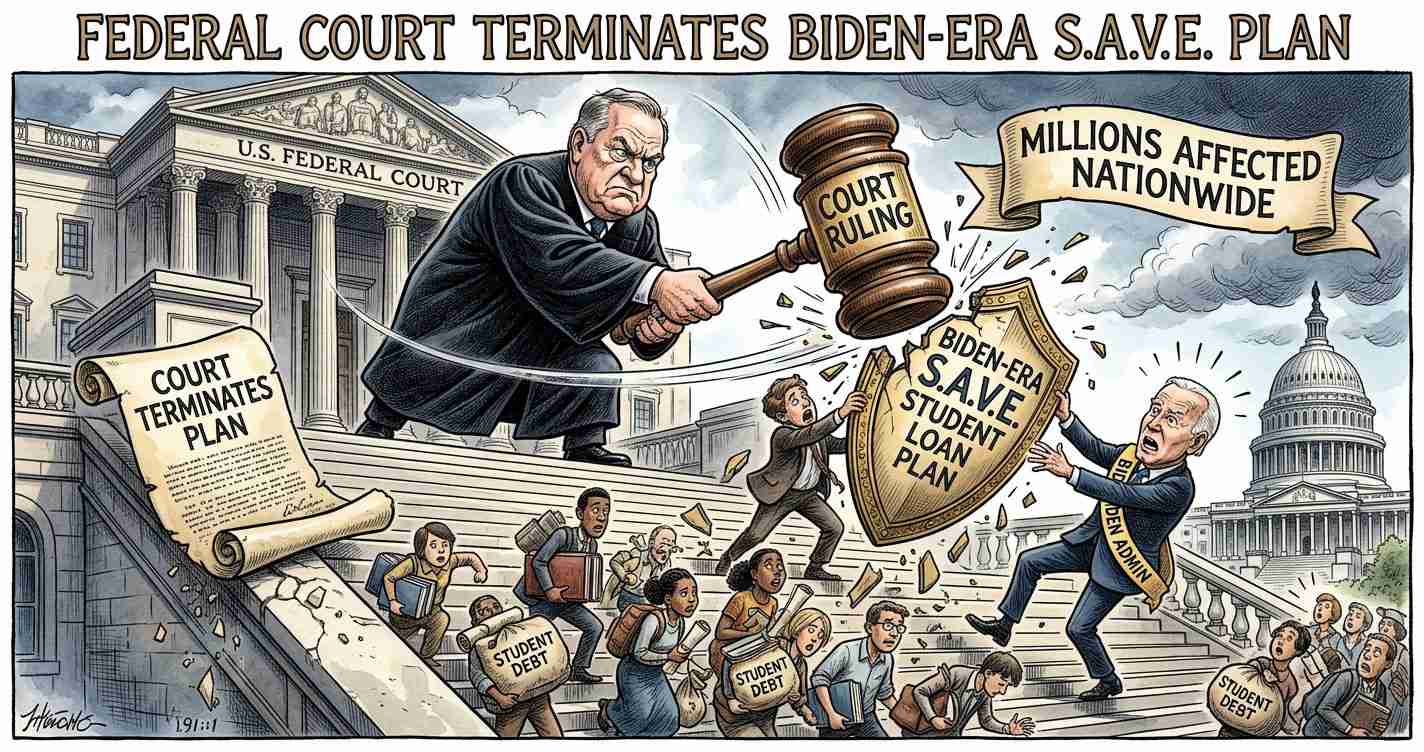
An appeals court on March 9, 2026, reversed a lower-court dismissal and ended the SAVE student loan repayment plan, forcing more than 7 million federal borrowers to choose new repayment options and altering forgiveness, forbearance, and enrollment rules.
- Major ruling: The Eighth Circuit reversed the dismissal and the settlement will halt SAVE enrollments and transition current enrollees. (Source: The College Investor)
- Scope: More than 7 million borrowers were enrolled in SAVE at the most recent count, many now facing resumed payments. (Sources: Student Loan Borrower Assistance; TICAS)
- Key change: SAVE’s interest subsidy and forbearance protections will end and the Department will move borrowers into other plans with limited time to choose. (Source: Student Loan Borrower Assistance)
What the court decision means
On March 9, the U.S. Court of Appeals for the Eighth Circuit reversed Judge John Ross’s February dismissal of a Republican-led challenge, reopening litigation tied to a December 2025 settlement that sought to vacate much of the SAVE rules and set transition terms for borrowers. (Sources: The College Investor; Student Loan Borrower Assistance)
Under the settlement agreed with the Department of Education, the Department will:
- Stop enrolling new borrowers in SAVE and deny pending applications. (Source: Student Loan Borrower Assistance)
- Move current SAVE enrollees into other repayment plans within a limited timeframe. (Source: Student Loan Borrower Assistance)
- End the broad SAVE forbearance protections that paused many payments since mid‑2024, meaning borrowers moved to new plans will generally need to resume payments. (Source: Student Loan Borrower Assistance)
- Not provide loan cancellation through SAVE, even for borrowers who reached 300 months (25 years) of qualifying payments under IDR rules. (Source: Student Loan Borrower Assistance)
Why SAVE mattered
Introduced in 2023, SAVE was lauded because it subsidized 100% of unpaid monthly interest, preventing balances from growing for borrowers with low or unstable incomes. That feature made SAVE one of the most affordable federal repayment plans and drove rapid enrollment. (Source: Student Loan Borrower Assistance)
Alternative repayment options borrowers should consider now
Borrowers do not have to wait for the Department to act. Experts urge those enrolled in SAVE to evaluate alternatives and, if needed, switch proactively.
- Income-Based Repayment (IBR): Monthly payments set at 10%–15% of discretionary income over 20–25 years; a direct alternative for some leaving SAVE. (Source: Student Loan Borrower Assistance)
- Income-Contingent Repayment (ICR): Borrowers who have already reached 25 years of qualifying payments should consider ICR; under certain rules it may preserve eligibility for cancellation. (Source: Student Loan Borrower Assistance)
- Repayment Assistance Plan (RAP): Under the One Big Beautiful Bill Act (OBBBA), RAP launches July 1, 2026, with payments 1%–10% of AGI and a 30‑year term. RAP may help some borrowers but could lengthen repayment. (Source: research notes provided)
What to know about PSLF and frozen credit
Time spent in SAVE forbearance generally did not count toward Public Service Loan Forgiveness (PSLF) or many IDR forgiveness timelines because borrowers could not make qualifying payments while broad protections were in effect. If you are pursuing PSLF, immediately:
- Verify your employer’s PSLF eligibility and loan type.
- Check your account and payment history for months where progress may have been frozen.
- File or update PSLF employment certifications and applications to reclaim any credit where regulations allow adjustments. (Source: Student Loan Borrower Assistance)
“If you are pursuing PSLF, you should immediately verify employer eligibility, check your account history, and file or update certification to preserve any creditable months.”
Regulatory fallout and other program changes
The settlement will vacate most of the 2023 repayment regulations that enabled SAVE-linked features, including expanded access for borrowers in default and streamlined IDR applications. The Education Department must conduct negotiated rulemaking to repeal those rules and decide on changes affecting PAYE and other plans created or modified by OBBBA. (Source: TICAS)
The settlement also requires the Department to notify Missouri’s attorney general at least 30 days before canceling or forgiving more than $10 billion in federal student loans in a single month for the next 10 years. (Sources: Student Loan Borrower Assistance; TICAS)
Timeline and next steps for borrowers
The Department has given limited guidance and said borrowers will have a “limited time” to pick new plans and will be contacted “in the coming weeks” or “in the coming months.” Because specifics remain unclear, take action now to avoid surprises:
- Check your loan servicer account online and review current plan and balance.
- Compare IBR, ICR, other IDR options, and the upcoming RAP to determine the best fit. (Sources: Student Loan Borrower Assistance; TICAS)
- Contact your servicer to ask how and when you will be notified, what choices you will have, and whether any temporary waivers apply.
- If pursuing PSLF, submit employer certifications and track qualifying payments now. (Source: Student Loan Borrower Assistance)
Sources and further reading
- The College Investor: “SAVE student loan plan officially ended by court order”
- Student Borrower Protection Center / Student Loan Borrower Assistance: “With new settlement, SAVE plan may be ending soon”
- TICAS: “Dept. of Education announces end of SAVE plan; offers little clarity for borrowers”
Implications for Fresno, California
Economic impact: Fresno has many federal loan holders — including recent graduates and public-service workers — who may see higher monthly bills, reduced disposable income, and lower local spending at small businesses and service providers. Some borrowers may delay purchases or moves, creating local ripple effects.
Political consequences: Student loan policy is already a local issue. Fresno leaders and members of Congress may receive more constituent complaints, and city/county officials could pressure state or federal representatives for clearer transition timelines and borrower protections.
Social effects: Fresno’s public school and municipal employees pursuing PSLF should immediately check their PSLF status and files. Community groups and legal-aid organizations may face higher demand for counseling and enrollment assistance.
Cultural relevance: Lower SAVE payments supported household budgets and educational mobility for many families. The plan’s end may create stress for households and push local nonprofits, faith groups, and community colleges to increase outreach and assistance.
Practical applications for residents
- Check the Department of Education’s Federal Student Aid site and your loan servicer account for notices and options.
- Contact local nonprofit legal services, community colleges, or Fresno County social services helplines for counseling and help switching plans.
- If you work in qualifying public service, file or update PSLF employment certifications to preserve any eligible months of service.
- Act now: review accounts, gather pay and employment records, and speak with a counselor to reduce the risk of missed payments or lost forgiveness credit.