
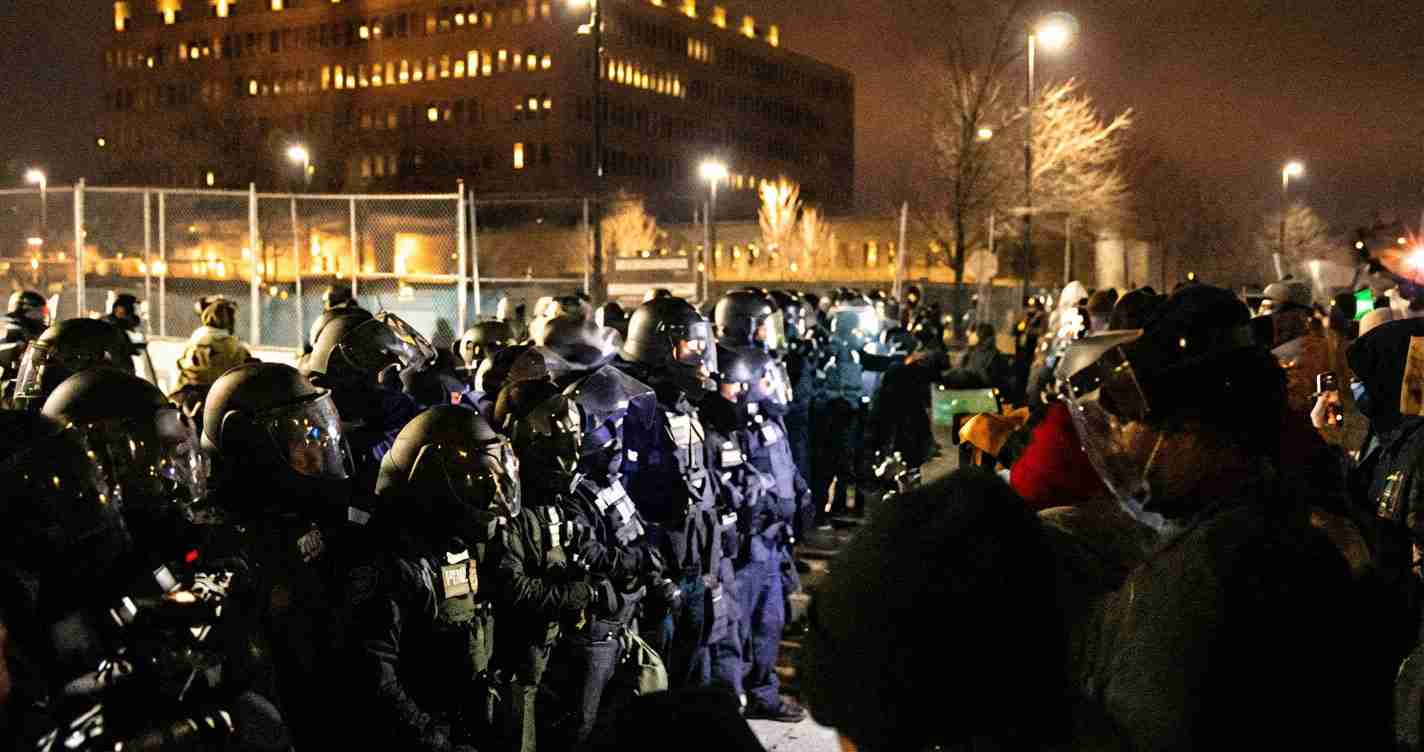
Minneapolis judge curbs federal agents — order blocks ICE from detaining or tear-gassing peaceful protesters during Operation Metro Surge
U.S. District Judge Kate Menendez barred ICE and federal agents from detaining or using tear gas or pepper spray against peaceful protesters and observers in Minneapolis during Operation Metro Surge, protecting First and Fourth Amendment rights effective Jan. 16, 2026.
Key takeaways
- Injunction issued Jan. 16, 2026: Judge Menendez issued an 83-page injunction limiting federal conduct against peaceful demonstrators.
- Probable cause required: Officers must have articulable facts showing probable cause or reasonable suspicion before arrests or force (CBS News).
- Narrow scope: The order applies to Minneapolis–St. Paul for the duration of Operation Metro Surge, not statewide (RNZ).
- Legal and political tensions continue: The ruling follows a Dec. 17, 2025 lawsuit and the Jan. 7, 2026 shooting of Renee Good and may be appealed (CBS News; Politico).
What the ruling says
Judge Menendez’s order lays out clear limits on federal officer conduct during Operation Metro Surge. Federal agents are barred from several actions against non-interfering demonstrators and observers:
- Arresting or detaining peaceful protesters or observers who are not interfering with law enforcement — evidence and limits detailed in the 83‑page injunction.
- Using tear gas, pepper spray, or other crowd-control munitions against nonviolent demonstrators or bystanders (CBS News).
- Pointing firearms at lawful demonstrators as a form of intimidation is prohibited (RNZ).
The order also requires officers to have articulable facts supporting reasonable suspicion or probable cause before stopping cars, detaining drivers or passengers, or making arrests. Judge Menendez emphasized that simply driving behind agents or following them does not automatically justify stopping a vehicle (RNZ).
Judge’s reasoning and scope
In an 83‑page opinion the judge reviewed video evidence and reports of federal tactics and described some methods used by agents as “disturbing”. Menendez cited incidents including threats to break car windows, following protesters home, and using force against people who were not violent; she found the government failed to justify many arrests and uses of force in this somewhat unique mobile protest context (RNZ).
“The government failed to justify many arrests and uses of force against observers in what the court called a ‘somewhat unique’ mobile protest context.”
The injunction is narrow: it applies only to federal operations in Minneapolis–St. Paul and remains in place while Operation Metro Surge continues. Requests for broader relief, such as a statewide ban on certain federal actions, were denied. Menendez concluded the plaintiffs were likely to succeed on their First and Fourth Amendment claims and that the balance of harms and public interest favored issuing the injunction (CBS News).
Background: Operation Metro Surge and the Renee Good shooting
Operation Metro Surge represents one of DHS’s largest recent deployments; the surge sent nearly 3,000 ICE and Border Patrol agents to the Twin Cities with a focus on suspected immigration violations and fraud in communities including Minneapolis’s Somali population (RNZ).
Tensions spiked after an ICE agent fatally shot 37‑year‑old Renee Good on Jan. 7, 2026. Good — a mother of three — had been taking part in neighborhood patrols aimed at observing ICE activity, according to local activists. Officials say an ICE agent fired after Good allegedly tried to run over officers; DHS Secretary Kristi Noem described the act as “domestic terrorism.” Local leaders and activists pointed to video that they say shows Good driving away and argued the force was unjustified (CBS News).
The lawsuit that led to Menendez’s ruling was filed on Dec. 17, 2025 — before Good’s death — and alleged prior constitutional violations by federal officers, including unnecessary force to break up demonstrations. While the shooting intensified scrutiny, it was not the sole basis for the injunction (RNZ).
Government response and possible appeal
DHS has defended its actions, saying forces act to protect agents and enforce federal law; department officials assert agents use the “minimum force necessary” in response to assaults, vandalism and threats. The department also noted that obstructing federal officers is a federal crime (RNZ).
Federal attorneys argued force was needed to respond to violent or obstructive behavior by some protesters and observers (Politico).
No immediate formal DHS comment followed Menendez’s decision; federal officials may appeal the injunction, and the government has a history of challenging district court orders in higher courts, so the legal fight could continue (Politico).
Related developments
On the day Menendez issued the injunction, federal prosecutors reportedly issued grand jury subpoenas to Gov. Tim Walz and Mayor Jacob Frey under a federal law that bars conspiring to impede officers; both leaders called the subpoenas political intimidation. Reports noted the subpoenas further strained relations between local and federal officials (CBS News; Politico).
Protests and clashes have continued. Federal agents report obstruction and some violent incidents during Operation Metro Surge, while activists and city officials say many demonstrators are peaceful and only seeking to document ICE activity. The injunction aims to protect lawful observation and protest while allowing agents to respond to criminal conduct (RNZ).
Implications for Fresno, California
Economic impact
While the order is focused on Minneapolis, it may influence how federal agents operate in other cities. Fresno businesses with immigrant employees or family ties to targeted communities may follow the case closely; changes in enforcement tactics could affect labor markets in agriculture, food processing and service sectors (RNZ).
Political consequences
The ruling could shape debate in Fresno about federal enforcement and local cooperation. City and county officials may face pressure from groups urging protections for protest rights and immigrant communities, while others call for cooperation with federal agencies on criminal enforcement. The decision underscores tensions when federal and local priorities collide (Politico).
Social effects
Peaceful protest rights are central to the ruling. Fresno community organizers, faith groups and civil-rights organizations may use the Minneapolis case to press for local policies protecting demonstrations and observers. Expect increased demand for legal briefings and documentation assistance (CBS News).
Cultural relevance
Fresno’s large immigrant communities rely on advocacy and oversight to feel safe. The Menendez ruling highlights national concerns about immigration enforcement’s local effects and may prompt dialogue on policing, community trust, and the rights of observers and protesters (RNZ).
Practical applications for residents
Residents who attend or organize protests, or who record law enforcement activity, should know their rights. The Minneapolis order reinforces that peaceful observers should not be detained without probable cause. Fresno groups may pursue “know your rights” trainings, local ordinances, and increased legal aid to document encounters with agents (CBS News).
How Fresno leaders might respond
City officials may review cooperation policies with federal immigration authorities and consider formal guidance for handling protests and observers. Elected leaders could face calls for clearer rules to protect peaceful protesters while ensuring public safety; the national spotlight may prompt Fresno’s leaders to clarify positions and communications (Politico).
Reporting sources
End of reporting.


