
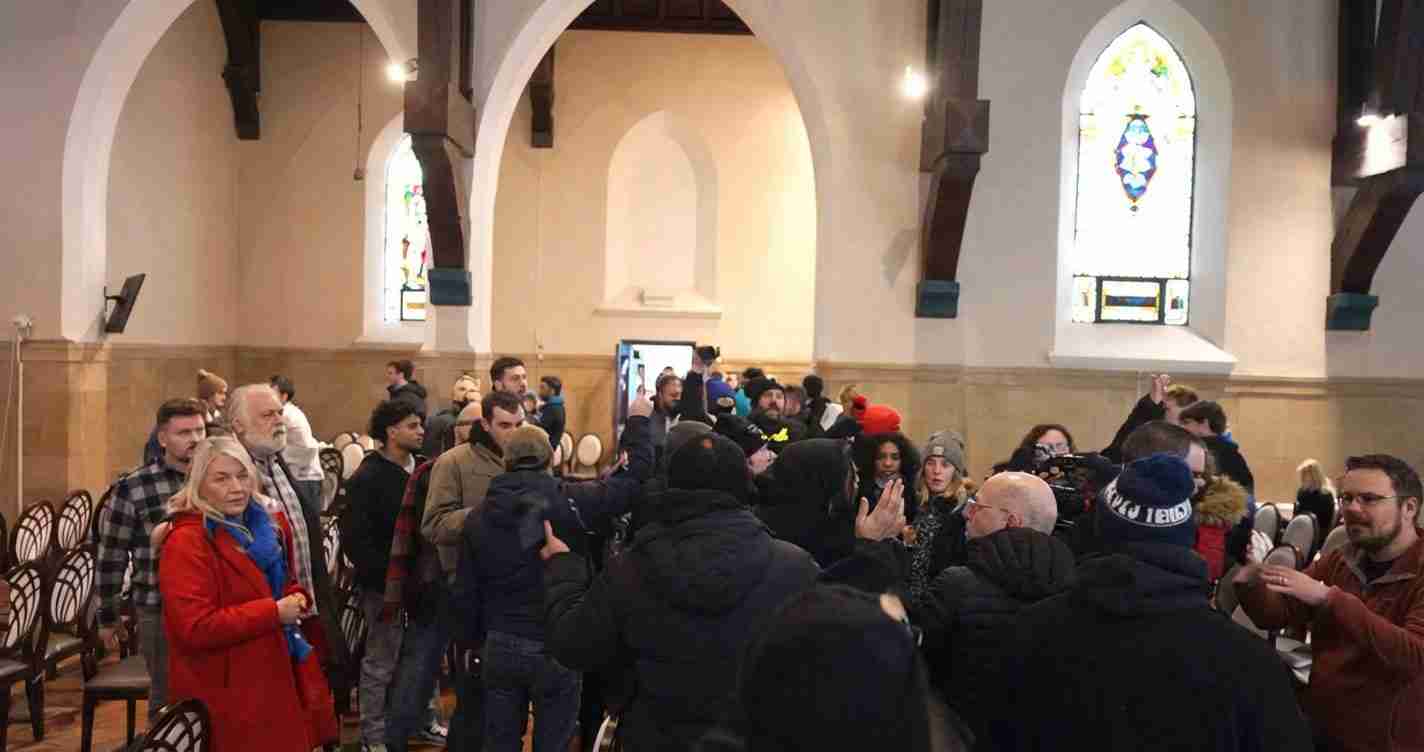
Anti-ICE agitators interrupt St. Paul church service, chanting “Justice for Renee Good”; incident unverified by authorities
On January 7, 2026, the killing of Renee Good sparked protests across Minneapolis and St. Paul; social media videos show protesters entering Cities Church in St. Paul during a service, chanting “Justice for Renee Good,” an incident unverified by authorities.
Key takeaways
- Social media clips show protesters entering a sanctuary at Cities Church and chanting “Justice for Renee Good.”
- Reporter searches of local outlets, police press pages and municipal records produced no independent confirmation as of Jan. 19, 2026.
- Verification remains limited: the report is based on user-posted video and unconfirmed claims; key facts — including alleged ICE ties — are unverified.
- Authorities and church leaders did not provide statements before publication; further official updates will be appended if received.
What the videos show and what witnesses say
Multiple short clips circulating online depict people walking into a sanctuary and calling out as a worship service begins. In one widely shared clip, voices chant “Justice for Renee Good” while several people stand in the center aisle.
Another angle, filmed from the back of the sanctuary, includes a narrator saying demonstrators entered after learning a pastor was allegedly “connected to ICE.” The person filming described the disruption as a “clandestine mission”, implying organization and intent.
“The footage appears to show protesters remaining in the sanctuary while the pastor speaks,” according to the material reviewed.
The available material does not include clear on-camera statements from church leaders, law enforcement or named protest organizers. Efforts to reach the church before publication were unsuccessful.
Verification status and limitations
Reporter searches of mainstream outlets, police press releases and municipal records returned no confirmed news reports or official incident logs tied to the church disruption as described in the videos. Searches included the St. Paul Police Department press page and broader news searches.
Because the only available evidence consists of user-posted video and social posts, core facts remain unconfirmed: whether protesters were affiliated with organized groups, whether the pastor has ties to ICE, whether arrests or complaints followed, and how many congregants were present.
Law enforcement and religious leaders weigh in on targeting houses of worship
Local faith leaders and public-safety officials have expressed concern about demonstrations moving into sensitive spaces. Officials encourage peaceful protest while warning against actions that could threaten safety or cross into trespassing or disorderly conduct.
Local guidance urges both demonstrators and institutions to coordinate and report criminal behavior; see the St. Paul Police public-safety advice. As noted, no formal St. Paul police incident report tied to this disruption was publicly available at the time of reporting.
Context: Renee Good killing and anti-ICE demonstrations in Minneapolis and St. Paul
The Jan. 7, 2026, killing of Renee Good intensified scrutiny of ICE activities in Minnesota and spurred sustained protests in the Twin Cities. Demonstrators have staged rallies, marches and encampments while confronting buildings and officials tied to immigration enforcement.
For broader coverage and federal statements related to immigration enforcement, see Renee Good killing and protests and ICE news and statements.
Voices from the video and online discussions
The chants captured on video — notably “Justice for Renee Good” — have become a rallying phrase for Twin Cities demonstrations. Online reaction is mixed: some praise the direct action as necessary civil disobedience; others criticize disruptions of worship as counterproductive or unlawful.
Chain of custody concerns: because the recording is user-generated, context can be incomplete. The filming subject’s claim that the group “recently learned of a pastor’s ties to ICE” remains unverified.
Why independent verification matters
Journalists distinguish between verified facts and unverified claims. Social media footage can show events in real time but may omit context or be reposted without full attribution. Given sensitive allegations—such as a pastor’s purported federal affiliation and a sanctuary disruption—confirmation is essential to prevent mischaracterization.
Investigators must establish who entered the church, whether laws were broken, whether the pastor has any ICE affiliation, and what actions both church and law enforcement took afterward.
Implications for Fresno, California
Though the incident occurred in St. Paul, its dynamics carry potential implications for Fresno and other cities engaged in immigration enforcement debates.
Economic impact
- Public confrontations can create uncertainty for institutions; churches and nonprofits that serve immigrants may face operational and fundraising pressures.
Political consequences
- Local officials may be pressured to clarify stances on ICE cooperation, sanctuary policies and law-enforcement coordination.
Social effects
- Targeting houses of worship risks deepening community divisions and may increase fear among volunteers and immigrant clients.
Practical applications for residents
- Congregations may review service security, coordinate with police on safety protocols, and issue communications to counter misinformation.
Source links and reporting notes
- Cities Church (public website)
- St. Paul Police Department (public safety and press)
- ICE news and statements
- Google News search — Renee Good killing and protests
- X (Twitter) search results for circulating videos
- YouTube search for circulating video clips
Reporting methodology
This report is based on video clips and posts circulating on social media, the user-submitted lede and searches of local news and official public-safety pages. Where direct confirmation from law enforcement, the church or other named parties was not available, the article notes the lack of independent verification.
Requests for comment were sent to Cities Church and the St. Paul Police Department. Any updates or official statements received after publication will be appended to this story.



