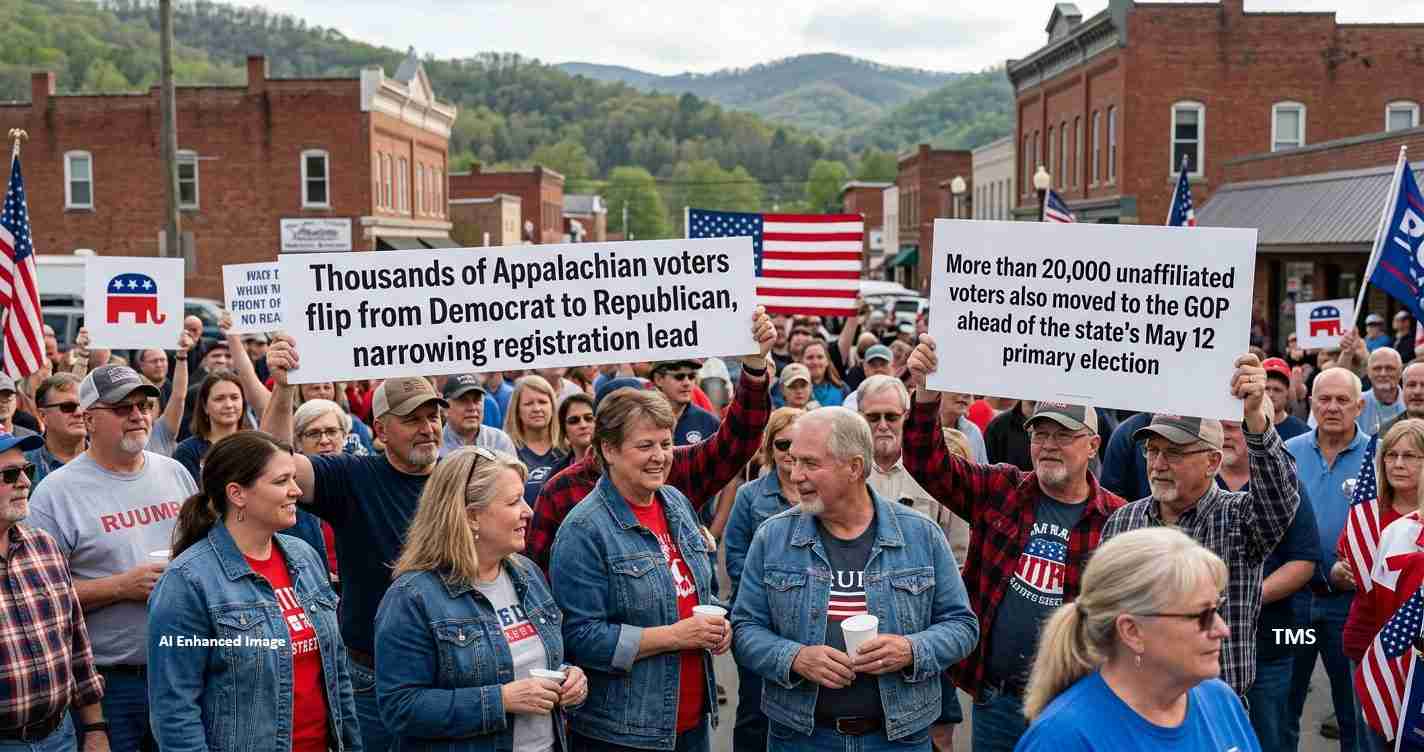
Tens of thousands switch parties in West Virginia ahead of May primary, reshaping the state’s political map
More than 68,000 West Virginia voters changed party registration between Jan. 31 and April 23, 2024, dramatically reshaping the electorate ahead of the May 12 closed primary and altering campaign strategies across the state this year.
Key takeaways
- 68,235 total party changes were reported statewide between Jan. 31 and April 23, 2024, per Secretary of State data summarized by Fox News.
- Major flows: 16,910 Democrats → Republican; 20,003 unaffiliated → Republican; 12,299 Democrats → unaffiliated; 7,559 Republicans → unaffiliated.
- As of April 23, registrations stood at 519,756 Republicans, 327,089 Democrats and 301,933 independents; Democrats + independents still outnumber Republicans by roughly 100,000.
- The timing — just before a closed primary with an April 28 roll-update deadline — appears to have driven many tactical switches to Republican registration.
Shifting numbers and what they show
State records released by Secretary of State Kris Warner document a surge of registration changes in the months before West Virginia’s May 12 primary. Officials reported 68,235 total switches between Jan. 31 and April 23, 2024. The single biggest moves were toward the Republican Party: 16,910 registered Democrats and 20,003 unaffiliated voters became Republicans during the reporting period, while thousands left both major parties for independent status.
Those raw counts show net gains for GOP registration but do not erase the fact that, together, Democrats and independents still outnumber Republicans by roughly 100,000. Timing matters: many of the changes clustered immediately before the closed primary deadline and early voting period. The Secretary of State numbers and reporting are summarized by Fox News.
Why voters are switching
State Republican Party Chairman and Delegate Josh Holstein told local reporters that West Virginia’s closed primary system was a major driver: only registered Republicans may vote in the Republican primary, and only registered Democrats may vote in the Democratic primary. Holstein said many voters switched to Republican registration so they could participate in competitive GOP contests. As he put it, “This huge uptick in the last couple of months is certainly tied to the primary being closed.”
“This huge uptick in the last couple of months is certainly tied to the primary being closed.” — Josh Holstein, West Virginia GOP
Democratic Party Chairman Delegate Mike Pushkin offered a broader take, noting movement in multiple directions and frustration with both parties. Pushkin emphasized that many voters are becoming unaffiliated while others re-engage with prior choices — a dynamic captured in local coverage and summarized by Fox News.
Election mechanics and timing matter
West Virginia’s closed primary rules made party registration a practical choice for voters who wanted to influence the outcome in a given party’s contest. Officials said final voter rolls were to be set after the April 28 deadline for updates; early in-person voting began April 29 and ran through May 9. The concentration of registration changes in the weeks immediately before these cutoffs underscores how procedural rules shape individual decisions.
The shifts also mirror national debates about primary access and party control of nomination rules. Separately, the West Virginia GOP later moved to restrict primaries to registered Republicans in a later internal vote — a decision discussed in a public meeting, available as a party meeting recording — though reporting does not directly tie that later vote to the 2024 registration surge.
Where the changes are concentrated
The statewide release from Secretary of State Warner does not provide county-by-county detail in this summary, but the statewide totals point to a notable flow of Democrats and unaffiliated voters into Republican registrations. Analysts and party officials emphasized the practical motive: voters who wanted a say in a competitive Republican primary registered with the party to ensure participation.
Implications for the May primary and beyond
Immediately, the registration churn affected who could vote in closed primaries, forcing candidates and campaigns to adjust outreach and messaging for a changing electorate that included recent registrants and newly unaffiliated voters. Long-term implications include questions about party strength and voter loyalty in a state that has trended Republican in recent years; even so, Democrats plus independents currently still outnumber Republicans, leaving room for competition if parties can persuade and mobilize those voters.
Implications for Fresno, California
What local political watchers should notice: West Virginia’s surge was driven partly by closed-primary mechanics that do not apply in California. Still, the behavior offers lessons for Fresno campaigns about timing, targeted messaging and mobilizing unaffiliated voters.
- Primary rules differ: California’s systems (including top-two) change the calculus for registration choices; the West Virginia pattern highlights how rules can drive tactical registration moves.
- Party strategy: Fresno parties should focus on messages that resonate with unaffiliated voters and emphasize concrete benefits of registering or re-registering ahead of deadlines.
- Local issues matter: Jobs, water, agriculture and public safety remain central in the Central Valley; tying messaging to these issues can sway voters who might otherwise drift.
- National attention: Large swings can attract outside spending and visits; Fresno leaders should be ready for potential increases in targeted outreach if parties see opportunity.
Sources
Reporting based on public release of voter registration data from West Virginia Secretary of State Kris Warner and statements reported in local coverage. Full data and reporting summarized by Fox News. See related party meeting discussion in the party meeting recording.
Key figures preserved from the release:
- 68,235 total party changes (Jan. 31 – April 23, 2024)
- 16,910 Democrats → Republican; 20,003 unaffiliated → Republican
- 12,299 Democrats → unaffiliated; 7,559 Republicans → unaffiliated
- 5,211 unaffiliated → Democrat; 2,399 Republicans → Democrat
- Registration totals (April 23): 519,756 Republicans; 327,089 Democrats; 301,933 independents
- More than 1.19 million registered voters eligible for the May primary; final roll update targeted by April 28 deadline