
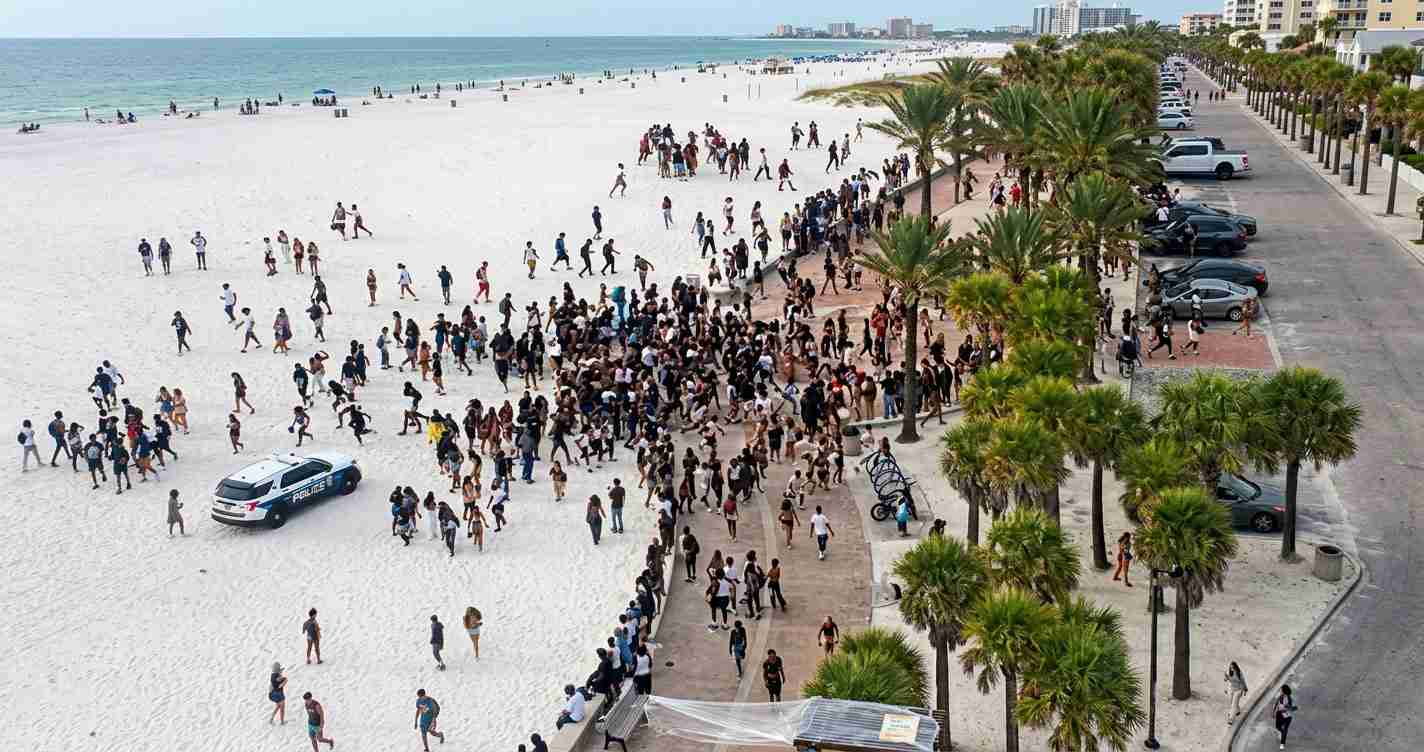
Florida police stop planned St. Augustine Beach “teen takeover” after online alert, highlighting rise of viral youth gatherings and social‑media monitoring
St. Augustine Beach police used online intelligence and a “zero tolerance” stance to halt a planned teen takeover at the city pier, deploying extra officers and posting cancellations after a real‑time intelligence tip flagged the event online.
- Proactive intervention: Local police stopped an advertised, unsanctioned pier takeover before it occurred after being alerted by a real‑time intelligence center. (Fox News Digital)
- Monitoring and deterrence: The St. John’s County ARTIC flagged the online flyer, officials posted a large “Canceled” notice and extra officers were pre‑positioned as a deterrent. (Fox News Digital)
- Wider trend: Similar surge staffing and social‑media monitoring tactics have been used across Florida and the U.S.; cities pair enforcement with outreach in some cases. (ABC News)
What happened
St. Augustine Beach police learned of a planned, unsanctioned “teen takeover” that was being advertised for the city pier. The online flyer urging attendees to “Pull up. Turn Up. Take over” circulated on social platforms and prompted concern. (Fox News Digital)
How the takeover was stopped
Advance warning: The St. John’s County Real‑Time Intelligence Center (ARTIC) flagged the flyer days before a scheduled 2 p.m. gathering and forwarded the tip to the small local department, giving officers time to act. (Fox News Digital)
Officials placed a large “Canceled” banner across the shared flyer, posted repeated warnings that the gathering was not sanctioned, and sent extra officers to the pier as a visible deterrent. Police Chief Daniel Carswell called the operation a success because the event did not materialize and no charges were filed. (Fox News Digital)
Why local chiefs say they are worried
Unpredictable turnout: Chief Carswell and other leaders say these online‑organized gatherings differ from routine spring‑break crowds. They can be created with the “sole intent of just causing disruption”, and turnout ranges from dozens to hundreds, which can overwhelm small departments.
“Pulling officers from scheduled duties or calling them in on days off strains resources and can leave parts of the community understaffed,” Carswell warned.
Those resource strains—overtime pay, redirected patrols and mutual‑aid coordination—can be costly and logistically difficult for smaller agencies. (Fox News Digital)
Police social media monitoring and tools
How ARTIC and similar centers work: Real‑time intelligence centers search social platforms and open sources for planned events or threats, then alert partner agencies so they can pre‑position resources. Officers in Tampa and Pasco County used similar monitoring and pre‑positioned patrols to deter or respond to takeovers. (Fox News Digital; ABC News)
Law‑enforcement officials maintain that monitoring public posts helps prevent violence and large disturbances, but the practice raises broader governance questions discussed below.
Surge staffing and “zero tolerance” as deterrence
Visible presence: A common response is highly visible staffing at anticipated hotspots. St. Augustine’s extra officers at the pier mirrored actions in Clearwater and Wesley Chapel, where patrols were boosted on beaches and public spaces.
Zero tolerance messaging — warning that disorderly conduct, weapons or drugs will result in arrest — is often paired with surge staffing. Officials say the combination can deter trouble, though it is costly and challenging for smaller agencies. (ABC News)
National picture: not every gathering turns violent
“Teen takeovers” fit a broader pattern of youth gatherings organized via social platforms. Not all events lead to crime. In many cases, early monitoring and a strong police presence have prevented major incidents. Pasco County, for example, used a large force to keep order while other locales, like Clearwater, experienced a shooting tied to a takeover that resulted in serious charges. (ABC News)
Community responses and alternatives
Some cities pair enforcement with positive alternatives. In Tampa, organizers and nonprofits worked with police to offer supervised events such as “Takeover with a Purpose”, Midnight Basketball and expanded summer programs to provide safe spaces for teens.
Youth‑justice experts recommend prevention and engagement — not only suppression — as ways to reduce the risk that gatherings devolve into fights, property damage or weapons use. (ABC News)
Legal and civil‑liberties questions
The use of social‑media monitoring raises concerns about privacy and free speech. Agencies say they monitor public posts and open sources to protect safety; civil‑liberties advocates warn that monitoring and pre‑emptive policing can chill lawful assembly and disproportionately affect young people who are simply socializing.
Local officials state they aim to balance safety with rights, but that equilibrium is likely to remain a source of debate as summer brings more online‑driven gatherings. (Fox News Digital; ABC News)
Implications for Fresno, California
Economic impact: Fresno is not a beach town, but viral youth gatherings can still affect local businesses and parks. Large, unsanctioned events could draw teens to retail districts or public spaces, causing damage, theft or lost sales while officers handle crowd control—straining Fresno Police Department budgets and city services. (Fox News Digital)
Political consequences: Moderate voters may demand protection of public safety while upholding civil liberties; city leaders could face pressure to adopt monitoring tools, expand mutual‑aid agreements, or address curfew and surveillance policies. (ABC News)
Social effects & cultural relevance: Fresno’s large youth population means schools, parents and community groups may need to coordinate supervised alternatives. Aggressive “zero tolerance” policing can reassure some residents but risk alienating families concerned about over‑policing; leaders should weigh enforcement with engagement to reflect diverse communities.
Practical applications for local agencies
- Strengthen regional information sharing: Improve mechanisms for agencies to flag planned gatherings early.
- Use public messaging: Inform residents when an event is not sanctioned and explain deterrent measures.
- Coordinate with schools and nonprofits: Offer safe, supervised alternatives during high‑risk periods to reduce chances of disorder.
- Balance privacy and safety: Consider policies that protect individual privacy while allowing monitoring of public posts for credible threats. (Fox News Digital; ABC News)
Reporting sources
This story draws on reporting from Fox News Digital and ABC News, which document the St. Augustine Beach police response and the wider pattern of teen takeovers, social‑media monitoring and police tactics across the country.


