Smithsonian swaps Trump portrait, strips Jan. 6 and impeachment language from wall text amid White House museum review
The Smithsonian’s National Portrait Gallery replaced President Trump’s painted portrait with a Daniel Torok photograph and removed references to his two impeachments and the January 6, 2021 attack, a change made amid a White House museum review ahead of 2026.
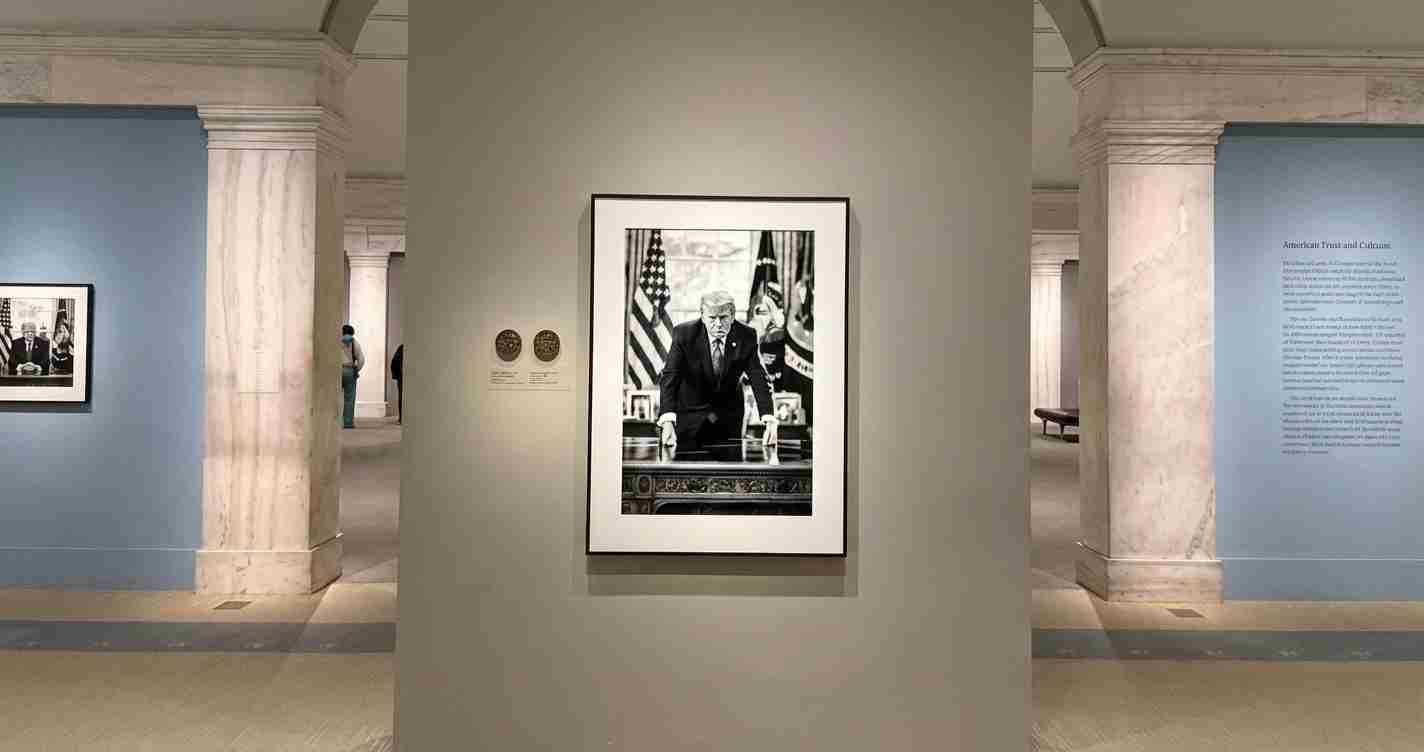
- Portrait swap: The gallery installed a black-and-white photo by Fox News photographer Daniel Torok in the “America’s Presidents” exhibition.
- Label change: Extended interpretive text naming Trump’s two impeachments and the January 6 attack was removed and replaced with a short “tombstone” label listing basic facts.
- Context: The move occurred during a White House-ordered Smithsonian review ahead of the U.S. semiquincentennial; reporting links the review to requests for internal records and possible funding pressure (Fox News).
- Continuing debate: Critics say the change obscures key events from visitors; supporters call shorter labels appropriate pending a formal painted portrait (The Daily Beast).
New portrait and display changes
Last week, the National Portrait Gallery swapped the image representing Mr. Trump in the “America’s Presidents” gallery. The replacement is a black-and-white photograph taken by White House photographer Daniel Torok. The image shows the former president standing behind the Resolute Desk in the Oval Office, hands or fists on the desk, looking directly at the camera. Reporting and images of the new display are described by Fox News.
Photograph described as temporary
A White House official told reporters that photographs will be used in the gallery until a formal painted portrait is completed and installed. The White House highlighted the photograph and its placement as an “iconic” honoring image in public statements (Fox News).
Removal of impeachment and January 6 references
Previously, the wall text next to Mr. Trump’s portrait explicitly noted he was “Impeached twice—on charges of abuse of power and incitement of insurrection after supporters attacked the U.S. Capitol on January 6, 2021—[and] acquitted by the Senate in both trials.” That expanded label was replaced by a brief “tombstone” plaque listing only name, the artist (the photographer), and years in office, omitting mention of impeachments and January 6 (Fox News; The Daily Beast).
Photographs and reporting show that other presidents who faced impeachment—such as Bill Clinton and Andrew Johnson—continue to have labels noting those proceedings. That contrast makes Mr. Trump the only president in the gallery, per available reporting, without extended interpretive text calling out those historical events (The Daily Beast).
Smithsonian and National Portrait Gallery response
The National Portrait Gallery told the Associated Press that it “has been exploring quotes or tombstone labels, which provide only general information, such as the artist’s name,” presenting the change as part of a broader interpretive review rather than a targeted action. The institution has not released a detailed curatorial rationale or a timeline for any gallery-wide label revisions (Fox News).
White House review of museums and reported pressure
Context matters: The label and portrait changes happened during a White House-ordered review of Smithsonian museums ahead of the United States’ 250th anniversary. Reporting says the White House requested extensive internal records from the Smithsonian by Jan. 13 and warned of potential funding consequences if the institution did not comply (Fox News).
Former President Trump and some White House spokespeople have criticized cultural institutions as insufficiently celebratory of American achievement. White House spokesman Davis Ingle said:
“for the first time in history, the Smithsonian National Portrait Gallery has hung up an iconic photo taken by the White House honoring President Trump… his unmatched aura will be seen and felt throughout the halls of the National Portrait Gallery.”
Reactions from media and critics
Media coverage framed the change variously: some outlets emphasized removal of impeachment and January 6 language and tied the move to the White House review (Fox News), while others described the update as a quiet stripping of impeachment details (The Daily Beast).
Critics argue the gallery altered how visitors encounter major events tied to Mr. Trump’s presidency. Supporters counter that a short photograph label is reasonable while awaiting a formal painted portrait and that museums should avoid editorializing in object labels. At the time of reporting, no new public label guidelines or prospectus explaining the decision process had been published.
What has not changed
Important to note: the label update does not alter the historical record. Mr. Trump remains a twice-impeached president and the events of January 6, 2021 remain documented facts. What changed is the National Portrait Gallery’s interpretive approach to labeling his portrait for visitors (Fox News; The Daily Beast).
Open questions and what to watch next
- Rationale: The gallery has not released a full internal explanation detailing whether the change reflects an institutional policy shift or external influence.
- Consistency: It is unclear if the tombstone label style will be used across the presidents’ gallery or remain an outlier for Mr. Trump.
- Review details: The scope, criteria and any funding leverage tied to the White House museum review have not been publicly documented in full.
Sources and further reading
Reporting referenced in this article includes coverage by Fox News and The Daily Beast.
Implications for Fresno, California
Economic and cultural impact: Fresno relies on tourism tied to national history and cultural events. National debates about museum labeling and interpretive choices at major institutions like the Smithsonian can influence visitor expectations and how local museums market exhibits. If national museums move toward shorter, less interpretive labels, Fresno institutions may face pressure to revise displays or to publicly defend fuller interpretive text.
Political consequences: The display change and White House review could shape local political conversations. Fresno civic leaders and candidates may use the story to argue about how public institutions present history, affecting debate over curriculum, public funding for arts, and museum oversight.
Social effects: For Fresno’s diverse communities, how recent events are presented matters. Removing references to contentious events like January 6 and impeachment may alarm residents who want fuller context. Community groups, educators and parents might press for clear standards to ensure museum exhibits present multiple perspectives.
Cultural relevance and practical applications: Fresno cultural institutions that partner with national museums for loans and traveling exhibits could see ripple effects. Local teachers may use the debate as a civics lesson; libraries and museums might host public panels. Residents concerned about historical accuracy can contact elected officials or museum boards to inquire whether similar interpretive reviews are planned locally.
For Fresno readers: watch for updates from the National Portrait Gallery and the Smithsonian about label policies and any public comment opportunities tied to the White House museum review. National decisions about historical presentation can influence local practices and community conversations about shared history.