Ahmed al‑Ahmed hailed a hero after tackling gunman in Bondi Beach shooting; recovering in hospital as Australia reels
Ahmed al‑Ahmed, 43, is being hailed as a national hero after tackling a gunman during a Hanukkah event near Bondi Beach, disarming an attacker and forcing him to flee; he is now recovering in hospital from multiple gunshot wounds.
Key takeaways
- Heroic intervention: Ahmed al‑Ahmed, 43, rushed and tackled one of two attackers, wrestled away a weapon and helped stop further immediate fire (video footage).
- Serious injuries: A second gunman shot al‑Ahmed several times; he is being treated at St George Hospital with bullets reported lodged in his shoulder (hospital reporting).
- Terror classification: New South Wales Police declared the incident a terrorist attack motivated by antisemitism; at least 15 people were killed and more than 40 injured (police statement).
- Political fallout: Leaders say one suspect legally acquired multiple firearms over the past decade, prompting proposed tougher gun laws (reporting).
The moment that stopped more bloodshed
Video of the attack shows Ahmed al‑Ahmed crouching behind a car, then charging a visible attacker and tackling him to the ground. Witnesses said the move caused the attacker to drop or lose control of his firearm and to flee the scene. Many who watched say that act prevented the shooter from continuing to fire at people gathered for the Hanukkah event (video footage).
Multiple witnesses and family members described al‑Ahmed’s actions as instinctive. They told reporters he saw people on the ground and blood everywhere and felt he had to act to protect them. Those interviews and footage have led to widespread description of him as a hero — locally and nationally, with some calling him an “international hero” (interviews).
Injuries and hospital condition
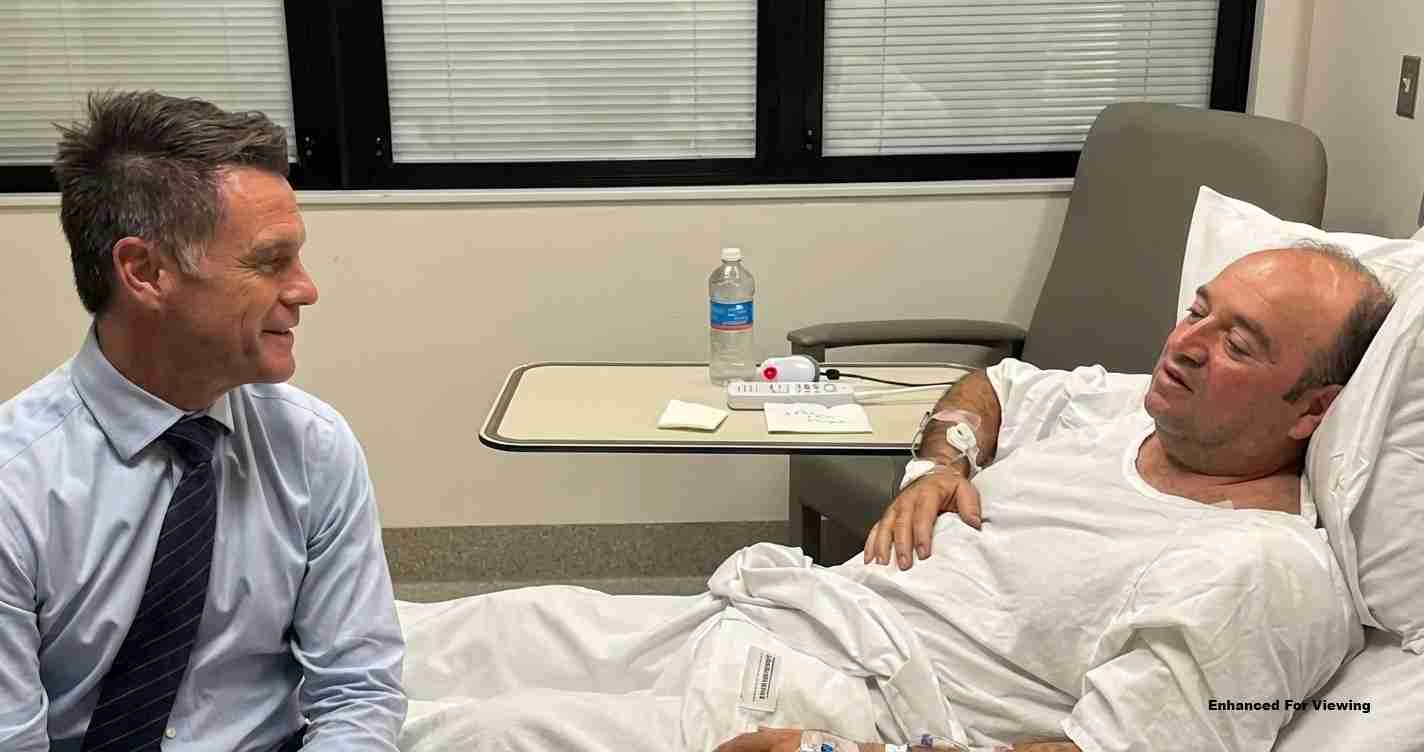
After tackling one attacker, Ahmed al‑Ahmed was shot by the second gunman. He suffered multiple wounds to the shoulder and upper body and was taken to St George Hospital for treatment. Reports note that some bullets remain lodged in his shoulder while doctors monitor his recovery (footage).
“What can I even say? I went through a tough time that only God knows about,” al‑Ahmed said from his hospital bed, asking for prayers for himself and the victims (hospital interview).
Background and family
Al‑Ahmed is a 43‑year‑old Sydney man and a father of two. Reports indicate he was born in Australia to parents who recently arrived from Syria and that he has lived in the country since 2006. Family members have told reporters that his conscience and instinct to protect others drove him into the line of fire, and they have been publicly praising his courage (family interviews).
How leaders and witnesses are responding
Australian leaders and local officials have publicly praised al‑Ahmed. Prime Minister Anthony Albanese, Home Affairs Minister Tony Burke and New South Wales Premier Chris Minns called him a “real‑life hero” as details of the attack and the rescue efforts emerged (official statements).
Witnesses described him as “incredibly strong and very brave,” and family members have expressed deep gratitude for his actions (witness accounts).
Police classification and casualties
New South Wales Police declared the Bondi Beach shooting a terrorist incident and said the attack was motivated by antisemitism. Authorities have reported at least 15 deaths and more than 40 people injured in what officials called Australia’s deadliest mass shooting in decades. Police confirmed that one attacker was fatally shot by officers at the scene and that a second suspect was arrested (police reporting).
Political and legal fallout
In the days following the Bondi Beach shooting, Prime Minister Albanese called the attack “an act of pure evil” and announced plans to propose stricter gun laws. Media reports and officials noted that one of the suspects had legally obtained six firearms over the past decade under existing rules, raising questions about how semi‑automatic and other weapons can still be legally acquired despite Australia’s generally strict gun laws (coverage).
The government’s proposed changes are expected to focus on tightening licensing, background checks and oversight, though details were still being discussed by national leaders and state officials at the time of reporting (policy reporting).
Investigations underway
Police and counterterrorism investigators are continuing to examine the motive, planning and weapons used in the attack. Officials are treating the case as a terrorist incident tied to antisemitic ideology and are reviewing how the suspects obtained firearms and whether gaps in regulation or enforcement allowed them to build an arsenal (investigative reporting).
Further interviews with witnesses, forensic analysis and legal steps against the arrested suspect are expected as the probe continues (updates).
How the community has reacted
The Jewish community in Sydney and across Australia has been shaken by the attack, with vigils, prayers and public statements of support for victims and their families. Many members of the public have recognized al‑Ahmed’s actions as life‑saving and have sent messages praising his bravery. Community leaders have called for unity, increased security at religious events, and renewed attention to preventing hate‑based violence (community reporting).
Implications for Fresno, California
The Bondi Beach shooting has local lessons for Fresno in several areas:
- Public safety and faith‑based gatherings: Fresno’s religious communities may reassess security plans for holidays and public celebrations, including training volunteers or placing security at larger events.
- Gun policy conversation: Though U.S. laws differ from Australia’s, the attack may renew discussion in Fresno about safe storage, background checks, buyback programs and enforcement of existing rules.
- Community cohesion and countering hate: The antisemitic motive highlights the need for interfaith outreach, anti‑bias education and support for vulnerable groups.
- Emergency preparedness: Local hospitals and responders can use this as a case study for mass‑casualty response, triage and trauma coordination.
- Local journalism and public information: Fresno newsrooms should prepare to provide timely, accurate reporting, translation for non‑English speakers, and avoidance of unverified claims.