
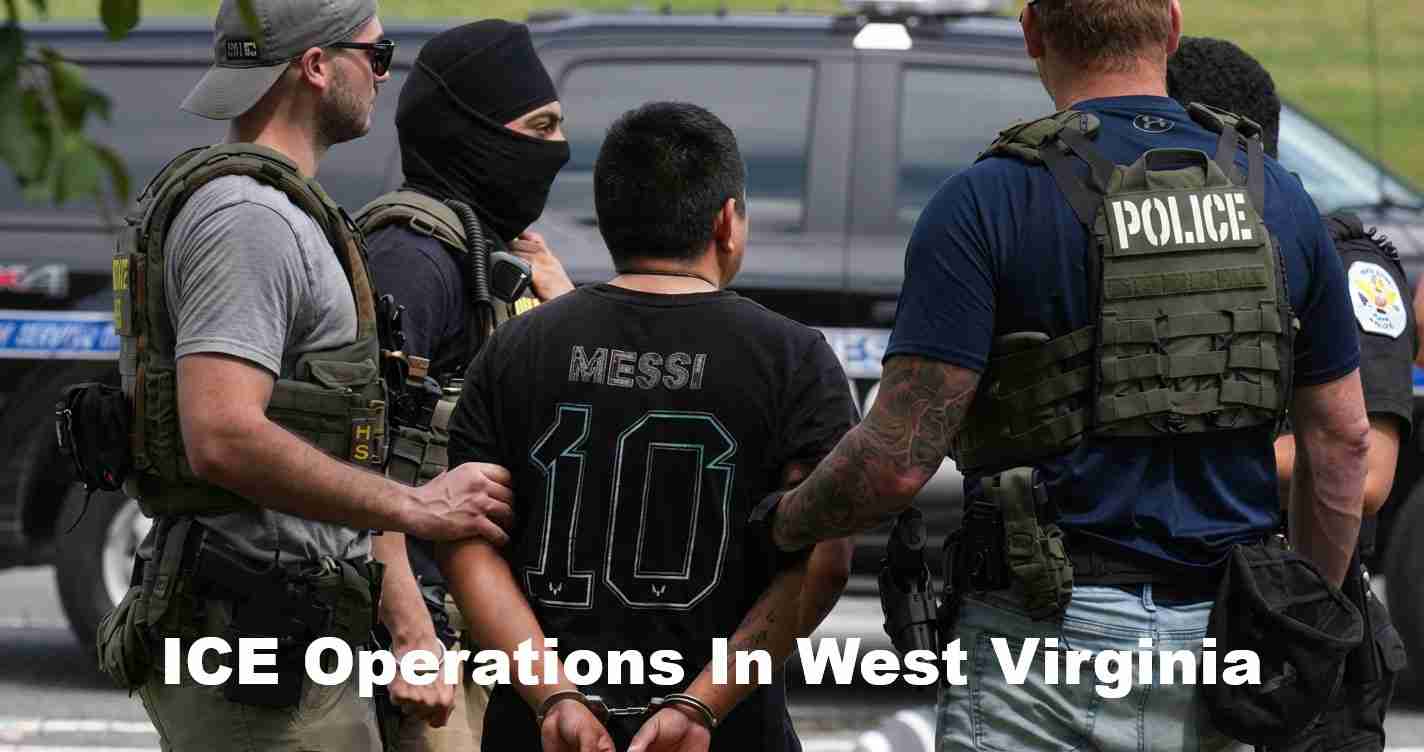
ICE arrests more than 650 in West Virginia “Operation Country Roads,” fueled by 287(g) partnerships
ICE arrested more than 650 people across West Virginia during “Operation Country Roads” from Jan. 5–19, 2026, a two‑week multi‑agency sweep led by U.S. Attorney Moore Capito that relied heavily on state 287(g) partners to target public‑safety threats.
- Scope: Operation Country Roads (Jan. 5–19, 2026) involved 14 federal, state and local law enforcement partners — see WJLA reporting.
- Arrests: ICE says more than 650 people were arrested across six cities — Charleston, Martinsburg, Beckley, Moorefield, Morgantown and Huntington — per WV MetroNews and WJLA.
- 287(g) role: More than 550 arrests involved West Virginia officers trained under 287(g) authority; the Justice Department notes the state led the nation in 287(g) daily arrests on multiple days — see the Justice Department release.
- Allegations and oversight: Officials described many arrestees as threats to public safety or national security, including some with criminal convictions; civil‑rights concerns and questions about traffic‑stop practices were raised by local reporters — see Mountain State Spotlight.
Operation details and partners
Operation Country Roads ran Jan. 5–19, 2026 and drew 14 participating agencies from the federal, state and local levels. Teams deployed to Charleston, Martinsburg, Beckley, Moorefield, Morgantown and Huntington.
ICE Enforcement and Removal Operations Philadelphia acting Field Office Director Michael Rose praised the partnerships and training that expanded local capacity to identify, arrest and process people without lawful status; his comments and operational descriptions are included in WJLA.
U.S. Attorney Moore Capito formally named the effort Operation Country Roads and credited state and local partners for the results; his statement is available from the U.S. Attorney’s Office.
Role of the 287(g) program
State and local officers trained under the 287(g) program accounted for a large share of arrests during the operation. The Justice Department reported that more than 550 arrests involved West Virginia agencies operating under 287(g) authority; at least 25 West Virginia entities participate in the program, including the State Police, National Guard, Division of Corrections and multiple sheriff’s and municipal agencies (Justice Department).
Governor Patrick Morrisey signed a 287(g) Memorandum of Agreement with ICE in August 2025 and publicly praised the operation for removing dangerous criminals; his office did not provide a breakdown of arrest numbers when asked (WJLA).
Arrests, criminal allegations and federal cases
Officials and local reporting identify a range of cases tied to the operation. ICE described some arrestees as having criminal convictions for serious offenses — including child sex abuse, drug possession and endangering children (WJLA).
Local reporting named individuals such as Sagar Singh (Indian citizen arrested on charges tied to operating an unsafe tractor‑trailer) and Ling Yan (Yang Ning) (Chinese national with prior removal orders and an Ohio conviction for two counts of endangering the welfare of children).
Search warrants executed in Nitro on Jan. 16 produced at least eight federal immigration cases, according to the U.S. Attorney’s Office. West Virginia State Police Superintendent Col. Jim Mitchell said the State Police assisted in roughly 250 arrests since September and reported no procedural errors in their work (WV MetroNews).
Protests and civil‑rights concerns
Officials noted there were no protests during the two‑week operation itself, though demonstrations were planned after ICE publicized the results. Announced gatherings included “Take Down The Tyrants” at Marshall University and “ICE Out of Everywhere” near a Department of Homeland Security office in Putnam County (WV MetroNews).
Constitutional concerns: The Mountain State Spotlight reported that some arrests, including a traffic‑stop arrest of Venezuelan citizen Antony Segundo Larrazabal‑Gonzalez, raised questions about potential overreach and the intersection of local policing with immigration enforcement (Mountain State Spotlight).
Investigative questions
- How closely were 287(g)‑trained officers supervised when making arrests during the operation? — see Justice Department release.
- What safeguards protected constitutional rights during traffic stops or housing searches that led to immigration arrests? — raised by Mountain State Spotlight.
- Did any arrests target asylum seekers or people applying for legal status? Local reporting suggests some cases merit closer review (Mountain State Spotlight).
Sources and official statements
- U.S. Attorney Moore Capito press release on Operation Country Roads
- WJLA reporting on ICE arrests and local reactions
- WV MetroNews coverage
- Mountain State Spotlight analysis and concerns about court oversight
Implications for Fresno, California
High‑profile operations like Operation Country Roads can have ripple effects beyond West Virginia. Below are potential impacts for Fresno, drawing on reporting and official statements from the operation.
Economic impact
Fresno’s economy — heavily tied to agriculture, food processing and transportation — could be affected if large‑scale immigration sweeps or expanded 287(g)‑style agreements occur more widely. Possible outcomes include:
- Sudden labor shortages for growers and processors, raising production costs and potentially consumer prices.
- Increased compliance costs for employers required to verify worker status more often.
- Heightened demand for local legal aid and immigrant‑services organizations (WJLA).
Political consequences
Operation Country Roads demonstrates how elected leaders can use 287(g) agreements to make immigration enforcement a state and local issue. In Fresno this could translate to:
- Campaign debates over local cooperation with federal immigration enforcement, even though California has generally limited such cooperation.
- Pressure on municipal leaders from proponents of stricter enforcement and from civil‑rights advocates warning about racial profiling and trust erosion (Mountain State Spotlight).
Social effects
Aggressive enforcement can strain community relations. In Fresno, where many households are mixed‑status, possible social impacts include:
- Deterrence of victims and witnesses from reporting crimes, which can reduce overall public safety.
- Increased demand for social services, school and health‑clinic outreach, and legal aid.
- Uneven social costs that disproportionately affect vulnerable families (WV MetroNews).
Cultural relevance
For Fresno’s diverse immigrant communities, operations like this touch identity, trust and civic participation. Faith groups, labor unions and immigrant‑rights organizations may mobilize in response; others may welcome stricter enforcement if perceived to enhance safety (WJLA).
Practical applications for Fresno residents
- Policy review: Local policymakers should audit existing and proposed agreements with federal immigration authorities, including legal and budget implications of 287(g)‑style programs (Justice Department).
- Training and oversight: Law enforcement agencies should emphasize constitutional limits and community‑policing best practices to reduce civil‑rights risks identified in West Virginia traffic‑stop cases (Mountain State Spotlight).
- Community preparedness: Nonprofits and legal‑aid providers should prepare for higher demand and enhance outreach to explain rights and resources for immigrant families (WV MetroNews).
Reporting notes
This story draws on ICE and Justice Department statements and reporting from WJLA, WV MetroNews and Mountain State Spotlight. Links to the original source material are provided for reference and further reading:



