
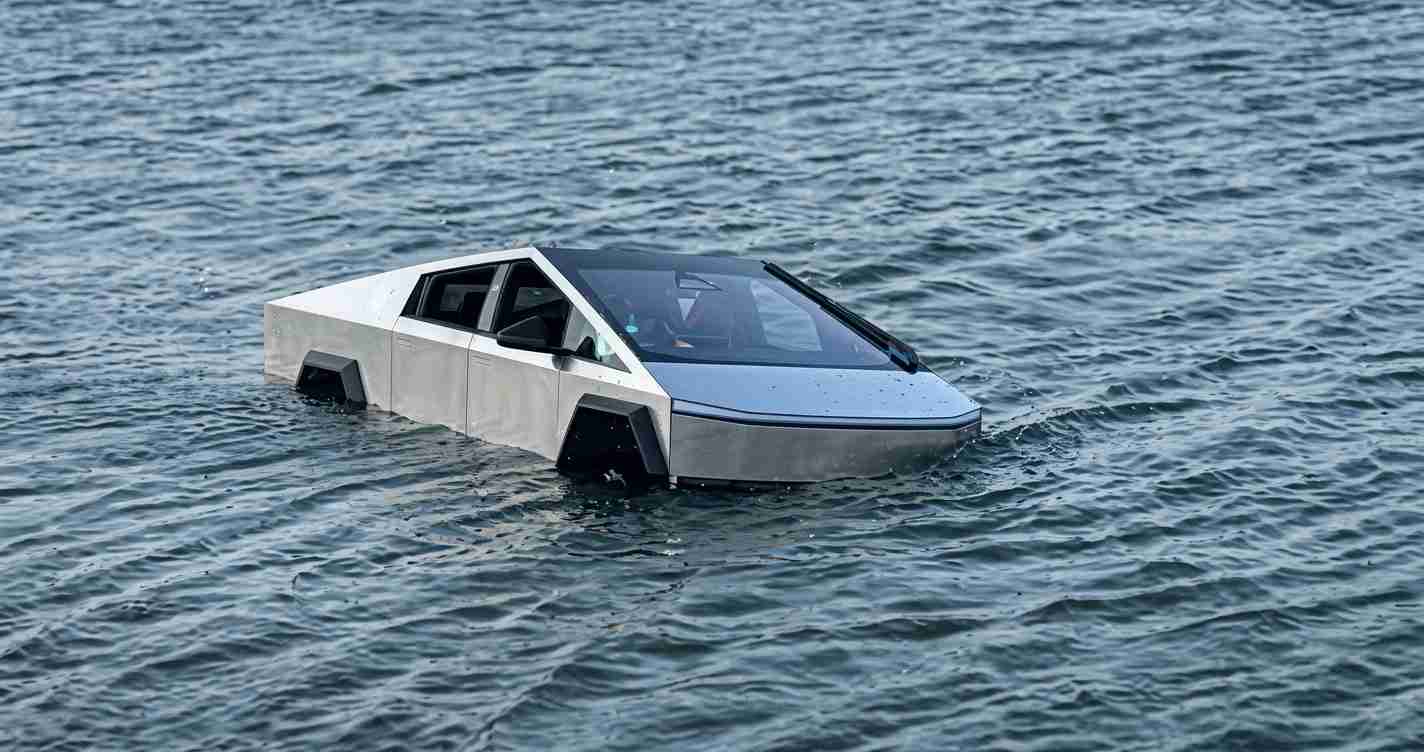
Texas driver arrested after intentional Cybertruck lake test leaves vehicle partly submerged — what happened in the Cybertruck Grapevine Lake incident
On Monday at Katie’s Woods Park boat ramp on Grapevine Lake, a 70-year-old man intentionally drove his Tesla Cybertruck into the water to test Wade Mode; the truck partly submerged, was recovered, and the driver was arrested on multiple charges.
- Location: Katie’s Woods Park boat ramp, Grapevine Lake, Grapevine, Texas.
- Action: Driver intentionally entered the water to test Wade Mode; vehicle disabled and partly submerged.
- Outcome: No injuries; Grapevine Fire Department water rescue recovered the truck and Grapevine Police arrested the driver on park and water-safety violations.
- Takeaway: Wade Mode is for shallow crossings only — local laws and safety concerns still apply.
What happened at Grapevine Lake
According to the Grapevine Police Department — official statements and social posts, officers responded Monday to reports of a partially submerged Tesla Cybertruck near the shoreline at Katie’s Woods Park boat ramp. Responding officers found the stainless-steel pickup sitting partially in the water; the driver told officers he had intentionally driven into the lake to test the vehicle’s Wade Mode.
Police and fire officials said the experiment “quickly went wrong.” The Cybertruck became disabled and began taking on water. The driver and any passengers exited the vehicle without physical injury. The Grapevine Fire Department — Water Rescue Team responded and assisted in recovering the truck from the ramp area. Photos released by authorities show the vehicle partially submerged while rescue crews worked to recover it.
Arrest and charges
The driver, a 70‑year‑old whose name has not been released, was arrested at the scene. Grapevine Police charged him with operating a vehicle in a closed section of a park or lake and with multiple water-safety equipment violations. Officials cautioned that even if a vehicle can physically enter shallow water, doing so may create legal and safety concerns under Texas law. Authorities said additional charges could follow after review.
What is Wade Mode? Tesla Wade Mode explained
Tesla promotes Wade Mode as a feature to assist in limited shallow-water and off-road situations. The feature is designed to:
- Temporarily raise the truck’s ride height.
- Pressurize and protect certain electrical components, including parts of the battery system, during shallow water crossings.
Tesla advises Wade Mode is intended for short, shallow crossings (low creeks, muddy fords) and warns drivers to avoid water conditions that exceed the vehicle’s capabilities. Local officials stressed Wade Mode is not an amphibious setting and is not meant for deep lakes or prolonged submersion. See Tesla’s overview: Tesla Cybertruck.
Why this test failed
Based on police statements and media reporting, the attempt likely failed for several reasons:
- Water depth or conditions exceeded Wade Mode’s intended limits.
- The boat ramp area was closed to motor vehicle use, adding legal and safety risk.
- Road vehicles are not designed as boats; key components can be disabled if water breaches seals.
- Emergency response was required, placing rescuers at risk and using public resources.
Broader context: Cybertruck marketing, owner behavior and social media
Since its release, the Cybertruck’s rugged marketing has encouraged some owners to test limits. Media and social-media clips show owners driving through mud, sand and occasional shallow water crossings. The Grapevine case is one of several incidents where owners pushed vehicle capabilities, sometimes resulting in damage or rescues. Local outlets described the event as a “botched attempt” to use Wade Mode outside of its design envelope.
Safety and legal takeaways
Important points for drivers and the public:
- Wade Mode is limited: for short, shallow crossings only; not for deep lakes.
- Obey local rules: park and ramp closures exist for safety and legal reasons.
- Emergency impact: entering water can require rescue teams and tie up resources.
- Environmental risks: submerged vehicles can release fluids and contaminants even if no major pollution is reported.
Implications for Fresno, California
Although Fresno is distant from Grapevine Lake, the incident has local relevance. Fresno-area reservoirs, rivers and recreation areas could face similar issues if owners test vehicle features in or near water. Local agencies may see increased recovery costs and pressure to tighten enforcement at boat ramps and launch sites.
Potential responses in Fresno include clearer signage, targeted outreach, increased patrols and public education emphasizing that features like Wade Mode have limits and that boat ramps are for watercraft launches—not vehicle tests.
Practical applications for Fresno drivers and officials
- Read the manual: consult your EV owner’s manual before attempting any water crossing.
- Respect closures: do not use boat ramps or closed park areas for vehicle tests.
- Know local rules: parks and waterways may enforce safety regulations similar to vessel laws.
- Outreach: agencies should post signs, run social-media alerts, and patrol ramps to deter risky behavior.
- Report quickly: call authorities if you see a vehicle entering water; timely reporting helps protect people and property.
Reporting notes
This account is based on statements from the Grapevine Police Department — official statements and social posts, the Grapevine Fire Department — Water Rescue Team, and local and national media coverage. Officials did not release the driver’s name at the time of reporting. Details current as of media reports published May 20–21, 2026.
Source attribution and where to read more
- Grapevine Police Department — official statements and social posts
- Grapevine Police Department Facebook
- Grapevine Fire Department — water rescue responses
- Tesla Cybertruck — official Wade Mode overview
- Times Media Service — local coverage and reporting
- Fox News search: Cybertruck Grapevine
“Even if a vehicle is physically capable of entering shallow freshwater, doing so can create legal and safety concerns under Texas law.”
— Grapevine Police Department / Grapevine Fire Department statements
Bottom line: Testing vehicle features in closed or unsuitable waters can quickly become dangerous, costly and illegal. Follow manufacturer guidance and local rules, and avoid treating road vehicles like boats.



