Tesla ends Model S, Model X production as Fremont factory set to repurpose for Optimus robot production
Tesla will cease production of the Model S and Model X by the end of Q2 2026, freeing Fremont capacity to build Optimus humanoid robots and pursue AI-driven growth — Musk said the goal is up to one million robots per year.
Key takeaways
- Production wind-down: Elon Musk said Model S and Model X production will wind down next quarter and stop by the end of Q2 2026 — source: Fox Business.
- Fremont repurpose: The Fremont factory space will be retooled to support Optimus humanoid robot production targeting up to one million units per year — source: Fox Business.
- Financial context: Tesla reported Q4 2025 revenue of $24.9 billion and full-year 2025 revenue of $94.8 billion, both down 3%; vehicle deliveries for 2025 were 1.64 million, down 9% — source: Fox Business.
- Model lineup changes: Model S and Model X accounted for less than 3% of 2025 deliveries and are not being replaced — reporting by Electrek and Edmunds.
What Musk said on the earnings call
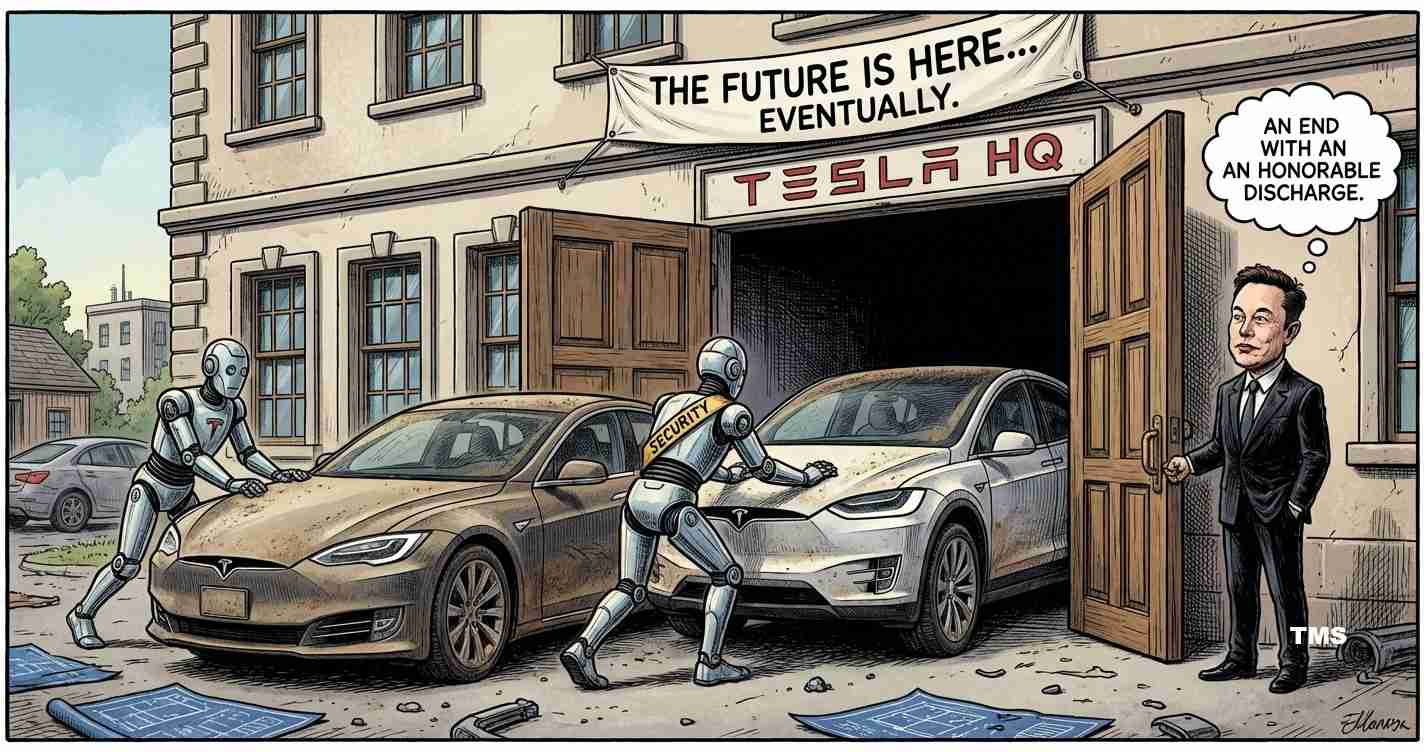
“An honorable discharge.” On Tesla’s fourth-quarter 2025 earnings call on Jan. 28, Musk described winding down the Model S and Model X programs with that phrase and urged buyers who still want the cars to order soon as production lines are prepared for new work. He framed the change as necessary to free up factory space and parts for Tesla’s push into autonomy and robotics — coverage: Fox Business, Electrek, and the earnings call clip.
Timeline and factory plans
Musk said Model S and X production will wind down next quarter with manufacturing to stop in 2026. The Fremont facility — long home to both models — will be retooled. Tesla told investors it plans six new production lines in 2026 for vehicles, robots, energy storage and batteries, and the Optimus program needs a new supply chain that will replace S/X lines entirely — reporting: Fox Business, Electrek.
Optimus and the robotics push
Tesla says it plans to scale Optimus production sharply, with Musk aiming for a maximum of one million units a year. The company plans to unveil a third-generation Optimus this quarter as part of preparing for mass production. Musk and Tesla argue robots and autonomy are the next major growth areas and that shifting Fremont capacity is a required step — reporting: Fox Business, Electrek.
Financial context and delivery trends
Key figures: Tesla’s Q4 2025 revenue fell 3% to $24.9 billion and full-year revenue also fell 3% to $94.8 billion. EV sales fell 16% in Q4 and total vehicle deliveries for 2025 were 1.64 million, down 9% from the prior year. Tesla grouped Model S and Model X into “Other Models” with Cybertruck and Semi; that category’s deliveries dropped from 23,640 in Q4 2024 to 11,642 in Q4 2025 and totaled 50,850 for the full year. Actual S/X deliveries were likely around 30,000 globally in 2025, a small slice of Tesla’s mix — source: Fox Business, Electrek.
Other Models deliveries by quarter (Electrek reporting)
- Q4 2024: 23,640 — Electrek
- Q1 2025: 12,881 — Electrek
- Q2 2025: 10,394 — Electrek
- Q3 2025: 15,933 — Electrek
- Q4 2025: 11,642 — Electrek
- FY 2025 total: 50,850 — Electrek
History of the model lineup
The Model S launched in 2012 and the Model X followed in 2015. Both once served as Tesla’s flagship vehicles and helped establish Tesla as a leader in electric cars. Over time, Tesla shifted its focus to higher-volume models like the Model 3 and Model Y. By 2025, S and X made up less than 3% of the company’s deliveries — coverage: Edmunds, Autoblog.
Pricing and recent updates
Tesla applied price cuts and then a mild refresh in June 2025 that raised list prices for the two models — Model S to about $84,990 and Model X to about $89,990 — while adding minor updates such as a front bumper camera and improved range. Musk encouraged buyers to place orders while inventory remains available — reporting: Fox Business, Edmunds.
Production capacity and utilization
Fremont’s S/X lines had about a 100,000-unit annual capacity but had been underused for years. The low volumes, rising focus on cheaper high-volume cars, and the company’s desire to build a new supply chain for robots all helped drive the decision to free up the space — reporting: Electrek.
Implications for Fresno, California
Note: Fresno is not the site of Tesla’s Fremont factory, but changes at Fremont can ripple through California and the Central Valley. Below are potential local impacts as analysts and community leaders react to Tesla’s decision.
Economic impact
Suppliers, logistics companies and independent shops that serve Tesla vehicles may see shifts in demand. If Tesla expands robotics production and requires new suppliers or distribution centers, some contracts could move to other regions—or create new local opportunities if supply chains widen. Local auto repair and parts businesses that work on higher-end S/X vehicles could see reduced demand over time. Analysts note major factory shifts often change regional supplier needs, though exact impacts will depend on Tesla’s final supplier plan — reporting: Fox Business, Electrek.
Political consequences
Local leaders in Fresno may face questions about workforce retraining and economic development. State and county officials who focus on manufacturing and jobs could push for investment to bring robotics or battery-related suppliers to the Central Valley. Policymakers will weigh incentives, workforce training grants and regional planning as the state shifts toward advanced manufacturing — analysis: Fox Business.
Social effects
Many Fresno residents drive Teslas or service Tesla vehicles locally. Changes to the S/X line may mean fewer new S and X cars on the road over time and could affect used-car inventories and repair demand. Workers with skills tied to traditional auto manufacturing might face pressure to reskill for robotics, EV, or battery-related work. Community colleges and training programs in the region could see increased demand for courses in robotics, automation and battery tech — reporting: Electrek.
Cultural relevance
Tesla’s Model S and Model X are widely known in California, including Fresno, where EV adoption has been growing. For some drivers, the end of production marks the close of a chapter in EV history. For others, the move toward robots and autonomy fits a wider narrative of Silicon Valley tech firms shifting priorities from consumer products to AI-driven systems. The cultural conversation in Fresno may focus on balancing innovation with local job protection — reporting: Edmunds.
Practical applications for residents
- Car buyers: Those in Fresno considering a new Model S or X may find remaining inventory or used options; Musk urged interested buyers to order while production continues — Fox Business.
- Local businesses: Auto shops, parts suppliers and logistics firms should review exposure to S/X work and consider diversifying into EV, charging station services, or other vehicle models.
- Workforce and training: Community colleges and training centers may expand offerings in robotics, automation and battery tech if employers in the region seek a trained labor pool — reporting: Electrek.
Reporting notes and sources
This article draws on Tesla’s Q4 2025 earnings call reporting and multiple news accounts, including Fox Business, Electrek, Edmunds, Autoblog, CarBuzz and others. Sources:
Musk described the phase-out as giving the Model S and Model X an “honorable discharge,” urging buyers to order soon as lines are repurposed for the company’s robotics and autonomy push — Fox Business.