
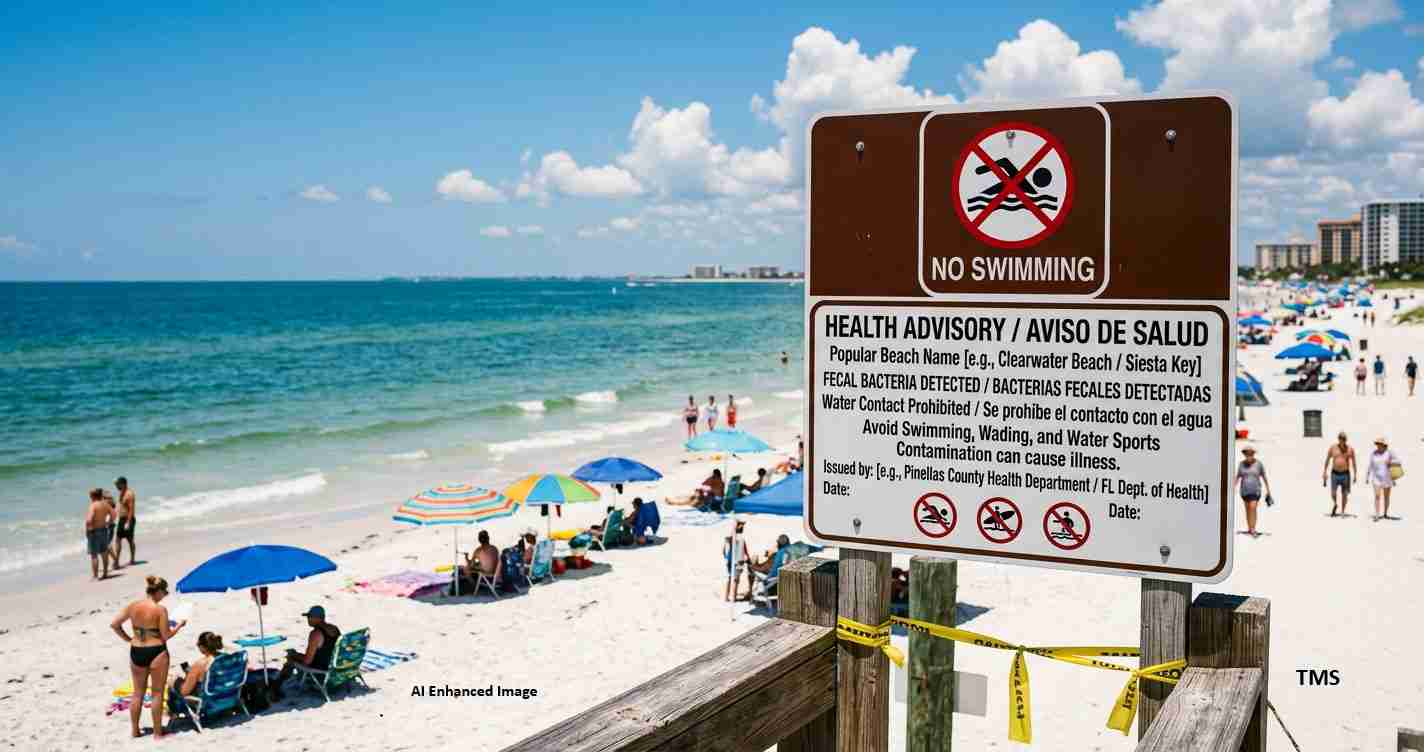
Bay County issues beach health advisory after tests show elevated enterococci bacteria at Panama City Beach sites
Bay County health officials have issued a water quality advisory for three Panama City Beach sites after tests found elevated enterococci bacteria; residents and visitors are urged to avoid swimming until follow-up sampling confirms safe levels.
- Beaches affected: Laguna Beach, Beach Drive and Carl Gray Park in Panama City Beach.
- Status: Beaches remain open but a health advisory warns against swimming or other water contact.
- Cause: Elevated enterococci—an indicator of fecal contamination—likely linked to recent heavy rainfall and stormwater runoff.
- Advice: Avoid water contact at the three sites until follow-up tests return to normal.
What the advisory means
The Florida Department of Health in Bay County monitors recreational waters and posts advisories when bacteria levels exceed health-based thresholds. An advisory is not the same as a beach closure: people can still access the sand, but officials warn that contact with the water could increase the risk of illness.
Advisories remain in place until follow-up samples show bacteria concentrations within acceptable limits under state standards. Officials collect routine samples and issue advisories when results show “high” or “elevated” enterococci; samples collected Tuesday at Laguna Beach, Beach Drive and Carl Gray Park triggered this advisory.
What enterococci are and why they matter
Enterococci are bacteria that live in the intestinal tracts of warm-blooded animals, including humans. They are commonly found in fecal material, which is why public health agencies use them as an indicator of possible sewage or fecal contamination in coastal and brackish waters. Elevated enterococci do not identify a specific pathogen but signal a higher chance that harmful microbes may be present.
High enterococci levels increase the risk of gastrointestinal, skin, ear, eye or respiratory infections. (See the U.S. Environmental Protection Agency for details.)
Risk depends on bacteria concentration, exposure duration and personal health. Children, older adults, pregnant people and those with weakened immune systems face higher risk and are advised to be especially cautious during advisories.
Likely causes: recent rainfall and runoff
Bay County and other parts of Florida experienced heavy rain and localized flash flooding in recent days. Heavy rainfall can transport bacteria into coastal waters via stormwater runoff carrying pet waste, debris, agricultural and urban contaminants. Storms can also overwhelm sewer or septic systems, causing leaks or overflows. Wind and wave action may stir bottom sediments, temporarily increasing measurable bacteria in the water column.
These pathways commonly cause short-term spikes in enterococci counts following storms. The Florida Department of Health in Bay County cites runoff and system strain as likely contributors.
Health risks and who should be most careful
The advisory indicates an increased risk of illness from water contact at the affected sites. Most swimming-related illnesses are mild and short-lived for healthy people, but symptoms can include:
- Diarrhea, vomiting or fever
- Ear pain or eye irritation
- Skin rashes or infected wounds
People with open cuts, chronic illness, or weakened immune systems should avoid water contact entirely during advisories. If symptoms develop after beach exposure, contact a health care provider and mention recent water contact.
Official recommendations and practical steps
- Avoid swimming, wading, paddleboarding or any direct contact with water at Laguna Beach, Beach Drive and Carl Gray Park until the advisory is lifted. Signs or flags may be posted at access points.
- Visit safely: Walk the sand or enjoy the shoreline without entering the water. Avoid letting waves or spray contact your mouth, eyes or open wounds.
- If exposed: Rinse thoroughly with fresh water and soap as soon as possible if you accidentally enter the water; seek medical attention for wounds that become red, swollen or painful.
- Check for updates: The Florida Department of Health in Bay County posts beach status and advisories online before visiting.
Duration of the advisory and follow-up testing
Advisories remain in effect until follow-up testing shows enterococci levels have returned to acceptable levels under state standards. Local programs typically collect samples weekly or biweekly, but counties may increase monitoring frequency after an advisory to determine when it is safe to lift the warning. Until new sample results are public, the advisory at Laguna Beach, Beach Drive and Carl Gray Park will remain active.
Investigative notes on monitoring and transparency
Bay County’s beach program follows state guidance for testing and public notification, but advocates note that routine weekly sampling can miss short contamination spikes immediately after heavy rainfall. Officials say testing frequency and advisory decisions balance resources, lab turnaround times and public safety, yet the recent cluster of elevated enterococci raises questions about stormwater infrastructure resilience and sewer system strain during extreme weather.
Implications for Fresno, California
Though this advisory concerns Panama City Beach, the episode offers lessons for Fresno residents and officials:
- Economic impact: Travel advisories influence vacation choices; Fresno travel businesses should inform clients about affected destinations.
- Political consequences: The advisory underscores links between extreme weather and public health—prompting possible support for stormwater and sewer investments.
- Social effects: Families traveling to beaches should follow clear, nonpartisan public health messaging to protect vulnerable travelers.
- Practical applications: Fresno agencies can review monitoring practices, increase post-storm advisories, and educate residents about runoff and sewage overflow risks.
Sources and further reading
- Florida Department of Health in Bay County — Beach water programs and advisories
- U.S. Environmental Protection Agency — Beaches and recreational water quality information
For the latest status at Laguna Beach, Beach Drive and Carl Gray Park, check the Florida Department of Health in Bay County beach safety page and posted signs at beach access points. If you plan to travel or have recently been at these beaches and develop symptoms, contact a health care provider and mention recent water exposure.


