“ICE was here” Nativity at St. Susanna Parish in Dedham draws rebuke from ICE acting director and Archdiocese
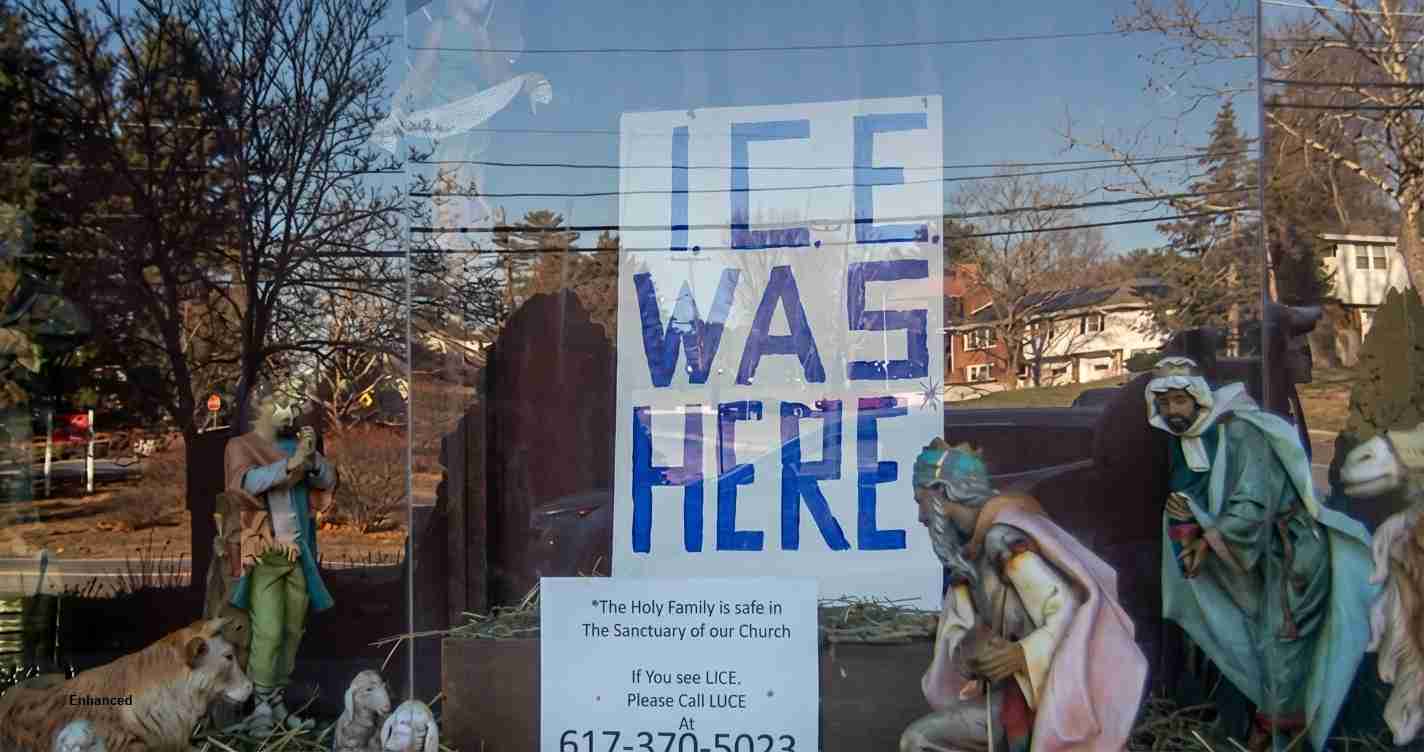
A Nativity at St. Susanna Parish in Dedham featured an empty manger and a sign reading “ICE was here,” prompting public rebukes from ICE acting director Todd Lyons and the Archdiocese of Boston while the parish defended its pastoral intent.
Key takeaways
- Controversial display: An outdoor Nativity with an empty manger and a sign reading “ICE was here” included contact information for a Massachusetts immigration-enforcement monitoring group.
- Official rebukes: Todd Lyons, acting ICE director for New England, and the Archdiocese of Boston publicly criticized the display and asked for its alteration or removal.
- Parish defense: St. Susanna framed the crèche as a moral and pastoral statement linking the Holy Family’s vulnerability to the plight of modern migrants and refugees.
What happened, reactions and context
What the display showed and why the parish says it did it
The display: On the lawn of St. Susanna Parish in Dedham, the manger where baby Jesus is traditionally placed was left empty and accompanied by a plainly readable sign: “ICE was here.” Beside the sign was a phone number linking people to a local group that monitors immigration enforcement and offers “know your rights” resources for immigrants.
Parish intent: Parish leaders and supporters told reporters the scene was meant to draw a parallel between the Holy Family’s vulnerability — forced to flee and live as strangers — and modern migrants facing enforcement, detention and family separation. The parish framed the display as an expression of Catholic teaching on the dignity of migrants and a pastoral outreach to people who might be frightened or in need of help. See St. Susanna Parish statements and local reporting from WBUR and the Boston Globe.
Todd Lyons and ICE’s objection
ICE response: Todd Lyons, the acting senior ICE official for the New England region, publicly criticized the display, saying it adds to a dangerous narrative
that miscasts ICE officers and could inflame hostility toward those carrying out federal law enforcement duties. Lyons framed his remarks as a strong public rebuke, arguing the portrayal singled out individual officers and misrepresented the agency’s mission of enforcing immigration and public-safety laws. See U.S. Immigration and Customs Enforcement and related coverage at WBUR.
The Archdiocese response: sacred symbol or political billboard?
Archdiocesan stance: The Archdiocese of Boston told parish leaders they believed the Nativity should not be used to directly name and shame a specific government agency. Church officials emphasized that while the Church advocates for migrants and refugees, it typically does so through pastoral care, teaching and broad policy engagement — not by affixing partisan or anti-government messaging to central devotional symbols like the Nativity.
The archdiocese warned the display risked dividing parishioners and misusing a sacred image, and asked the parish to change or remove the sign and hotline so the crèche could remain a unifying devotional object rather than a tool of political activism.
Parish and community reactions: split responses
Supporters described the empty manger as prophetic — a moral wake-up call linking the Christmas story to migrants today, noting that the Holy Family were refugees in Christian teaching.
Critics — including some Catholics — said the display crossed a line by directly naming an agency and providing a hotline that functions as an activist tool. They argued it unfairly villainized rank-and-file officers and turned a sacred scene into partisan theater; the presence of hotline contact information reinforced concerns the Nativity was both symbolic and operational, not merely artistic.
History: St. Susanna’s issue-focused Nativities
This is not the first time St. Susanna has used the Nativity to highlight social issues. For years the parish staged crèches drawing attention to migration, war, poverty and environmental crises. Earlier displays drew media attention and prior complaints, which helps explain the archdiocese’s prompt reaction: the “ICE was here” sign and the hotline were seen as an escalation that named a federal agency directly.
Catholic teaching and the debate over tactics
The dispute reflects two approaches within Catholic public life: a prophetic stance that names institutions and calls out perceived wrongdoing in moral language, and an institutional approach that seeks to keep devotional symbols apart from narrow political fights. Catholic social teaching emphasizes the dignity of migrants and the need to protect families, yet bishops and diocesan leaders often counsel caution about direct political messaging from sacred spaces.
Broader context: immigration debate and local law enforcement
The disagreement at St. Susanna occurs amid a heated national debate over immigration enforcement. Churches and faith groups nationwide have been sites of sanctuary, advocacy and protest, and officials sometimes push back when religious messaging singles out specific agencies or personnel. Including a hotline linking to an enforcement-monitoring group moves the display into activist organizing and raises legal and pastoral questions about separating religious observance from political mobilization on church property. See contextual reporting from the Associated Press and the Boston Globe.
Implications for Fresno, California
Economic impact
Local services and nonprofits that assist immigrants in Fresno could see higher demand if parishes adopt similar outreach. Fresno County, with a large immigrant population including many farmworkers and mixed-status families, may experience increased need for legal help, housing assistance and language services. Faith-based outreach directing people to hotlines or legal clinics could increase use of those services; organizations such as Catholic Charities Diocese of Fresno may be called upon more frequently.
Political consequences
The Fresno region could see intensified debate about how churches engage with immigration. Local officials might be asked to respond if parishes stage displays naming agencies such as ICE, as the Massachusetts episode shows how such actions can draw federal attention and diocesan responses. Community leaders should prepare for public conversations about the limits and responsibilities of religious advocacy. See MIRA for context on statewide advocacy.
Social effects
Dramatic displays can comfort immigrant residents by signaling solidarity, but they can also inflame tensions in diverse communities. In Fresno, where families from many backgrounds live side by side, parish decisions on signage and outreach can affect neighborhood relations and perceptions of safety. Faith communities aiming to be welcoming may need to balance prophetic witness with pastoral care that avoids alienating members.
Cultural relevance
The debate over using sacred symbols for political messaging will resonate in Fresno’s large Catholic and faith communities. Many local parishes already work on immigrant justice, but leaders will need to navigate expectations that sacred spaces remain both compassionate and unifying. The Archdiocese of Boston’s approach suggests diocesan authorities may favor less confrontational public witness.
Practical applications for residents
- Churches and nonprofits: Consider partnering with established legal-service providers and immigrant-rights organizations to provide discreet help without politicizing devotional spaces. Organizations such as Catholic Charities Diocese of Fresno and statewide groups like MIRA can offer legal clinics, “know your rights” trainings and referral hotlines.
- Immigrants and families: Keep local hotline and legal resources handy. If a church or community center offers a hotline, verify the operating group and whether it provides legal counsel or only monitoring and referrals.
- Public officials and law enforcement: Expect and prepare for public debate when places of worship take activist stances; clear communication between faith leaders, law enforcement and local officials can reduce misunderstanding and keep community safety a priority.
Reporting notes and sources
This report is based on parish statements, public comments by ICE Boston leadership and communications from the Archdiocese of Boston, along with local and national news coverage of the St. Susanna display and its aftermath. Sources and further reading include the Archdiocese of Boston, U.S. Immigration and Customs Enforcement, local reporting from WBUR, the Boston Globe and national reporting from the Associated Press. Times Media Service provided reporting and editorial coordination for this dispatch.
Further reading: Catholic teaching resources at the Vatican.