Dearborn residents press city to limit mosque loudspeakers as noise complaints grow over Islamic call to prayer
Dearborn, Michigan residents are pressing city officials to limit outdoor loudspeakers after multiple noise complaints about mosques broadcasting the Islamic call to prayer, prompting police decibel tests, legal reviews and debate over balancing religious freedom with neighborhood peace.
- Neighborhood complaints: Multiple Dearborn noise complaints cite outdoor loudspeakers broadcasting the Islamic call to prayer, according to a local report and video.
- Police action: Dearborn police have visited sites and performed decibel tests while officials gather evidence and monitor sound levels (local report and video).
- Ordinance gaps: The city noise ordinance bars loudspeakers between 10 p.m. and 7 a.m., but daytime outdoor amplification rules remain under review (local report and video).
- Community sensitivity: Some neighbors fear public complaints could be labeled Islamophobic, complicating the public record and discussion (local report and video).
Key information
Neighbors near one or more Dearborn mosques have filed multiple Dearborn noise complaints about outdoor loudspeakers used to broadcast the Islamic call to prayer, according to a local report and video.
Dearborn police have visited affected sites several times and performed decibel tests as part of their response; officers are documenting sound levels and gathering evidence to determine whether systems violate local rules (local report and video).
City Council President Mike Sirianni said police are gathering evidence and conducting sound level measurements to inform next steps (local report and video).
At least one facility, the Dearborn Community Center, reported loudspeaker levels found by police monitors to be within acceptable limits and “even below the average of the rules,” according to center director Nabeel Bahar (local report and video).
A review of the Dearborn noise ordinance shows restrictions on loudspeakers between 10 p.m. and 7 a.m., which would make after‑hours broadcasts a clear violation; whether outdoor loudspeakers are allowed more broadly is still under review (local report and video).
Some neighbors say they are reluctant to speak publicly about the issue for fear of being labeled Islamophobic, adding social and political sensitivity to the dispute (local report and video).
City response and investigation
City officials and Dearborn police moved quickly after residents raised concerns. Officers have made multiple visits to mosques and nearby homes to document sound levels and gather evidence, officials told council members during a public meeting.
Council President Mike Sirianni said the police department has been performing decibel readings at various sites as part of an effort to determine whether the sound systems are violating local rules. Monitoring has been ongoing while the city examines the legal framework guiding loudspeaker use (local report and video).
“Monitoring devices indicated the center’s loudspeaker output was ‘even below the average of the rules,’” said Nabeel Bahar, director of the Dearborn Community Center, citing police readings that found levels within current guidance (local report and video).
Residents who filed complaints maintain the volume and timing of outdoor calls to prayer have been disruptive. Police say additional monitoring and evidence collection are needed to resolve competing claims.
Legal ambiguity and the Dearborn noise ordinance
The dispute has exposed uncertainty over how Dearborn’s local laws apply to outdoor loudspeakers used for religious purposes. The ordinance clearly restricts loudspeaker use between 10 p.m. and 7 a.m., making after‑hours broadcasts a violation.
But questions remain about whether outdoor loudspeakers are permitted during the day and, if so, what decibel limits or permit requirements apply. City officials acknowledged the ordinance is not explicitly clear on outdoor loudspeaker use for religious services and that more evidence and legal review are needed to reach a definitive ruling (local report and video).
Legal experts and civil rights groups often note that ordinances touching religious expression must balance noise control with constitutional protections for worship. Dearborn officials said they will proceed carefully while gathering facts (local report and video).
Community reactions and concerns about speech
The controversy has stirred unease. Some residents say they have been reluctant to raise complaints publicly because they fear being accused of Islamophobia, which has complicated the public record and made it harder for officials to get a full accounting of problems.
Mosque leaders say they want to be good neighbors and point to police readings showing some systems are within limits. City Council meetings have featured tense exchanges as officials weigh resident complaints against constitutional protections for religious practice.
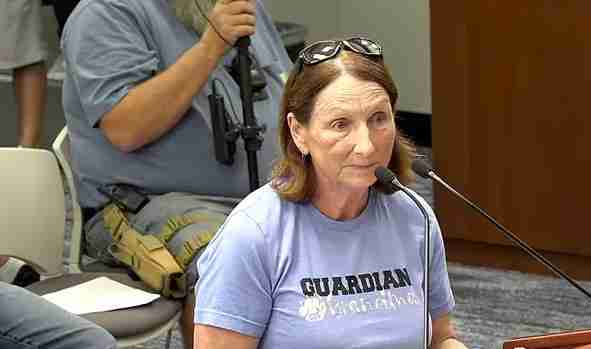
Public comment sessions included voices urging clear rules to protect residents from excessive noise and others warning against measures that could single out or burden religious groups (local report and video).
Broader context: religious freedom and municipal rules
Dearborn’s dispute echoes similar debates in U.S. cities where outdoor religious sound systems — from church bells to mosque loudspeakers — prompt complaints. Municipalities must balance free exercise of religion with residents’ right to quiet enjoyment of their homes.
Officials say the city intends to rely on measured evidence, community input, and legal guidance before taking steps that could affect worship practices. That process may include proposals to clarify the noise ordinance or create a permitting process for outdoor loudspeakers (local report and video).
Implications for Fresno, California
- Economic impact: Fresno could face similar disputes and may need to budget for sound monitoring equipment, police overtime for measurements, or legal reviews to revise noise rules.
- Political consequences: Noise disputes can become local political issues; Fresno leaders might be pressed to act, especially in close elections.
- Social effects: Residents may feel uneasy raising concerns if they fear being labeled discriminatory; neutral reporting channels can help preserve legitimate complaints.
- Cultural relevance: Policy changes should respect cultural and religious practices while applying rules evenly across faith communities.
- Practical applications: Fresno can review noise ordinances now, clarify allowable hours and decibel limits, set permit processes for outdoor amplification, and prepare standard procedures for decibel testing and mediation.
What officials say and next steps in Dearborn
Dearborn police and city leaders say they will continue to collect evidence and monitor sites before recommending changes. City staff are expected to review the noise ordinance language and seek legal advice on how rule changes or enforcement actions could affect religious freedom.
Officials told the public they plan to share findings and consider policy options that aim to balance community peace with the constitutional right to worship. Residents and mosque leaders asked for a transparent process that leads to fair, enforceable rules (local report and video).