
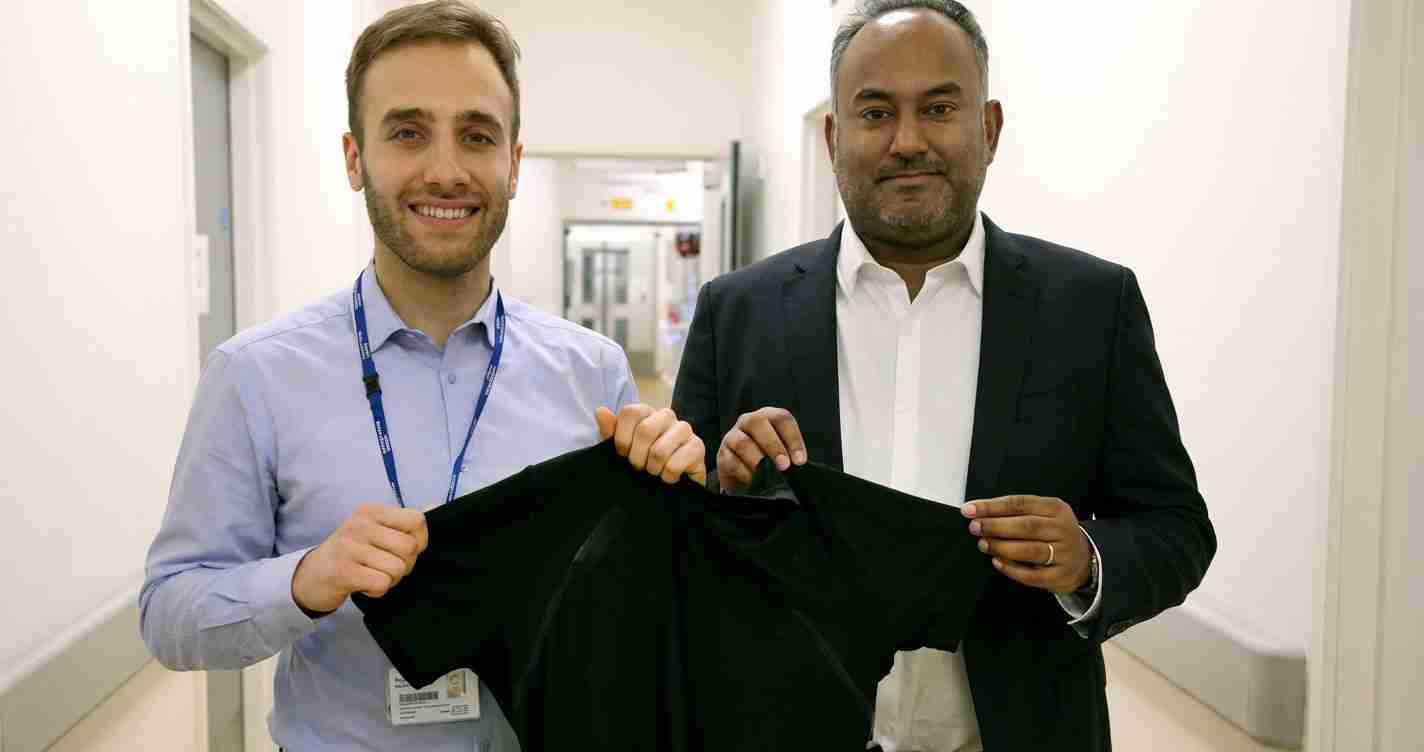
Your next heart test might start with a T‑shirt: Imperial College develops AI smart T‑shirt for long‑term heart monitoring
Imperial College London researchers led by Professor Zachary Whinnett are developing an AI-powered, washable smart T‑shirt woven with up to 50 ECG sensors to provide continuous heart monitoring and detect inherited rhythm disorders often missed by brief clinic ECGs.
Key takeaways
- Innovative wearable: A sportswear‑style, washable T‑shirt with up to 50 woven ECG sensors for days‑to‑weeks monitoring.
- AI detection: Algorithm trained on ECG data from more than 1,000 people to identify inherited rhythm disorders including Brugada syndrome.
- Feasibility study: About 200 volunteers will wear the T‑shirt for up to three months at Hammersmith Hospital’s Peart‑Rose Research Unit.
- Funding & timeline: Backed by more than £340,000 from the British Heart Foundation and NIHR support; clinical use estimated in roughly five years pending trials and regulation.
Background
Researchers at Imperial College London, led by Professor Zachary Whinnett of the National Heart and Lung Institute, are developing an AI‑assisted T‑shirt intended to improve detection of inherited heart rhythm disorders and reduce sudden cardiac deaths.
Technology and design
The garment is a washable, sportswear‑style T‑shirt woven with up to 50 ECG‑style sensors that record continuous electrical signals from the chest. The design addresses limitations of existing home monitors that use sticky electrodes and external boxes by providing a comfortable, under‑clothes option for long‑term wear.
AI training and detection
Raw signals from the woven sensors are analyzed by a machine‑learning algorithm trained on ECG data from more than 1,000 people, including patients with inherited rhythm disorders (such as Brugada syndrome) and healthy controls. Training on both groups helps the system learn to distinguish normal variation from patterns suggesting elevated risk.
Trial plan and timeline
An initial feasibility study will recruit about 200 volunteers who will wear the T‑shirt for up to three months at Hammersmith Hospital’s Peart‑Rose Research Unit to test real‑world detection against clinical standards. The research team estimates the technology could reach clinical practice in roughly five years, subject to successful trials and regulatory review.
Why a T‑shirt, not a short ECG?
Clinic ECGs provide short snapshots of heart activity and can miss intermittent inherited rhythm disorders that appear briefly. Home monitors with sticky electrodes can be uncomfortable and disruptive to daily life. The T‑shirt is designed for continuous wear, improving chances of capturing short, dangerous episodes that a brief ECG could miss.
Scale and scope of the problem
Inherited heart rhythm disorders are more common than often assumed. The research team and the British Heart Foundation estimate around 340,000 people in the UK may be affected. Such conditions can be silent and unpredictable, and are linked to sudden deaths in otherwise healthy young people.
Planned testing and unanswered questions
The feasibility study will compare T‑shirt readings to established clinical standards. Researchers caution the device must pass rigorous trials, regulatory review, and independent validation before clinical prescription. Key outstanding issues include:
- Detailed funding breakdown and device specifications
- Independent validation of AI accuracy across populations
- Data security, patient privacy, and clinical workflow integration
- Long‑term durability and washability of sensor fabric
Who is supporting the work
The project received more than £340,000 from the British Heart Foundation and is supported by the NIHR Imperial Biomedical Research Centre. Professor James Leiper of the BHF said the initiative uses “the power of AI to help clinicians unmask these hidden conditions.”
What this means for patients and clinicians
If validated, the AI smart T‑shirt could change screening for suspected inherited rhythm disorders by providing longer, naturalistic recordings that may speed diagnosis, enable earlier treatment, and help identify at‑risk family members. Successful adoption will depend on reliable detection, clear clinical pathways for positive findings, and robust data protections.
Implications for Fresno, California
Although developed in the UK, the technology has potential implications for Fresno’s healthcare ecosystem:
- Screening and early detection: Local clinics and hospitals could use long‑term wearable monitoring to detect inherited rhythm disorders that short ECGs miss.
- Rural and underserved communities: A comfortable, easy‑to‑use wearable could support remote diagnosis and reduce travel burdens when paired with telehealth cardiology services.
- Schools and athletics: Fresno Unified and colleges might consider noninvasive screening for student athletes, requiring careful policy, consent, and oversight.
- Regulation and market: A US version would need Food and Drug Administration approval and likely additional US trials to confirm safety and accuracy.
- Cost and equity: Price, insurance coverage, and equitable access remain open questions for local health leaders to evaluate.
Next steps for local clinicians
Cardiologists and primary care providers in Fresno can follow trial results and regulatory progress, and consider participating in future US studies or pilot programs—particularly for patients with family histories of sudden cardiac death or unexplained syncope.
Sources and further reading
- Imperial College London — AI-assisted smart T‑shirt article
- Imperial College London — AI T‑shirt could improve heart monitoring
- British Heart Foundation — Smart T‑shirt could reveal heart conditions
- Fox News — coverage of the Imperial T‑shirt project
Reporting note
The T‑shirt project is in early development and initial feasibility testing. Funding amounts, trial details, and timelines are based on early 2026 announcements from Imperial College London and the British Heart Foundation.
“Far too many people die from inherited heart conditions which could be treated if they were identified earlier… We hope our AI-assisted t-shirt will provide a practical and comfortable solution, allowing us to carry out longer-term scanning that could improve diagnosis.” — Professor Zachary Whinnett



