California health agency tells nearly 4,000 staff to reconfirm work eligibility via E‑Verify+, fueling privacy worries
The California Department of Public Health ordered about 3,800–4,000 staff to reconfirm work eligibility through the federal E‑Verify+ system, prompting employee and union privacy, data‑security, and immigration‑enforcement concerns while aiming to protect federal funding and contractual eligibility.
Key takeaways
- Scope: CDPH directed roughly 3,800–4,000 current employees to enroll in E‑Verify+, with phased deadlines ending April 10, according to reporting from Laist and CalMatters.
- Purpose stated by CDPH: Officials say the re‑verification is intended to protect federal grants and contract eligibility tied to projects such as the CDC’s National Death Index (per department communications).
- Concerns: Labor leaders and many employees warn of privacy and data‑security risks, potential cross‑agency sharing with immigration enforcement, and system errors that can mislabel workers.
What the CDPH directive says
A human resources deputy director at CDPH circulated a January memo telling current staff to enroll in E‑Verify+. The department told employees the verification is necessary to keep federal grants and avoid penalties or losing future contracts tied to federal work. The memo laid out a phased schedule with an April 10 cutoff for compliance for most staff, according to reporting by Laist and CalMatters.
CDPH response and administrative context
CDPH did not respond to multiple media requests for comment before publication. A state human resources spokesperson told reporters that state agencies decide individually whether to enroll employees in E‑Verify.
How E‑Verify+ works
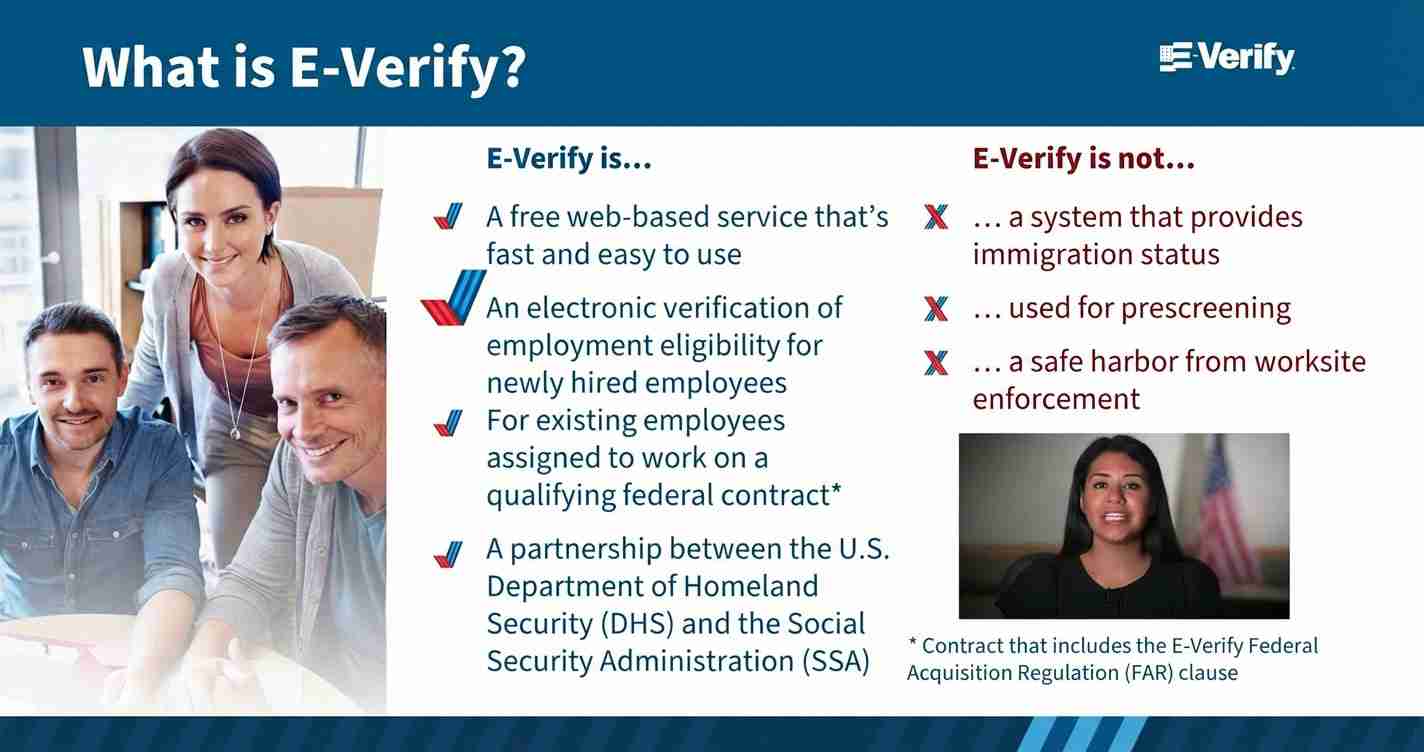
E‑Verify is a federal system run by U.S. Citizenship and Immigration Services and the Social Security Administration that checks new‑hire I‑9 information against federal records to confirm work authorization. E‑Verify+ is an enhanced implementation that ties I‑9 completion directly to the verification step and may involve photo matching between an employee’s photo and identity document. The CDPH memo says employees hired before a November cutoff may be allowed to opt out of the “+” version, while hires after that date would not have the opt‑out.
Union and employee reactions
Unions and employee groups responded quickly and critically. SEIU Local 1000 President Anica Walls said the re‑verification raises significant questions about privacy and data security and described the request as unnecessary for workers already legally employed by the state. Jacqueline Tkac, president of the California Association of Professional Scientists (UAW Local 1115), warned that E‑Verify+ is “deeply integrated with DHS databases, including systems used by ICE,” calling the request “extremely chilling.”
Workers worry that photos and personal data could be shared with federal agencies that conduct immigration enforcement.
Some employees have also expressed frustration about unclear opt‑out rules and asked the agency to extend opt‑out options to more recent hires. Anonymous staff raised concerns that the policy could hurt recruitment and retention, particularly in regions with significant immigrant communities.
Privacy and data security concerns
Labor leaders’ chief worries center on data privacy and security. E‑Verify checks information against federal databases, and E‑Verify+ can share more detailed information — possibly including biometric‑like photo matches — across agencies. Union leaders say cross‑agency sharing raises the chance that immigration enforcement could use employer‑entered data to locate workers, a risk that is heightened under a federal administration prioritizing stricter immigration enforcement.
System errors are also a concern. Critics point out false positives and mismatches in E‑Verify that can wrongly flag people as ineligible; lawmakers and national critics have cited estimates of high mislabeling rates if E‑Verify were universal, which could affect long‑term employees who already completed I‑9 forms when hired.
Legal and policy context
E‑Verify began as a voluntary federal tool in the 1990s but became required for certain federal contractors in 2009. More than 20 states now require E‑Verify for some employers, licenses, or contracts; some states have expanded requirements further. California’s labor rights office warns employers not to re‑verify workers unnecessarily or target specific groups based on national origin or immigration status. See the California Department of Industrial Relations guidance for more on worker rights and re‑verification.
What CDPH says about federal funding
CDPH has linked the verification push to the need to protect federal funding and comply with contract rules. Reporting cited contracts and projects — including work connected to the CDC’s National Death Index — that could be tied to federal grant conditions. State officials told reporters that agencies independently decide whether to use E‑Verify and framed the change as part of efforts to modernize human resources processes.
Reporting limits and unknowns
Public reporting to date relies on departmental memos and interviews obtained by outlets including Laist and CalMatters. CDPH did not publicly answer follow‑up questions before publication. It is not clear whether federal agencies will receive employee photos, what specific safeguards CDPH will use for data security, or how many employees ultimately completed enrollment.
Implications for Fresno, California
Local public health staffing: Fresno County and regional partners rely on CDPH guidance, data, and staffing support. If CDPH faces recruitment or retention problems because employees refuse E‑Verify+ or leave over privacy fears, local programs — including disease surveillance, vaccination drives, and community outreach — could see delays.
Worker trust and community access: Fresno has a large immigrant population that depends on public health services. If CDPH staff feel threatened by federal data sharing or potential immigration enforcement, they may be less able to reach vulnerable communities, reducing trust and limiting outreach in immigrant neighborhoods.
Data security and local partners: Fresno public agencies that share data with CDPH may face new questions about handling personal information and patient privacy when federal checks are involved.
Budget and services: Losing federal contracts or funding because of noncompliance could have local effects. Fresno public health programs that rely on state and federal funds could face cuts or delays if CDPH reallocates resources to meet verification rules.
Practical steps: Fresno public employees or contractors unsure of their rights should consult state labor resources, including the California Department of Industrial Relations’ Know‑Your‑Rights notice, and contact local unions or worker groups for assistance.
Reporting sources
For now, CDPH staff and labor leaders are pressing for clearer answers on who will see employee data, what safeguards will be used, and whether opt‑out rules will change. The April 10 deadline in the memo remains a focal point as unions and employees seek more information.