Newsom’s high-speed rail humiliation deepens as cost soars to $126 billion and Fresno dubs half-built project “Stonehenge”
California’s high-speed rail project has ballooned from a $33 billion promise to an estimated $126 billion, with roughly $15 billion spent, no trains running and construction limited to a Central Valley stretch between Merced and Bakersfield.
Key takeaways
- Cost escalation: The full Los Angeles–San Francisco system is now estimated at about $126 billion, up from the $33 billion figure voters saw in 2008.
- Limited progress: Roughly $15 billion spent so far, but no trains have operated and no continuous intercity track is complete — construction is concentrated in the Central Valley.
- Federal pullback: A $4.2 billion federal grant was terminated in July 2025, sparking a brief lawsuit by California that was later dropped.
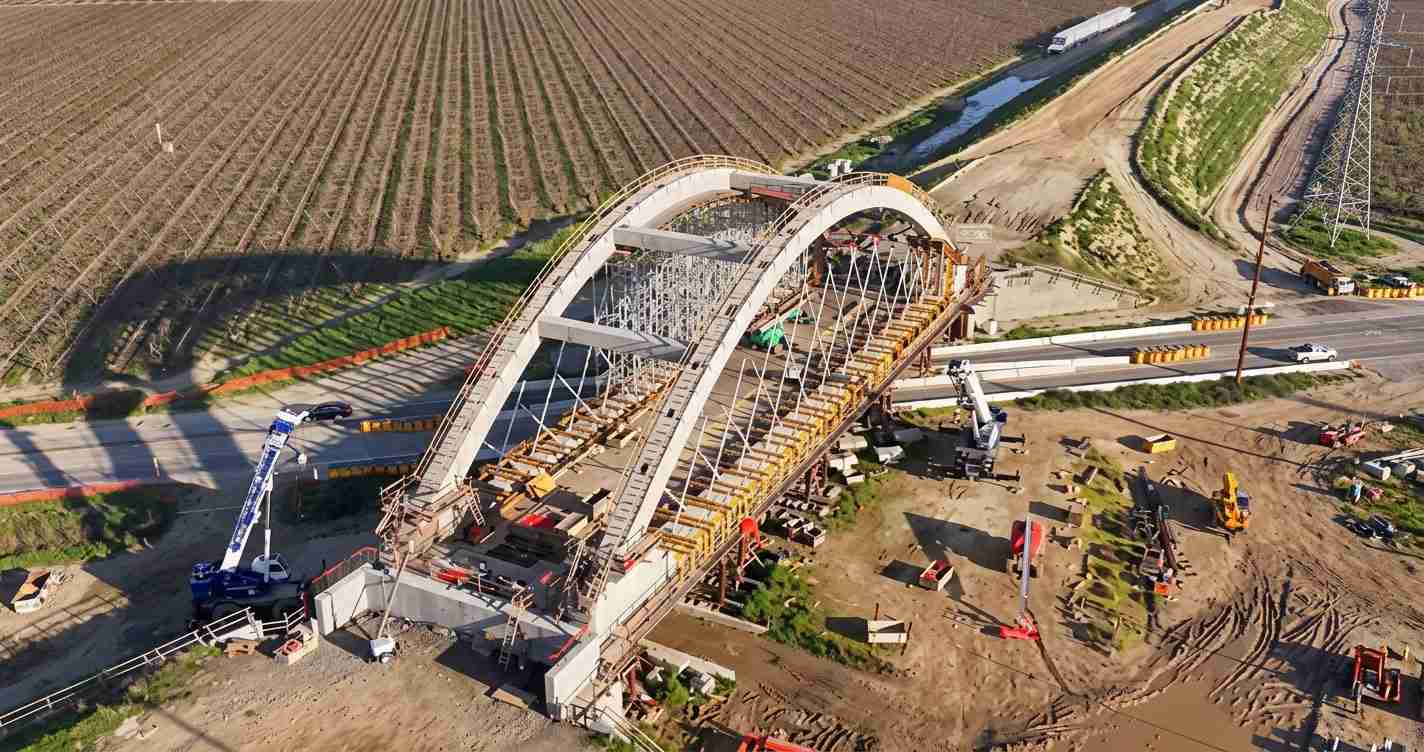
- Local symbolism: Fresno residents mock the half-built concrete columns as “Stonehenge”, a visual stand-in for stalled ambition and public skepticism.
Background and timeline of delays
The California High-Speed Rail Project began as a bold plan approved by voters in 2008 to build a roughly three-hour high-speed link between San Francisco and Los Angeles, with an advertised cost near $33 billion. Over time the envisioned network shrank while costs rose and timelines slipped. By 2019, Gov. Gavin Newsom conceded that “there simply isn’t a path from San Francisco to LA,” and the state refocused on an initial Central Valley segment between Merced and Bakersfield. (Source: Source; video briefing).
Escalating costs and the funding gap
What voters were shown in 2008 as a roughly $33 billion project has swelled to an estimated total cost near $126 billion. The state has already spent about $15 billion, but much of the remaining work lacks a clear funding plan, leaving an estimated shortfall of roughly $90 billion. Officials and analysts note the new estimate eclipses long-term federal support for passenger rail and raises hard questions about how to finish the system. (Source: Source; video briefing).
Federal funding cut and political fallout
In July 2025 the Federal Railroad Administration moved to terminate a $4.2 billion grant, concluding the California High-Speed Rail Authority would not meet agreed milestones, including key operational start dates. Transportation Secretary Sean Duffy framed the decision as protecting taxpayers from a flawed project; California filed suit but later withdrew the litigation. The episode amplified scrutiny and raised concerns about the project’s viability. (Source: Source; video briefing).
Official admissions and political critique
Officials have offered blunt assessments. California Transportation Secretary Toks Omishakin acknowledged that the state underestimated what delivery would require: “I don’t think the voters fully understood and neither did we what it was gonna take to actually get this project delivered.” Gov. Newsom’s earlier concession about lacking a path from San Francisco to LA underscores the retreat from the original promise. Critics such as Rep. Vince Fong have labeled the effort a “bait and switch,” with some lawmakers calling it emblematic of mismanagement. (Source: video briefing; Source.)
“Right now, there simply isn’t a path from San Francisco to LA.” — Gov. Gavin Newsom
(Quoted in public remarks and federal briefings.)
Progress on the ground — and the “Stonehenge” label
The most visible construction is a Central Valley corridor, where the authority advanced planning into physical work along a planned 171-mile alignment between Merced and Bakersfield. Yet the unfinished concrete pillars and foundations have drawn derision; in Fresno the half-built supports are nicknamed “Stonehenge”, an image used by critics to emphasize the project’s incompleteness. Despite visible activity, not a single passenger train has operated on continuous intercity track. (Source: video briefing).
Accountability, investigations and transparency concerns
Governance questions have dogged the project. An investigation related to the authority’s former CEO — including law-enforcement action — raised conflict-of-interest concerns and prompted public debate about oversight. Separately, state lawmakers considered proposals that some critics say would create record exemptions for the authority, potentially limiting public access to financial and contracting documents. Transparency advocates warn that such changes could make independent oversight more difficult. (Source: video report; CalMatters coverage; CapRadio report).
Implications for Fresno, California
Economic impact
Local contractors and workers have seen some benefit from construction activity, but the dramatic cost increases and funding uncertainty threaten those short-term gains. If the project stalls or funding shifts, regions that provided rights-of-way and services could face fewer construction jobs and reduced economic stimulus than once promised. Taxpayers statewide — including Fresno residents — could face bill exposure if state or local revenues are tapped to close the roughly $90 billion gap. (Source: video briefing).
Political consequences
The rail project’s troubles are likely to influence elections and political debates. Incumbents can be judged on project stewardship, while candidates may frame the program either as bold investment or costly waste. Transparency debates and investigations escalate political heat in Fresno and across the Central Valley. (Source: Source; video briefing.)
Social effects
Commuters and residents who anticipated expanded transit options may feel disappointment and mistrust. With the earliest projected opening for the first Central Valley segment pushed to about 2033, drivers and bus riders should expect to rely on existing roads and conventional rail for the foreseeable future. Local businesses that planned for increased station-area foot traffic could need to revise growth strategies. (Source: video briefing.)
Cultural relevance
The “Stonehenge” nickname captures a local, cultural shorthand: visible reminders of a grand plan stand, but the train itself has not arrived. For some residents this symbolizes skepticism toward large government projects; for others it leaves open the possibility of retooling and reconstructing a viable plan if funding and oversight improve. (Source: video briefing.)
Practical applications for daily life
Short-term expectations: Fresno residents should not expect operational high-speed rail service in the near term. Planners and local officials may prioritize alternative projects with clearer funding and faster timelines to improve mobility, such as regional bus improvements, highway upgrades or conventional rail enhancements. Contingency planning is critical to maintain commuter mobility while the future of high-speed rail is debated. (Source: video briefing.)
Sources and further reading
- U.S. Department of Transportation: Secretary Sean P. Duffy op-ed and briefing
- Commerce Committee release on federal funding and oversight
- Reporting and interviews summarizing project status (video)
- Investigation coverage regarding the former CEO (video)
- CalMatters: coverage of proposed record exemptions and transparency concerns
- CapRadio: reporting on transparency and record-access debates