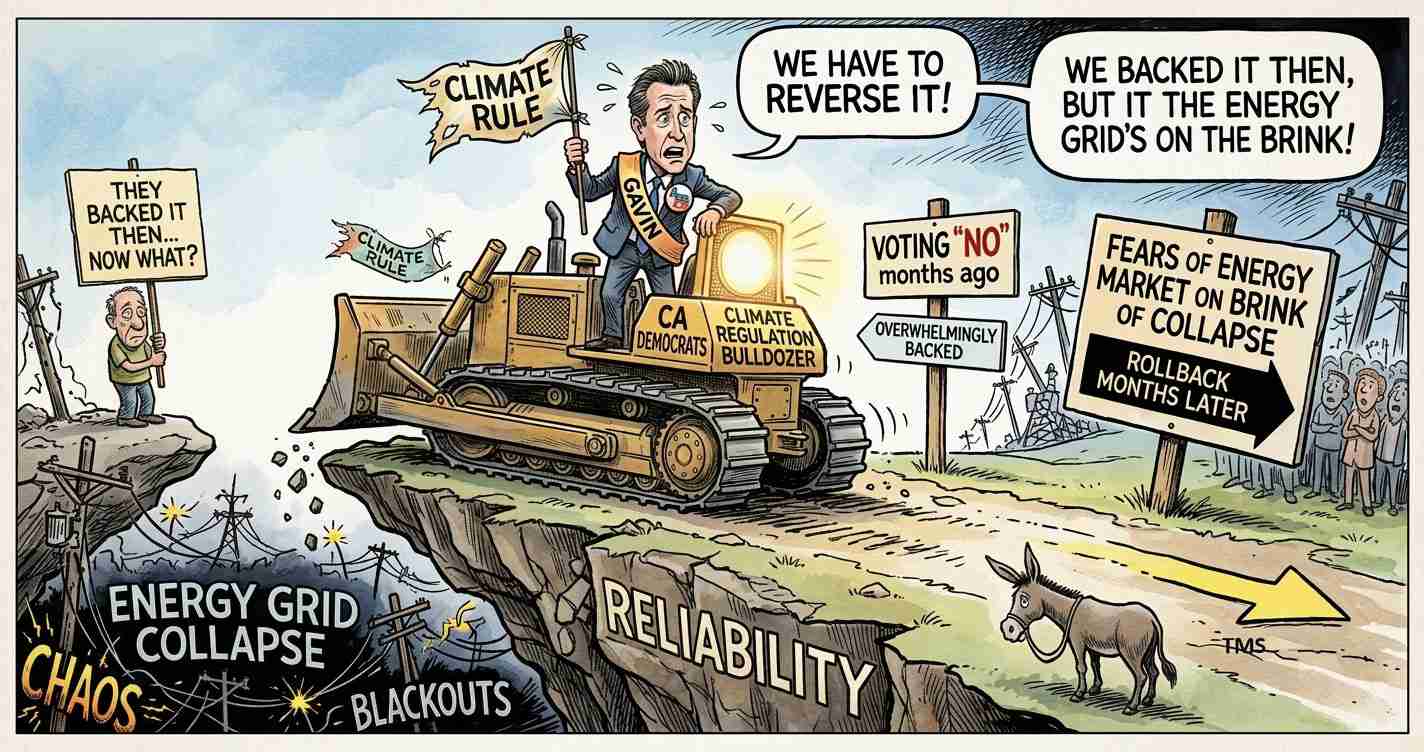
Democratic Lawmakers Who Backed Cap-and-Invest Urge CARB to Rethink Fuel, Power Rules Ahead of May Vote
Fifteen California Democratic Assemblymembers asked the California Air Resources Board on March 23, 2026, to reconsider proposed cap-and-invest amendments, warning the changes could destabilize fuel and power markets and raise energy costs for families before a May vote.
- Lawmakers who backed reauthorization now request delay: 15 Democratic Assemblymembers urged CARB to “go back to the drawing board” on fuel and electricity coverage changes.
- Supply and cost risks: The group warned proposed amendments could create chronic supply imbalances, long-term market instability, and higher energy bills for households.
- Political and regional stakes: The letter from majority-party members complicates CARB’s path to a May vote and heightens scrutiny of economic modeling, with specific concerns for regions like Fresno.
Sacramento, California (Times Media Service) — Overview
What happened: On March 23, 2026, a group of 15 Democratic Assemblymembers sent a formal letter to CARB asking regulators to pause or revise proposed amendments to California’s cap-and-invest program that would expand how fuels, gas and electricity are covered.
What the lawmakers asked CARB to do
A coalition of Assemblymembers who voted last year to reauthorize the program told CARB to “go back to the drawing board” on proposals changing coverage of fuels and electricity, citing risks that the state’s energy transition may be moving faster than infrastructure and markets can handle.
The March 23 letter was signed by Assemblymembers Blanca Rubio, Michelle Rodriguez, Jose Luis Solache, Stephanie Nguyen, Lisa Calderon, Juan Carrillo, James Ramos, Lori Wilson, Blanca Pacheco, Maggy Krell, Esmeralda Soria, Tina McKinnon, Cecilia Aguiar-Curry, Anamarie Avila Farias and Mike Gipson. The lawmakers urged CARB to pause or revise aspects of the proposal that target fuels and electricity until additional analysis is complete and emphasized impacts on families already facing high energy costs.
The core concerns — supply, costs and timing
The lawmakers argue that ambitious climate policy must be balanced with realistic assessments of infrastructure readiness and market realities. Their letter warned:
“An energy transition that outpaces infrastructure readiness, market realities, and technological feasibility risks creating chronic supply imbalances and long-term market instability.”
Industry groups and oil companies have echoed the warning. Public statements from firms including Chevron contend the proposal could raise gasoline prices by more than $1 per gallon by 2030 due to higher compliance costs for refiners and pressure on tight fuel supplies, potentially prompting refinery closures or relocations.
CARB’s position and legal context
CARB defends the program as the most cost-effective tool to meet California’s legally required greenhouse-gas reduction targets. The cap-and-invest system caps emissions from major polluters and requires companies to buy allowances; revenue supports clean-energy and community projects.
Last September, the Legislature reauthorized and updated the program and directed CARB to revise implementing rules. The proposed amendments would tighten emission limits through 2030 and reduce available allowances to accelerate emissions reductions, steps CARB says are necessary to meet statutory goals.
Note: the March 23 letter is addressed to CARB’s chair; reporting indicates the letter was sent to Chair Laine Farber.
Political stakes and the coming CARB vote
CARB plans a board vote on the proposal in May 2026, with final rules expected later in the year. The letter from members of the Democratic majority who originally supported the September 2025 reauthorization complicates the political dynamics and could influence how CARB frames technical analyses and economic modeling before the vote.
Republicans and some oil-industry advocates have also criticized the proposal, increasing public scrutiny ahead of the vote.
Industry warnings and consumer impact estimates
Oil companies emphasize risks to domestic refining capacity. Chevron and others argue that compliance costs and tighter limits could reduce refinery output and raise gasoline prices by over $1 per gallon by 2030. The lawmakers cite these industry estimates as part of their concern for household energy costs and regional job security.
Recent market disruptions have already pushed pump prices higher; California saw a roughly $0.50 per gallon increase earlier this year amid global tensions and market shifts, underscoring the lawmakers’ urgency.
Where the data and debate still need work
Reporting to date largely relies on the lawmakers’ public letter, industry statements and CARB responses; there is limited availability of full primary documents in some accounts. Analysts and some lawmakers request more detailed CARB modeling that explicitly shows effects on supply, refinery economics, and household bills over time.
CARB typically provides environmental and economic impact analyses prior to board votes; the lawmakers ask that such analyses fully account for market realities, infrastructure limitations, and impacts on low-income residents and essential services.
Implications for Fresno, California
Economic impact: Fresno and the San Joaquin Valley could be affected if refiners reduce output or close, or if higher fuel costs increase transportation and goods prices. The Valley’s agricultural and distribution sectors are sensitive to fuel and electricity costs, which could squeeze farm margins and raise costs for trucking, fertilizer and irrigation.
Jobs and industry: Local refinery-related jobs, trucking, and distribution work are vulnerable if refining activity scales back. Conversely, cap-and-invest revenue funds clean-energy projects that could create jobs in renewables, efficiency retrofits, and EV infrastructure if investments target the Valley.
Household budgets: Many Fresno households already face high energy costs; lawmakers stress that low- and middle-income families would be hit hardest by additional price increases, compounding living-cost pressures in a region with below-state-average incomes.
Energy reliability: Supply imbalances could cause local outages or price spikes during peak demand if fuel and electricity transitions outpace grid and fueling infrastructure upgrades, potentially stressing local services and emergency responders.
Practical next steps: Fresno-area leaders may seek CARB-provided, region-specific analyses of job, cost and supply impacts and push for cap-and-invest revenue to be directed to the Valley’s energy and workforce needs, including incentives for refineries to invest in cleaner technologies.
Sources and reporting
This report draws on coverage from multiple outlets and public materials. Full source links below provide the public record cited in reporting:
Reporting continues as CARB moves toward its May vote; the links above reproduce the lawmakers’ letter text, industry statements, and CARB responses that form the public record to date.