
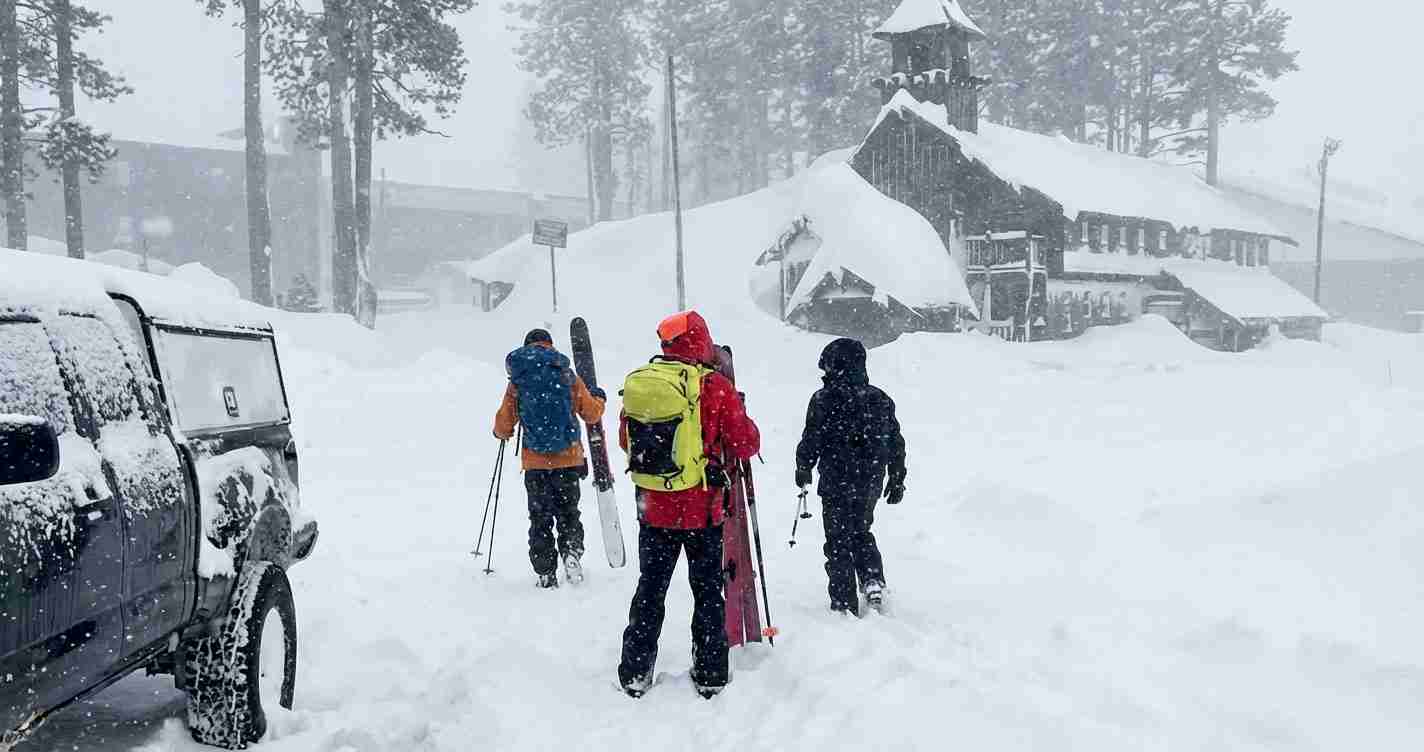
Deadly Sierra avalanche near Lake Tahoe kills eight; one missing
An avalanche near Frog Lake and Castle Peak on Feb. 17, 2026, killed eight backcountry skiers and left one missing during a major Sierra storm — the deadliest U.S. avalanche in over 40 years amid an active warning.
- Casualties: Eight confirmed dead, one missing and presumed dead; six survivors rescued after hours.
- Group: 15 people on a three-day backcountry ski trip — 11 participants and 4 guides from Blackbird Mountain Guides.
- Conditions: A multi-day storm dropped 3–6 feet in some areas and the Sierra Avalanche Center moved from a watch to a warning.
- Response: Rescue shifted to recovery amid ongoing avalanche danger; investigators are probing decision-making and communications.
Key information
Date and location: Feb. 17, 2026, near Frog Lake and Castle Peak in the Sierra Nevada, near Lake Tahoe. (Wikipedia: 2026 Lake Tahoe avalanche; Los Angeles Times: Sierra avalanche disaster and victim profiles)
Casualties: Eight killed, one missing and presumed dead; six survivors were rescued after hours. (Wikipedia: 2026 Lake Tahoe avalanche)
Group: Fifteen people — 11 clients and four guides from Truckee-based Blackbird Mountain Guides — were on a three-day guided backcountry ski trip. (Wikipedia: 2026 Lake Tahoe avalanche; Los Angeles Times: Sierra avalanche disaster and victim profiles)
Weather and warning status: A major storm delivered heavy snowfall; the Sierra Avalanche Center first issued a watch and later upgraded to a warning as conditions deteriorated. (Wikipedia: 2026 Lake Tahoe avalanche)
What happened
The group began the trip on Feb. 15 and was finishing the trek on Feb. 17 when a large slab of snow — described by officials as roughly the size of a football field — released and swept over skiers near the trailhead. Rescue calls reached authorities at about 11:30 a.m. that day. Capt. Russell “Rusty” Greene of the Nevada County sheriff’s office said someone yelled “Avalanche!” but the group had little time to react. (Wikipedia: 2026 Lake Tahoe avalanche)
Search-and-rescue teams arrived in worsening conditions around 5:30 p.m. They found six survivors huddled under a tarp and using emergency beacons and mobile phone signals; two survivors were taken to hospitals for injuries. Due to extreme weather and continued avalanche danger, operations shifted from rescue to recovery after eight victims were located and one person remained unaccounted for at last report. (Wikipedia: 2026 Lake Tahoe avalanche; Los Angeles Times: Sierra avalanche disaster and victim profiles)
Who was in the group
The tour included four guides from Truckee-based Blackbird Mountain Guides and 11 clients. Authorities said three of the four guides are presumed dead. Victims ranged in age from about 30 to 55 and included both men and women; local reporting identified several of those killed as close friends and mothers who loved backcountry skiing. Families and friends described some victims as skilled, experienced outdoorspeople. (Wikipedia: 2026 Lake Tahoe avalanche; Los Angeles Times: Sierra avalanche disaster and victim profiles)
Six women identified publicly — Carrie Atkin, Liz Clabaugh, Danielle Keatley, Kate Morse, Caroline Sekar and Kate Vitt — were described as friends who had traveled together from the Bay Area and other parts of the West. The Sugar Bowl Academy noted ties between some victims and its community but did not release names. (Wikipedia: 2026 Lake Tahoe avalanche; Los Angeles Times: Sierra avalanche disaster and victim profiles)
Weather, forecasts and warnings
A powerful winter storm began on Feb. 15 and intensified through Feb. 17. Reports indicate up to 30 inches in 24 hours at Boreal Mountain near Castle Peak, with intense snowfall rates in some areas. The Sierra Avalanche Center issued a watch at 6:49 a.m. on Feb. 17 warning that large avalanches were likely in the next 24 to 48 hours; hours later it upgraded the advisory to a warning, saying avalanches were expected. (Wikipedia: 2026 Lake Tahoe avalanche)
Investigative focus: Sheriff Shannan Moon said investigators would review why the trip proceeded despite the forecast. Blackbird Mountain Guides issued a statement that guides monitored conditions and used base communications, but it remained unclear whether guides had received the updated warning before or during the outing. The timing of updates, backcountry communications and rapidly changing weather are central questions. (Wikipedia: 2026 Lake Tahoe avalanche; Los Angeles Times: Sierra avalanche disaster and victim profiles)
Rescue and recovery operations
Nevada County Search and Rescue and Tahoe Nordic Search and Rescue led response efforts in blizzard conditions. Teams faced deep snow, high winds and persistent avalanche danger, and used snowmobiles, aircraft and other tools when it was safe to do so. Crews located eight bodies but were initially unable to retrieve them because of unsafe conditions; one person remained unaccounted for as of late reporting. (Fox News: Coverage of rescue efforts; Wikipedia: 2026 Lake Tahoe avalanche)
Forest closures: The U.S. Forest Service closed Tahoe National Forest lands and trails around Castle Peak through March 15 to protect public safety and allow crews space to operate. Forest Supervisor Chris Feutrier emphasized responder safety and bringing victims home. (Fox News: Coverage of rescue efforts)
Victims’ families and community response
Communities from the Bay Area to Truckee expressed shock and grief. Family statements described victims as passionate skiers and devoted parents; many requested privacy as they cope. Rescuers and volunteers received public praise for long hours in dangerous conditions. The disaster has reverberated through ski clubs, guiding groups and rescue teams across the region. (Los Angeles Times: Sierra avalanche disaster and victim profiles)
Questions investigators will examine
Authorities said they will review several factors as part of the investigation, including:
- What information guides had about conditions and when they received updates to the Sierra Avalanche Center advisory.
- The decision-making process by guides and clients to start and continue the trek amid deteriorating weather. (Los Angeles Times)
- Whether safety protocols, route choices and group spacing followed industry standards.
- How quickly rescue resources could reach the site and whether earlier contact might have improved survival chances.
Officials said the mission shifted from rescue to recovery because the storm and avalanche danger made further search operations too risky — a difficult balance between rapid response and responder safety. (Wikipedia: 2026 Lake Tahoe avalanche)
Background on avalanche risk and backcountry travel
Avalanches occur when snow layers lose strength and slide; heavy snowfall, wind-loading and unstable layers increase risk. Avalanche advisories use set levels — a watch signals likely large avalanches in 24–48 hours while a warning means avalanches are expected. Backcountry travel depends on education, planning and constant hazard assessment; even experienced skiers and professional guides face danger when conditions change quickly. (Wikipedia: 2026 Lake Tahoe avalanche)
Implications for Fresno, California
Economic impact
Fresno serves as a regional hub for travelers heading to Sierra recreation. The Castle Peak avalanche and subsequent forest closures could reduce winter tourism and lodging demand for several weeks, affecting shuttles, guides and hospitality businesses that serve Sierra visitors. Local gear shops and outdoor service providers that rely on Lake Tahoe recreation may also see cancellations and lower bookings. (Los Angeles Times)
Public safety and emergency services
Fresno County search-and-rescue and emergency planners will likely review local protocols for supporting Sierra operations. The incident highlights the need for coordination between county, state and volunteer teams during large storms, and the importance of clear public messaging about backcountry risk for Fresno residents traveling to the Sierra. (Wikipedia: 2026 Lake Tahoe avalanche)
Community and social effects
Many Fresno families have ties to the Sierra and Lake Tahoe communities; losses will affect schools, clubs and social networks. Local organizations, churches and outdoor groups may provide support, counseling and fundraising for affected families. The tragedy could prompt expanded avalanche awareness, beacon-use training and group risk-assessment practice in the Fresno area. (Los Angeles Times)
Policy and industry implications
The deaths will likely spark conversations among Fresno outfitters, guide services and recreation officials about best practices. Investigations and public scrutiny may focus on how guides communicate evolving warnings, client vetting, go/no-go decisions, emergency communications, insurance and liability measures. Fresno-based outfitters that run Sierra trips may revisit emergency plans and training. (Wikipedia: 2026 Lake Tahoe avalanche)
Practical advice for residents
Fresno residents planning Sierra travel should: check avalanche forecasts from the Sierra Avalanche Center, carry and know how to use avalanche beacons, probes and shovels, and consider delaying travel during warnings. Local clubs should offer refresher safety courses and beacon-search practice to maintain readiness. (Wikipedia)
Sources and further reading
- Wikipedia: 2026 Lake Tahoe avalanche
- Los Angeles Times: Sierra avalanche disaster and victim profiles
- Fox News: Coverage of rescue efforts and community response
Investigators continue to collect evidence and interview survivors and guides to determine how a guided group traveling during a major storm and an active avalanche warning suffered such devastating losses. The search for the missing person and reviews of decision-making and safety practices are ongoing as mountain communities and nearby cities like Fresno reckon with the tragedy. (Wikipedia; Los Angeles Times)
