
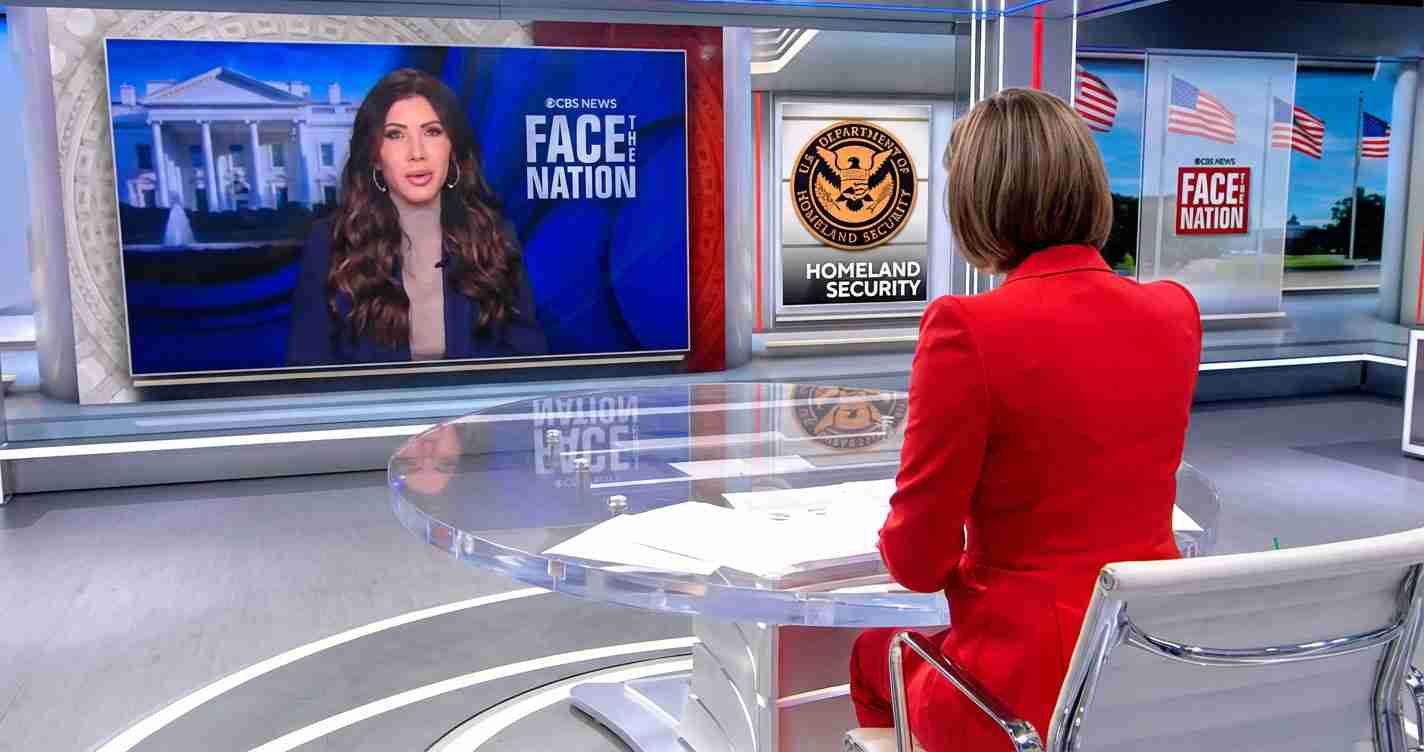
Noem Defends ICE Agent Jonathan Ross After Renee Good Shooting; CBS Interview Exchange Unverified as Questions Mount Over Aftermath
On Jan. 7, 2026, ICE Agent Jonathan Ross shot and killed Renee Good in Minneapolis; Ross was treated for internal injuries and has not returned to work. Homeland Security Secretary Kristi Noem publicly defended him amid verification questions.
- Agent identified: ICE Agent Jonathan Ross is reported to have shot and killed Renee Good on Jan. 7, 2026, in Minneapolis — see Wikipedia: Killing of Renee Good.
- Agency position: Federal officials say Ross acted in self-defense after Renee Good’s vehicle moved toward the officer, according to CBS News.
- Injuries and status: Ross suffered internal bleeding, was treated and released the same day, and has not returned to active duty (CBS News).
- Verifiability: Reports that Secretary Noem told CBS anchor Margaret Brennan “Don’t say his name” in a Sunday interview — and an “8,000‑percent” threats figure — remain unverified in available transcripts and published coverage.
What happened in Minneapolis
Federal and local accounts say the encounter began on Jan. 7, 2026, when Immigration and Customs Enforcement agents were at a location in Minneapolis. Authorities say Renee Good’s vehicle moved toward or struck an ICE agent, and the officer fired his weapon. Officials have identified the agent as ICE Agent Jonathan Ross (Wikipedia: Killing of Renee Good).
Federal officials told reporters the agent believed he acted in self-defense. CBS News reported that Ross suffered internal bleeding to the torso, was treated and released from the hospital the same day, and has not returned to active duty (CBS News).
Noem’s public defense of the agent
Homeland Security Secretary Kristi Noem has publicly defended Ross, calling him “an experienced law enforcement officer who believed he was defending himself and fellow agents,” according to CBS News. Noem framed the shooting within officer safety concerns and the challenges of volatile encounters.
Unverified exchange: Widely shared social posts attribute an admonition — “Don’t say his name” — to Noem during a CBS interview with Margaret Brennan and cite an “8,000‑percent increase in death threats.” Those exact lines do not appear in the available reporting or transcripts reviewed for this article; further verification would require an official transcript or interview video.
Media coverage and verification questions
Major outlets, including CBS News, have reported on Ross’s injuries and Noem’s defense. The broader account of the killing has been summarized in public sources such as Wikipedia: Killing of Renee Good.
Because news organizations and official transcripts are standard for verifying on‑the‑record comments, the absence of such documentation means the line attributed to Noem in some social posts should be treated as unconfirmed.
Threats to officers and law enforcement safety
Officials have said the agent involved has received threats; CBS News cited Border Patrol Commander Gregory Bovino saying the agent “has had several threats against his life” (CBS News).
This raises the familiar tension between transparency and officer safety: advocates stress accountability through naming officers, while law enforcement groups warn naming can fuel harassment and danger.
Legal and investigative status
As of the latest reporting, federal and local authorities are investigating. Public accounts indicate authorities have characterized the shooting as self-defense by the officer, but investigations and any potential legal proceedings remain ongoing. No final determinations or public court filings were reported in the sources reviewed (CBS News; Wikipedia: Killing of Renee Good).
Why some facts remain unsettled
High‑profile federal agent shootings frequently produce fast‑moving coverage, competing narratives, and social media speculation. Press conferences, agency statements, witness accounts, body‑camera footage, and official reports can arrive at different times and sometimes contradict early claims. The specific CBS interview wording attributed to Secretary Noem is not present in the reviewed transcripts and articles; verification requires an official transcript or video.
Implications for Fresno, California
Although the shooting took place in Minneapolis, national stories about ICE operations can affect communities like Fresno in several ways:
Economic impact
- Federal presence and funding: High‑profile ICE incidents can influence congressional attention and funding debates, potentially shifting resources or oversight that affect local programs.
- Local business and tourism: Protests near federal facilities could disrupt traffic and business in affected neighborhoods, though long‑term economic effects are typically limited.
Political consequences
- Pressure on leaders: Fresno elected officials may face calls to respond on policy and transparency.
- Policy debates: The incident could reignite debate over local cooperation with ICE, sanctuary policies, and use of local resources for federal immigration work.
Social effects
- Community trust: News of the shooting can heighten fear and mistrust among immigrant families, reducing cooperation with authorities and services.
- Protests and civic action: Fresno activists and groups may organize demonstrations, town halls, and requests for independent oversight.
Cultural relevance and practical applications
- Values and debate: The story touches on safety, fairness, and treatment of vulnerable people — themes central to Fresno’s diverse electorate.
- Practical steps for residents: Know local legal aid and advocacy resources, attend public meetings, and seek clear statements from local officials about ICE interactions.
Reporting notes and sources
This article draws on available reporting and public records. Key sources include CBS News reporting and a compiled entry on Wikipedia: Killing of Renee Good. Specific reported exchanges from a CBS interview — including the line “Don’t say his name” and an “8,000‑percent” increase figure attributed to Noem in some social posts — were not found in the transcripts and remain unverified.
We will continue to update this story as official transcripts, videos, or investigative findings become available for verification.



