
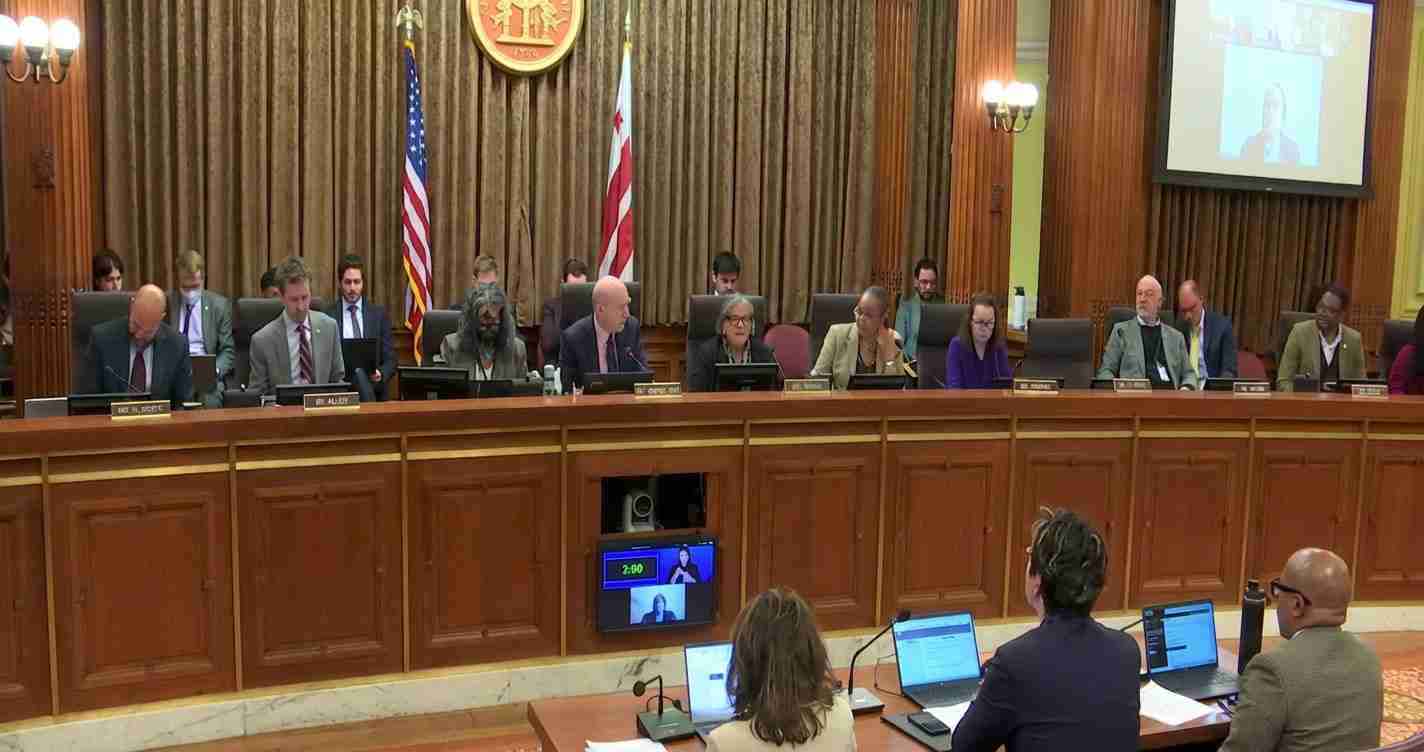
House votes to block D.C. tax move tied to Trump’s “One Big Beautiful Bill Act”; debate centers on city revenue loss
The House passed legislation Feb. 4, 2026, to block Washington, D.C.’s effort to decouple from parts of President Trump’s One Big Beautiful Bill Act, a move local officials say could cost the city about $600 million in revenue.
Key takeaways
- House vote: The House approved the measure 215–210 on Feb. 4, 2026, along party lines; bill sponsored by Rep. Brandon Gill (R-Texas). (Source)
- D.C. decoupling: D.C.’s council passed a law to decouple from federal changes that would eliminate some taxes and alter credits, aiming to protect roughly $600 million in local revenue. (Source)
- Policy effects: Policies at issue include elimination of taxes on tipped and overtime wages, business tax cuts, and restoration/expansion of the Child Tax Credit and Earned Income Tax Credit locally. (Source)
- Local impact: D.C. leaders and advocates warn the House action could cause confusion during tax season and force cuts to social programs, schools and public safety funding. (Source)
Background: What the D.C. local tax measure would do
The D.C. Council enacted a local law intended to decouple the District from several provisions of the One Big Beautiful Bill Act. Council members said the federal changes would sharply reduce the District’s tax base and force cuts to city services.
Under the local measure, D.C. would restore the Child Tax Credit and expand the Earned Income Tax Credit on district tax returns, while refusing to adopt federal provisions that eliminate taxes on tipped and overtime wages and that provide certain business tax breaks. City officials estimate the net effect could shrink local revenues by roughly $600 million. (Source)
Proponents’ case and local advocacy
Supporters of D.C.’s approach said the decoupling was meant to protect vital local programs and preserve fiscal stability while federal policy shifts take effect. Local advocacy groups — including DC Vote, the DC Fiscal Policy Institute and Free DC — warned that families already filing taxes could be affected and that congressional action would disrupt the tax season. (Source)
House vote and sponsorship
Rep. Brandon Gill (R-Texas) sponsored the House bill to prevent D.C. from implementing its decoupling plan. The measure passed on a strict party-line vote, 215–210. Gill told Fox News Digital he did not expect any Democrats to support the bill. (Source)
“Supporters argued federal tax law should be applied uniformly and framed the vote as ensuring benefits reach ordinary workers and small businesses.”
Revenue impact and opposition from local leaders
D.C.’s Delegate Eleanor Holmes Norton and other local leaders sharply criticized the House action as federal overreach into local governance and finance. Senator Chris Van Hollen (D-Md.) and fiscal analysts warned the full application of the federal bill in the District could create an estimated $600 million budget shortfall. (Source)
Local advocates also flagged practical concerns: many taxpayers had already filed claiming credits the D.C. measure sought to preserve, and sudden congressional intervention could cause confusion, delay refunds and create compliance problems for filers and tax officials during a critical season. (Source)
Legal and constitutional questions
The clash highlights long-standing constitutional issues: Congress has authority over D.C., but using that power to overturn a local tax decision is politically sensitive. Critics call it direct congressional interference in local affairs; supporters argue federal law should not be selectively applied by a local government. The dispute raises potential court challenges and political debate about the proper reach of congressional authority.
Implications for Fresno, California
While Fresno’s budget is not directly affected by the House vote on D.C. taxes, the broader debate over the One Big Beautiful Bill Act and limits on local decoupling could matter indirectly:
- Economic: Some Fresno households might see lower federal tax liabilities if the law is broadly applied, increasing disposable income. State-level policies in California may blunt or preserve local supports.
- Political: Local leaders and candidates may use the D.C. fight as an example in debates over local control versus federal intervention.
- Social: Changes to tax credits can alter household budgets for families relying on refunds; California’s supplemental policies could mitigate impacts for many Fresno residents.
Practical advice for Fresno residents
- Tax filing: Follow guidance from the IRS and the California Franchise Tax Board; watch for updates during tax season.
- Local services: Monitor city and county budget discussions in case similar shortfalls emerge locally and require adjustments.
- Engagement: Attend council meetings and use local elections to influence how officials respond to state and federal tax shifts.
Sources and attribution
Reporting in this article is based on congressional coverage and statements from D.C. officials and advocates. Key source: video summary and reporting compiled at the linked coverage, which includes the House vote, remarks from Rep. Brandon Gill and statements by D.C. leaders and advocacy groups.



