
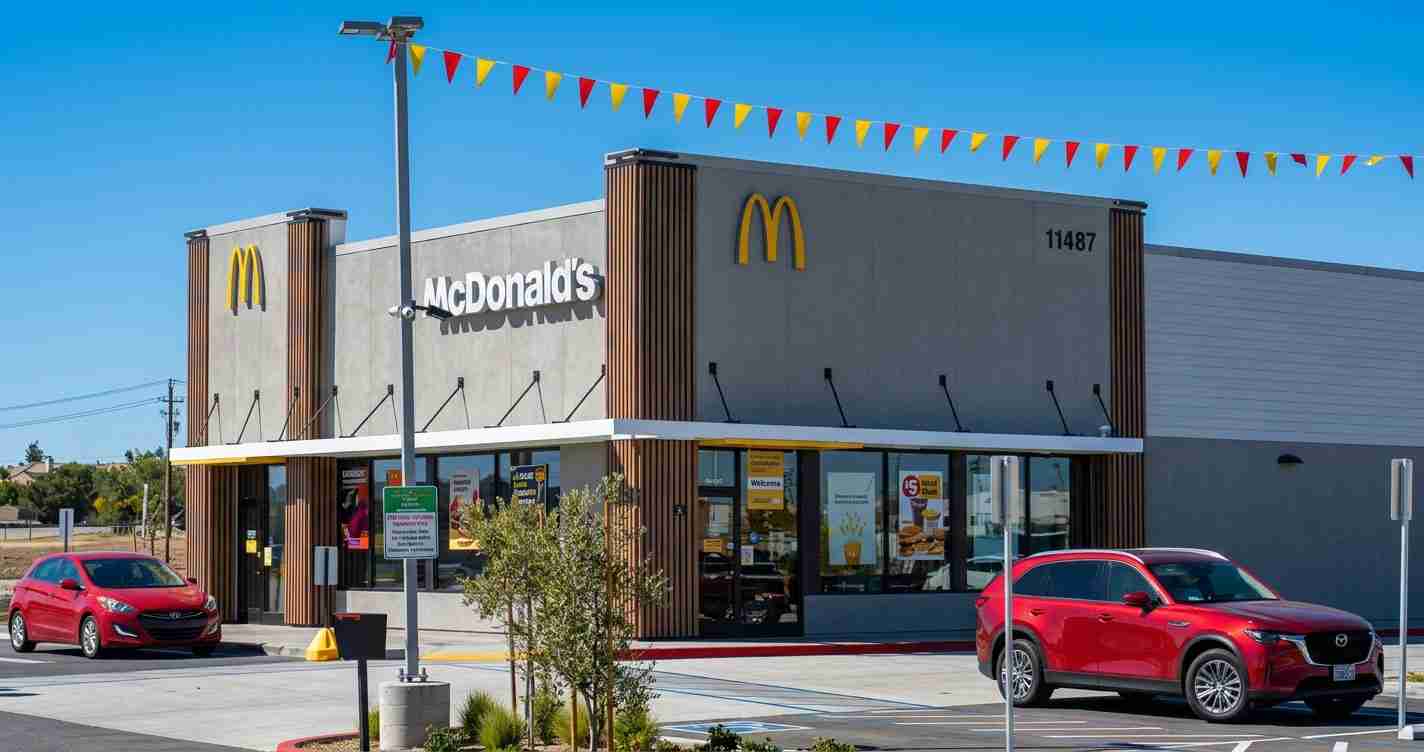
McDonald’s to End Self-Serve Soda Fountains Nationwide by 2032, Citing Safety, Consistency and Efficiency
McDonald’s will remove self-serve soda fountains from U.S. restaurants by 2032, transitioning nationwide to crew-poured beverages during remodels to improve consistency, food safety and operational efficiency as digital and drive‑thru orders grow and reduce maintenance and theft issues.
- Phase-out plan: Crew-poured beverages replacing self-serve fountains during remodels — completion targeted by 2032 (Business Insider, Fox Business, YouTube).
- Reasons cited: Consistency across channels, improved food safety, and reduced maintenance/theft (Business Insider).
- Operational shift: Rollout tied to remodels, aligning beverage service with drive‑thru, delivery and kiosk-focused restaurant designs (Business Insider, YouTube).
Behind the decision: why McDonald’s is shifting away from self-serve soda
Executives and franchisees say crew-poured drinks create a uniform experience whether customers order via app, kiosk, drive‑thru or in the dining room, helping with quality control and inventory tracking. Consistency across ordering channels is a primary rationale (Business Insider).
Food safety and reduced contact
After COVID‑19, shared touchpoints were re-evaluated industrywide. McDonald’s notes that crew-pour systems — including some automated crew-pour equipment — limit direct customer contact with dispensers and may lower contamination risk (reporting and video coverage: YouTube).
Theft prevention and maintenance savings
Self-serve fountains have been vulnerable to abuse (unauthorized refills) and require frequent upkeep. Crew-poured service allows portion control, reduces spills and sticky floors, and cuts machine repair needs (Business Insider, Fox Business).
What customers will notice
The most visible change is the reduced ability to get free, unlimited self-serve refills. Dine‑in guests can still request refills from crew, but the easy habit of walking to a fountain and topping off drinks will disappear in remodeled restaurants. Some locations (examples in Illinois and parts of California) already serve drinks behind the counter (Business Insider, YouTube).
Customization limits: Customers who mixed flavors or added extra ice may see those options reduced or handled by staff, which could affect convenience for families seeking quick refills.
How the rollout will work
McDonald’s plans a remodel-driven, phased rollout through 2032. Any store undergoing updates may remove its fountain and install behind-the-counter dispensers or automated crew-pour equipment. The timeline spans roughly six years from early 2026 reports, allowing franchisees to spread costs across renovation cycles (Business Insider, YouTube).
This change is framed as part of broader modernization that favors drive‑thru, delivery and kiosk ordering, simplifying front-of-house layouts and shifting crew duties to support takeout and delivery (Business Insider, Fox Business).
Industry context: broader fast food operational changes
The move aligns with an industry trend toward speed, digital ordering and drive‑thru optimization that accelerated during the pandemic. Chains have redesigned kitchens, added double drive‑thrus and leaned on apps and delivery partners; centralizing beverage service fits this efficiency-and-consistency pattern (Business Insider, Fox Business).
Beverage strategy and menu changes
McDonald’s has signaled growth in its beverage lineup — teasing new Refreshers and crafted sodas:
“Our fans’ love for McDonald’s beverages runs deep. Next month, we’re building on that passion with a new era of beverages, featuring a variety of Refreshers and crafted sodas rolling out nationwide.”
Company-provided messaging suggests menu expansion will accompany the crew-pour approach, giving the brand more control over portioning and presentation.
Voices from franchisees and customers
Franchisees report calmer dining rooms and fewer messes, plus lower maintenance costs. Customers are split: some will miss fountain perks; others, especially drive‑thru and pickup users, may barely notice (Business Insider).
Implications for Fresno, California
Economic impact
Fresno-area franchisees could see lower equipment and maintenance costs and improved beverage margins. Remodel-driven rollouts may create short-term construction work and favor locations on major roads for early updates (Business Insider, Fox Business).
Political consequences
Locally, public health officials may welcome fewer shared touchpoints. Labor impacts are likely to shift tasks (crew pouring drinks) rather than eliminate roles, though long-term employment needs may change with a focus on drive‑thru and delivery (Business Insider).
Social effects
For Fresno families, losing easy fountain refills may feel like the removal of a small perk. Schools or group visits should plan for staff-assisted refills. Customers favoring contactless pickup may appreciate faster, consistent beverage prep (Business Insider, YouTube).
Practical applications for residents and managers
Fresno customers should expect changes when their local McDonald’s is remodeled. If a fountain remains now, it may be replaced during an update. Dine-in patrons seeking refills should ask staff; managers can retrain crew on beverage prep and promote new drink offerings as they appear (Business Insider, Fox Business).
Sources
- Business Insider — Reporting on McDonald’s phasing out self-serve soda fountains
- Fox Business — Coverage of the change
- YouTube — Video report
- Company beverage signal provided in reporting materials.



