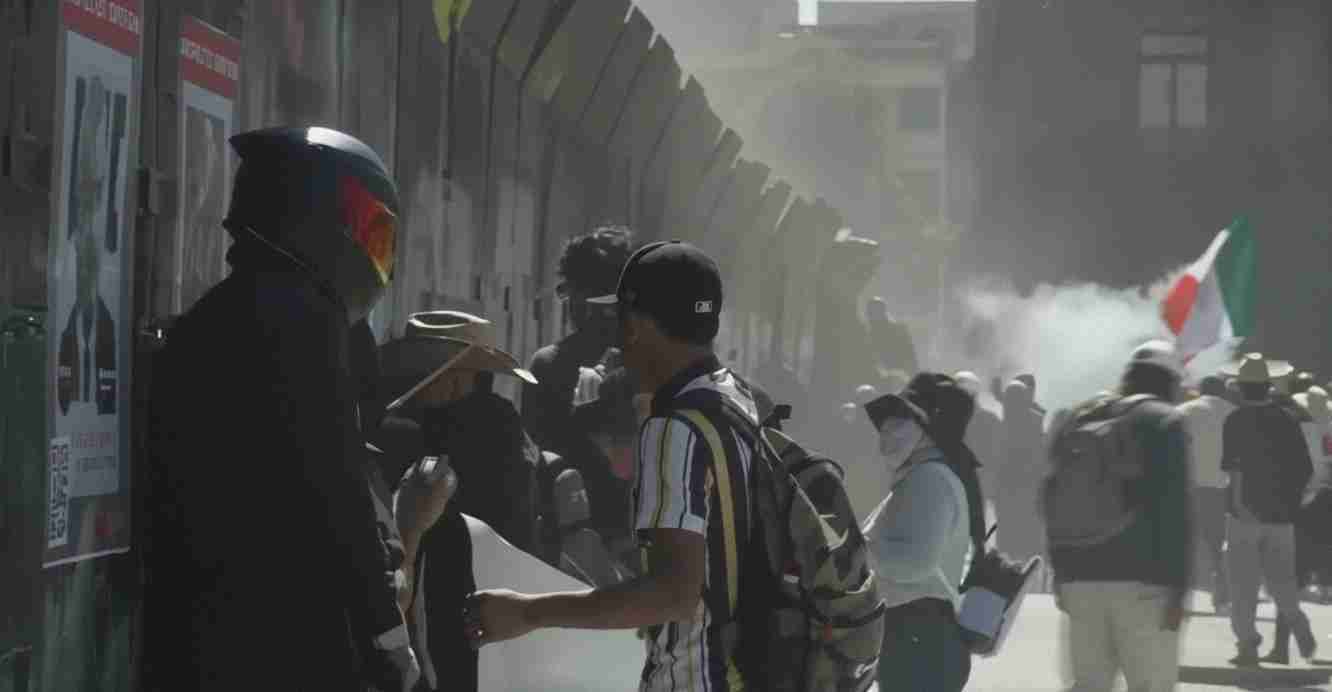
Protesters Attack Police, Breach Barrier at Mexico’s National Palace in Mass Rally Over Cartel Violence
Thousands clashed with police outside Mexico City’s National Palace on November 15, 2025, after the assassination of Uruapan Mayor Carlos Manzo, prompting tear gas, broken barriers and nationwide youth-led protests demanding action against cartel violence and impunity.
- Mass rally: Demonstrators pressed metal barricades and briefly breached security lines at the National Palace in Mexico City.
- Youth-led symbolism: Gen Z activists carried One Piece pirate flags and straw hats, blending pop-culture imagery with political protest (Times of India; The Straits Times).
- Broader impact: Similar demonstrations appeared in other Mexican cities and prompted concern about government responses, public safety, and civic protection.
What happened at the National Palace
On November 15, 2025, thousands poured into the Zócalo outside the National Palace. Video and eyewitness accounts describe groups pushing on metal barricades; some protesters reached security lines and struck officers while security forces deployed tear gas and crowd-control measures (Fox News; Times of India).
Injuries and chaos: Officers and protesters were reported injured as clouds of tear gas swept through the crowd and groups dispersed and regrouped amid chaotic scenes outside the presidential offices.
Symbols and participants
The demonstrations combined traditional protest tactics with youth-led symbolic elements. Young activists — sometimes described as Gen Z — were visible carrying One Piece pirate flags and straw hats, and displaying banners denouncing cartel violence and perceived government inaction (Straits Times).
The assassination that sparked the protest
The rally followed the killing of Mayor Carlos Manzo of Uruapan. Demonstrators said Manzo — a vocal critic of President Claudia Sheinbaum’s handling of cartel power — was targeted for speaking out, and his death became a focal point for nationwide anger and calls for accountability (Times Now; The Straits Times).
Why protesters demand change
Speakers and signs called for stronger security, clear plans to fight organized crime, and accountability for officials accused of tolerating corruption or failing to protect citizens. The mood mixed grief, anger and fear, with youth activists framing killings as a threat to civic life and the safety of local leaders (Indian Express; AOL).
“We want concrete action to protect communities and to end impunity for attacks on local leaders,” organizers said, according to reporters on the scene.
Police tactics and crowd control
Authorities installed metal barriers to protect palace grounds. When parts of the crowd pushed through, officers used tear gas and physical force to hold lines. Local emergency services treated injured demonstrators and officers; official injury counts varied in early reports (Fox News; Times of India).
National ripple effects and broader context
The Mexico City protest was not isolated. Demonstrations inspired by Manzo’s killing appeared in other Mexican cities, reflecting broader frustration over assassinations, violent crime, and perceived cartel influence (Straits Times; Indian Express).
Critics of President Claudia Sheinbaum say her policies have not curbed cartel violence; supporters argue the problem requires long-term reforms and coordination across federal, state and municipal governments. The mayor’s killing intensified scrutiny of national security strategy and political accountability (Straits Times; AOL).
Implications for Fresno, California
Fresno — with strong cultural, family and economic ties to Mexico — may see local effects ranging from community concern to political expectations. Local authorities and service providers could be asked to respond in several ways:
- Community safety and families: Residents with relatives in Mexico may seek consular help, information and support from community centers and faith groups.
- Public officials and politics: Fresno leaders may face pressure to issue statements condemning political violence and to support safe civic space abroad.
- Law enforcement: Local police may review cross-border crime monitoring and coordination with federal partners, though no immediate direct link to Fresno daily crime is indicated.
- Economic ties: Disruption in parts of Mexico could affect logistics, seasonal workers and trade links important to Fresno’s agriculture sector.
- Campus and youth engagement: The Gen Z character of the protests could spur solidarity events, discussions on civic engagement, and youth-led initiatives locally.
- Practical advice: Residents planning travel to Mexico should monitor State Department advisories and use consular services if needed.
Sources and reporting
This article draws on reporting from multiple outlets that covered the November 15 protest and its lead-up, including Times Now, Fox News, Times of India, The Straits Times, Indian Express, and AOL.
For more context: see original reporting links at Fox News, Times Now, Times of India, Straits Times, Indian Express, and AOL.