
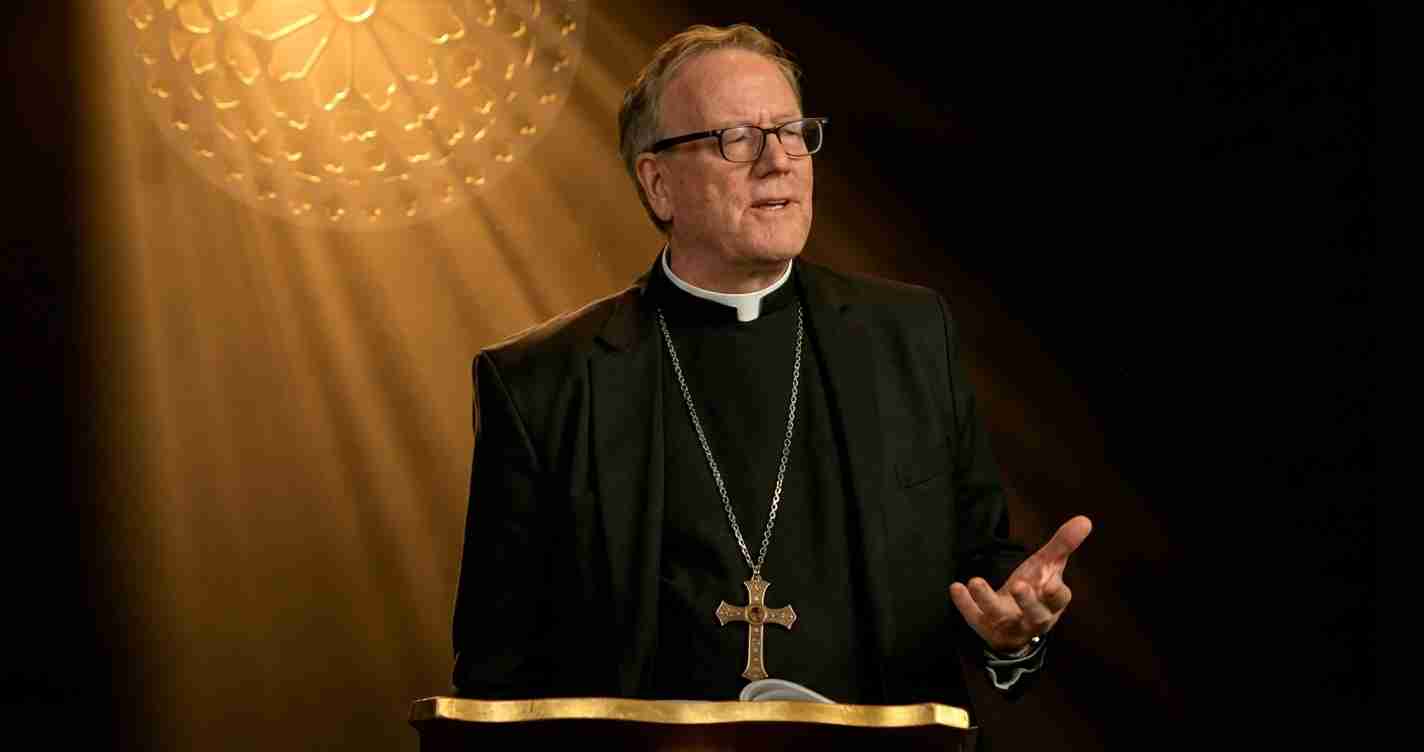
Bishop Robert Barron slams collectivism after Zohran Mamdani’s inaugural “warmth of collectivism” line
Bishop Robert Barron sharply criticized New York Mayor Zohran Mamdani’s inaugural praise of “the warmth of collectivism,” warning that collectivism’s history of mass suffering contradicts Catholic social teaching and has prompted a swift national conservative backlash.
Key takeaways
- Inaugural line: Mamdani said he would replace “the frigidity of rugged individualism with the warmth of collectivism.”
- Bishop Barron’s rebuke: Barron called the line “breathtaking,” linking collectivism to 20th‑century atrocities and arguing it conflicts with Catholic social teaching.
- National reaction: Conservatives including Gov. Ron DeSantis and Sen. Ted Cruz echoed concerns that collectivism implies coercion and loss of rights.
- Early actions: Mamdani signed housing executive orders and reversed predecessor policies, signaling rapid policy shifts in his first hours in office.
Bishop Barron slams collectivism
Bishop Robert Barron, head of Word on Fire Catholic Ministries, issued a direct public rebuke on X after Mayor Zohran Mamdani’s Jan. 1 inaugural address. Barron described the “warmth of collectivism” line as shocking and warned that various forms of collectivism have historically produced mass suffering.
“It took my breath away,” Barron wrote, referencing deaths attributed to collectivist regimes and naming countries such as Venezuela, Cuba and North Korea as modern examples of failed socialist or communist governance.
Barron tied his critique to Catholic doctrine, arguing the Church opposes socialism while endorsing market mechanisms that respect human dignity, rights and freedom. He cautioned that branding markets as mere “rugged individualism” is a caricature inconsistent with Catholic social teaching.
The inaugural statement and political context
In his inaugural address, Zohran Mamdani — New York’s first Muslim mayor and a self‑described democratic socialist — framed a shift away from what he called the “frigidity of rugged individualism” toward the “warmth of collectivism.” The phrase was concise but provocative, quickly drawing national attention and framing concerns about his governing philosophy.
Supporters said the language signaled shared responsibility and emphasis on public services; opponents argued it evoked authoritarian systems and threats to individual liberties.
Responses from political figures
Prominent conservatives joined Barron’s critique. Gov. Ron DeSantis argued that the “warmth” of collectivism “always requires coercion and force,” while Sen. Ted Cruz warned that communist rule strips away individual rights. The backlash framed Mamdani’s line within the broader national debate over socialism in American politics.
Supporters countered that the remark was rhetorical, meant to emphasize cooperation and enhanced public services, and urged judgment based on policy actions rather than a single phrase.
Mamdani’s early actions as mayor
Within hours of taking office, Mamdani signed multiple executive orders focused on housing policy and tenant protections:
- Revived the Mayor’s Office to Protect Tenants to address hazardous living conditions.
- Created a LIFT task force to consider using city‑owned land for housing development.
- Established a SPEED task force to reduce permitting barriers to construction.
- Revoked several predecessor executive orders, including one restricting city agencies from boycotting or divesting from Israel — a move that drew criticism from some right‑leaning Jewish leaders.
These early actions align with the tone of his inaugural address and suggest a rapid policy shift on housing and related issues.
Catholic social teaching and the debate over socialism
Barron framed his objection using the language of Catholic social doctrine, which emphasizes human dignity, the common good, subsidiarity and solidarity. He argued these principles are compatible with market systems that protect individual rights, while criticizing collectivist models as potentially coercive.
Scholars and clergy vary in their readings: some stress robust public institutions to aid the poor, while others, like Barron, warn collective models can erode freedom. This episode highlights how religious leaders can shape political debate when faith‑based values are invoked.
How language matters in politics
Political metaphors — collectivism, rugged individualism, common good — carry different meanings for different audiences. To some, collectivism implies community support and shared services; to others, it recalls authoritarianism and loss of liberty. Mamdani’s phrasing turned this abstract debate into an immediate flashpoint, quickly defining early impressions of his mayoralty.
Implications for Fresno, California
Economic impact
Fresno faces longstanding housing and affordability challenges. Mamdani’s approaches — using city land and streamlining permitting — mirror tools debated locally. If those policies gain national traction, Fresno may face pressure to consider similar measures, affecting developers, tenants and zoning conversations.
Political consequences
The debate may influence local messaging: candidates emphasizing a balance between private enterprise and public services could use the moment to appeal to moderates. Faith leaders, including Catholic clergy, may likewise weigh in on housing and poverty policies.
Social effects
Dialogues about community responsibility versus individual rights could intensify in Fresno neighborhoods with high renter populations. Tenant protections and concerns over government overreach may mobilize different constituencies.
Cultural relevance
With Fresno’s diverse faith and immigrant communities, the national exchange — between New York’s first Muslim mayor and a Catholic bishop’s critique — may prompt local interfaith conversations on civic roles and community cohesion.
Practical applications for residents
- Housing policy: Study use of public land and permitting reforms as tools to increase supply while guarding neighborhood character.
- Tenant protections: Advocates may press for stronger enforcement of habitability rules akin to New York’s revived tenant office.
- Civic engagement: Town halls and faith‑group forums can clarify trade‑offs between collective action and individual rights.
- Voter messaging: Moderates may favor practical, results‑oriented proposals over ideological rhetoric.
Sources and further reading
Primary reporting on Barron’s comments and Mamdani’s inaugural orders



