
Iran’s nationwide “kill switch” blackout hides alleged abuses as protests surge, rights groups say
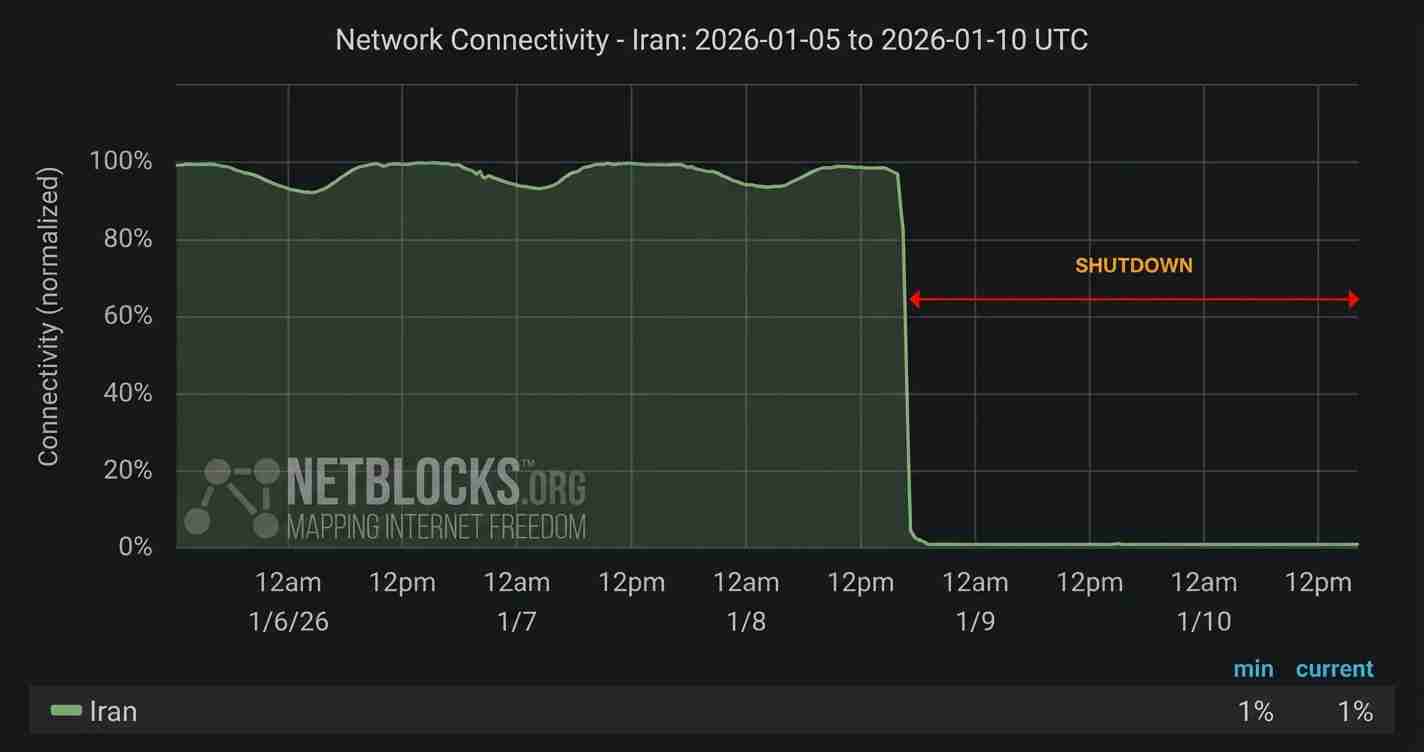
In January 2026 Iran imposed a near‑total internet and telecommunications shutdown as nationwide protests surged, a blackout rights groups say was used to conceal a violent security crackdown, enabling alleged unlawful killings, mass arrests and hindering independent verification.
Key takeaways
- Nationwide shutdown: Authorities imposed a near‑total internet and telecommunications blackout beginning 8 January 2026, documented by Amnesty International and the Institute for the Study of War.
- Human rights risk: Amnesty says the blackout was deliberate and provides cover for grave human rights violations and potential crimes under international law.
- Casualties and arrests: Rights groups documented at least 28 confirmed deaths in early incidents; activist networks report higher totals (claims of 65 killed and over 2,300 arrested) that remain unverified.
- Local impact: The shutdown complicates documentation, disrupts families and medics, and may embolden security forces to act with impunity.
What happened with the shutdown
On 8 January 2026 Iranian authorities cut most internet and mobile communications nationwide. Fixed‑line and mobile data traffic fell to a fraction of normal levels. Rights groups and analysts describe the move as a blanket, centrally controlled blackout that sharply limited the ability of journalists, medics, families and foreign monitors to document events in real time. See reporting by Amnesty International and the Institute for the Study of War.
“Deliberately blocked internet access inside Iran to hide the true extent of the grave human rights violations and crimes under international law they are carrying out.” — Amnesty International
Protests and how they spread
The unrest began on 28 December 2025 in Tehran after a sharp currency collapse and rising inflation. Demonstrations demanding major political change quickly spread around the country. Amnesty described the wave as the largest nationwide protests since the 2022 “Woman, Life, Freedom” uprising. Despite restricted connectivity, the Institute for the Study of War reported activity persisted across Iran, indicating people continued to gather and resist under difficult conditions.
Reported casualties and arrests
Amnesty International has documented at least 28 deaths of protesters and bystanders, including children, between 31 December 2025 and 3 January 2026 across 13 cities in eight provinces. The group warned the death toll is likely higher and that the blackout is preventing a full accounting. Activist networks and some media circulate higher figures — claims of at least 65 killed, more than 2,300 arrested, and protests in as many as 180 cities — but these figures remain unverified by leading rights organizations or UN mechanisms as of the latest public reports.
Allegations of unlawful force
Amnesty and other groups report security forces used firearms and other lethal methods against demonstrators. The rights group documented unlawful killings in multiple cities and warned the blackout intensifies the risk of further unlawful lethal force and mass arbitrary detention by limiting outside scrutiny. Observers note parallels with earlier shutdowns in November 2019 and during the 2022 protests, where throttling and shutdowns coincided with force that rights monitors say led to hundreds of deaths.
International reaction and expert analysis
Amnesty urged urgent global diplomatic action to pressure Iranian authorities to end the blackout and stop the violence. Some governments issued travel warnings; Canada advised citizens to avoid travel to Iran and to leave if possible due to detention risks — as noted in a CTV segment. Cybersecurity experts and former officials told media that states under domestic pressure often use internet shutdowns as coercive tools to control narratives, disrupt protest organization, and hide abuses. Analysts also warn a government under intense internal strain may act more aggressively abroad, complicating regional security.
How Iran can execute a rapid shutdown
Iran’s internet architecture gives the state centralized control over international gateways and key service providers. Authorities can quickly route traffic, cut backbone links, or order providers to block services — a capability tech analysts describe as a de facto “kill switch”. The pattern of repeated shutdowns in 2019, 2022 and now 2026 shows the state retains operational control to sever communications when it chooses. See Amnesty International and the Institute for the Study of War.
Implications for Fresno, California
A prolonged crisis in Iran carries ripple effects for Fresno:
- Economic impact: Changes in oil prices and shipping can raise fuel and transport costs for Fresno agriculture and logistics, and affect specialty importers tied to Middle East supply chains.
- Political consequences: Local officials and voters will monitor U.S. and allied responses; constituent pressure may shape federal policy debates about sanctions, diplomacy and refugee support.
- Social effects: Iranian‑American families in Fresno face anxiety; local NGOs, faith groups and universities may organize vigils, donations, or legal and emotional support.
- Practical response: Consular and immigrant services should prepare to assist families with emergency contacts and guidance; schools may offer counseling to affected students.
- Civic action: Local human rights groups and cultural organizations can raise awareness, sponsor forums, and advocate for lawful, humanitarian responses that protect refugees and civil liberties.
Reporting caveats and verification
Many widely circulated figures — including claims of 65 killed, more than 2,300 detained and protests in 180 cities — originate from activist networks and media outlets. While plausible given the scale of unrest and past patterns, these numbers have not been fully verified by leading rights organizations or UN mechanisms because the blackout has made independent confirmation extremely difficult. The most reliable public tally from Amnesty International documents at least 28 deaths in the early days while warning the true toll may be higher.
Sources
Primary sources cited in this report:



