
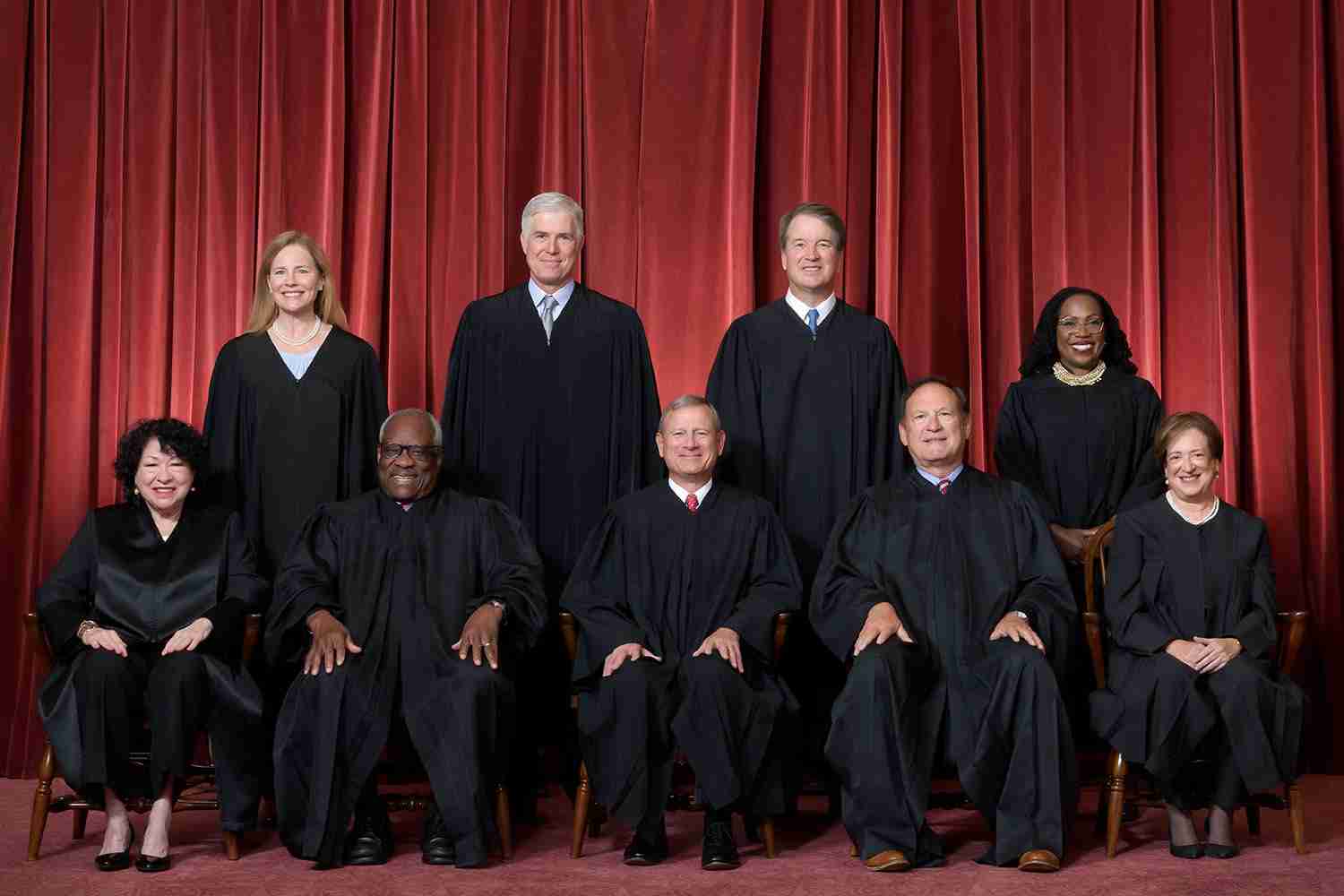
Trump criticizes justices after Supreme Court hearing on transgender athletes, saying those who back trans women ‘should lose a lot of credibility’
President Donald Trump condemned several Supreme Court justices after Jan. 13 oral arguments over state bans that bar transgender girls from girls’ sports, saying justices who back trans women competing in women’s sports “should lose a lot of credibility.”
Key takeaways
- Jan. 13 oral arguments covered two consolidated cases, Little v. Hecox (Idaho) and West Virginia v. B.P.J., testing state bans on transgender girls in school sports.
- A majority of justices appeared skeptical of challengers, focusing on biological sex and Title IX concerns, though the ultimate scope of any ruling remained unclear.
- President Trump publicly criticized justices he said were defending trans athletes’ participation and said such rulings would undercut their credibility.
What was argued at the Supreme Court
On Jan. 13 the justices heard nearly three-and-a-half hours of oral argument in two consolidated cases that test whether state laws can bar transgender girls from girls’ school teams. The litigation stems from conflicting appeals-court rulings: the 9th Circuit struck down Idaho’s law under the 14th Amendment while the 4th Circuit blocked West Virginia’s law under Title IX. Sources tracking the hearing include SCOTUSblog and Education Week.
State and federal government arguments
Attorneys for Idaho and West Virginia, supported by the U.S. government, said the laws aim to protect women’s sports from physical advantages some people assigned male at birth retain after puberty. Hashim Mooppan, arguing for the United States, urged the Court to accept a reasonable fit or substantial relationship standard rather than perfection for each individual. Lawyers also cited Title IX regulations permitting sex-separated teams and argued hormone treatment may not erase all biological differences (SCOTUSblog, Education Week).
Arguments from the challengers
Plaintiffs’ attorneys argued the bans unlawfully discriminate by treating transgender girls differently than cisgender girls, violating the Equal Protection Clause and Title IX. They noted many transgender girls receive medical care, such as hormone therapy, that reduces competitive advantages and said blanket exclusions create stigma and deny opportunities to youth who want to participate (ACLU, SCOTUSblog).
How the justices questioned the lawyers
Conservative justices pressed challengers on biological sex and Title IX’s meaning for sports, signaling skepticism about the plaintiffs’ legal theory. Liberal justices focused on narrow rulings and real-world impacts for individual students.
- Chief Justice John Roberts asked whether the challengers’ position would upend the traditional boy/girl distinction or create exceptions to a biological definition of girls (SCOTUSblog).
- Justice Amy Coney Barrett questioned whether the discrimination claim applied broadly, noting trans boys can play on boys’ teams (SCOTUSblog).
- Justice Clarence Thomas compared a weak male athlete trying out for women’s teams to transgender girls and cited Title IX language on separation by biological sex (Education Week).
- Justice Samuel Alito emphasized fairness concerns raised by cisgender female athletes and pressed for a measurable meaning of Title IX (Education Week).
- Justice Neil Gorsuch noted the history of Title IX sports rules and suggested sports may need distinct treatment from other sex-discrimination law (Education Week).
- Justices Sonia Sotomayor, Elena Kagan and Ketanji Brown Jackson probed limits, mootness and how medically treated transgender girls would be affected, signaling concern for concrete student impacts (SCOTUSblog, Education Week).
Why the court’s tone matters
Observers noted the conservative majority’s detailed focus on biological sex and Title IX could signal a willingness to uphold state bans or to give states more leeway drafting sports rules. Legal analysts cautioned that oral-argument tone does not guarantee the final outcome (SCOTUSblog, Education Week, Higher Ed Dive).
Trump’s public comments
“Big Supreme Court case. I mean, I can’t believe it. Some of the justices were fighting hard for men to be able to play in women’s sports. A couple of them, I can’t imagine it. But I think anybody that rules that way should lose a lot of credibility. But we banned men from playing in women’s sports.”
President Trump made these remarks at a White House press conference after the hearing; Fox News reported on his criticism of justices he believed sided with the transgender athlete plaintiffs (Fox News).
National context and scope
Idaho’s 2020 law was the first of roughly 27 states to enact transgender sports bans; the 9th Circuit struck down Idaho’s law while the 4th Circuit blocked West Virginia’s. A Supreme Court ruling could determine which federal standard applies and whether states may enforce bans nationwide (SCOTUSblog, Education Week).
Implications for Fresno, California
Local schools and athletes: Fresno Unified, Fresno State and area community colleges serve thousands of student-athletes. A ruling upholding bans could create conflicts with California protections for transgender students and force districts to revise eligibility rules.
Women’s sports fairness: The national debate over fairness will resonate with local families, coaches and athletes concerned about both competitive equity and inclusion.
Political consequences: Fresno officials and voters may see heightened activism on both sides, with possible school-board policy responses or calls for state-level action.
Social effects: Transgender youth and their families could face increased scrutiny and demand for services; local advocacy groups may see more requests for resources.
Practical applications: If states gain wide latitude, families moving across state lines or colleges recruiting out-of-state may encounter differing eligibility standards.
Sources and further reading
- SCOTUSblog: “Supreme Court appears likely to uphold transgender athlete bans”
- Education Week: “Supreme Court signals support for state bans on trans girls in sports”
- Higher Ed Dive: “Supreme Court weighs state restrictions on transgender student athletes”
- ACLU press release on oral arguments
- Fox News reporting on President Trump’s comments
- WGBH reporting on local impact and background
- Video of oral argument (recording)
For Fresno families, coaches and school leaders seeking clarity: monitor local school district statements and California education guidance as the Court issues its decision.



