LAPD chief refuses to enforce California SB 627 mask ban, citing safety risks and legal fights
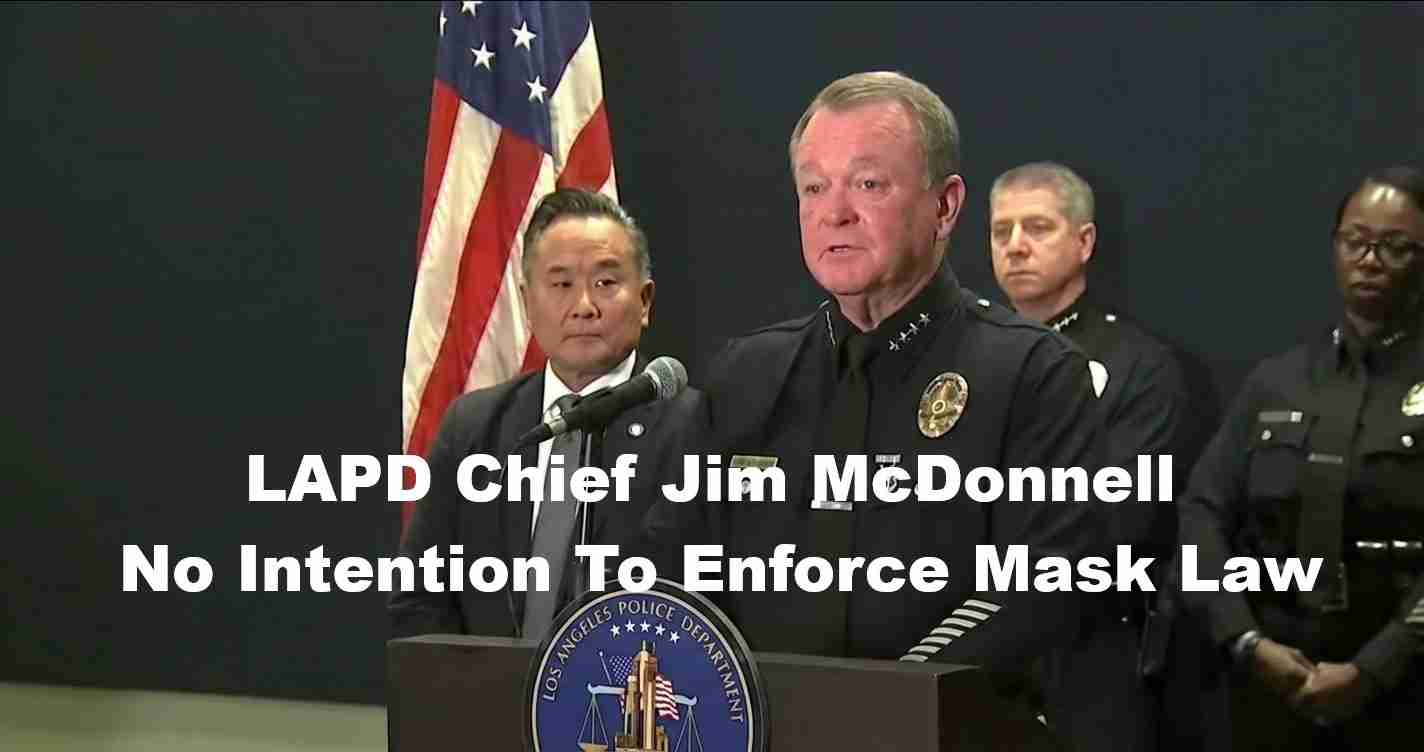
LAPD Chief Jim McDonnell said the department will not enforce California Senate Bill 627’s mask ban for law enforcement, citing officer and public safety risks and ongoing legal challenges that have paused statewide enforcement actions.
- Practical refusal: The LAPD will not attempt to enforce SB 627 against federal agents, citing tactical and safety concerns.
- Legal limbo: SB 627 was signed in September 2025, took effect January 1, 2026, but is under legal challenge and a statewide enforcement stay.
- Federal concerns: ICE and federal officials argue masks protect agents from doxxing and threats; courts are reviewing federal challenges under supremacy arguments.
- Local impact: Fresno and other California cities may face economic, political and social implications depending on how local agencies choose to respond.
Why McDonnell says he won’t enforce the law
McDonnell outlined his decision in interviews this week, telling reporters the move is about de‑escalation and safety rather than a direct constitutional position. He warned that trying to enforce a misdemeanor against another armed agency could provoke a dangerous confrontation.
“Trying to enforce a misdemeanor violation on another law enforcement agency, that’s not going to end well,” McDonnell said. “Potentially you have a crowd that could be agitated… it’s not a safe way to do business.”
McDonnell spoke on outlets including Fox Los Angeles while discussing falling crime rates and department priorities. He reiterated the LAPD’s longstanding policy — in place since 1979 — to avoid assisting ICE with immigration enforcement, while continuing federal partnerships on terrorism, trafficking and major events as needed (Los Angeles Times).
What SB 627 would do
California SB 627 would make it a misdemeanor for local, state or federal law enforcement officers to wear masks, disguises or face coverings while performing duties, with narrow exceptions for undercover work or tactical operations that require protective gear. Supporters called it the No Secret Police Act; critics say it may put officers at risk. The bill was authored by state Sen. Scott Wiener and signed by Governor Gavin Newsom in September 2025.
Supporters framed the measure as a response to masked agents and unmarked vehicles used in high‑profile 2025 immigration raids. Opponents — including some city officials — argue masks can be necessary to protect agents from doxxing and threats even when vehicles and clothing display agency markings (Fox News).
Legal fight and enforcement pause
Federal officials and the prior administration mounted a legal challenge, saying the law impermissibly interferes with federal law enforcement and may violate the Constitution’s Supremacy Clause. Courts have issued a stay while the litigation proceeds, creating a complex, unsettled enforcement landscape (ABC7).
The pause means local chiefs must decide whether to comply if the law is allowed to take effect. McDonnell’s public refusal adds a practical enforcement problem even if courts ultimately rule on constitutionality.
Reactions across the country
Responses have been mixed. Supporters of SB 627 call it a check on secretive policing and protective of civil liberties; opponents argue the law may endanger officers and hamper legitimate protective measures. Some outlets framed McDonnell’s stance as a move to avoid potential armed clashes between agencies (Boing Boing).
City police chiefs in other jurisdictions — including Minneapolis, Portland and Philadelphia — have also criticized certain federal tactics after contentious operations, fueling broader debate about federal‑local cooperation (Los Angeles Times).
The political and practical balance
McDonnell characterized the decision as a safety calculus: he emphasized avoiding escalation, preserving community trust, and maintaining operational flexibility with federal partners on matters like terrorism and trafficking. He did not couch his refusal primarily as a Supremacy Clause legal argument, but rather as a practical avoidance of potential confrontation.
The debate highlights competing priorities: protecting communities from aggressive tactics, guarding officers and families from retaliation or doxxing, and keeping cooperation channels open for major public‑safety threats.
Implications for Fresno, California
For Fresno — like other California cities — the fallout could be economic, political and social. Reduced local‑federal cooperation might affect federal grants, joint task forces, and the ability to host large events that require federal support. Local leaders could face pressure to clarify whether county and city agencies would adopt similar non‑enforcement policies if the law takes full effect.
Community trust is central in Fresno’s large immigrant populations; policies that limit immigration arrests may encourage reporting of crimes but raise concerns among some residents about consistency in enforcing federal immigration laws. Local agencies are advised to publish clear guidance for officers and the public while monitoring the litigation’s outcome (Los Angeles Times).
Reporting and sources
Note: This article preserves reporting and quotations from the outlets listed above and relies on their interviews and coverage for factual details.