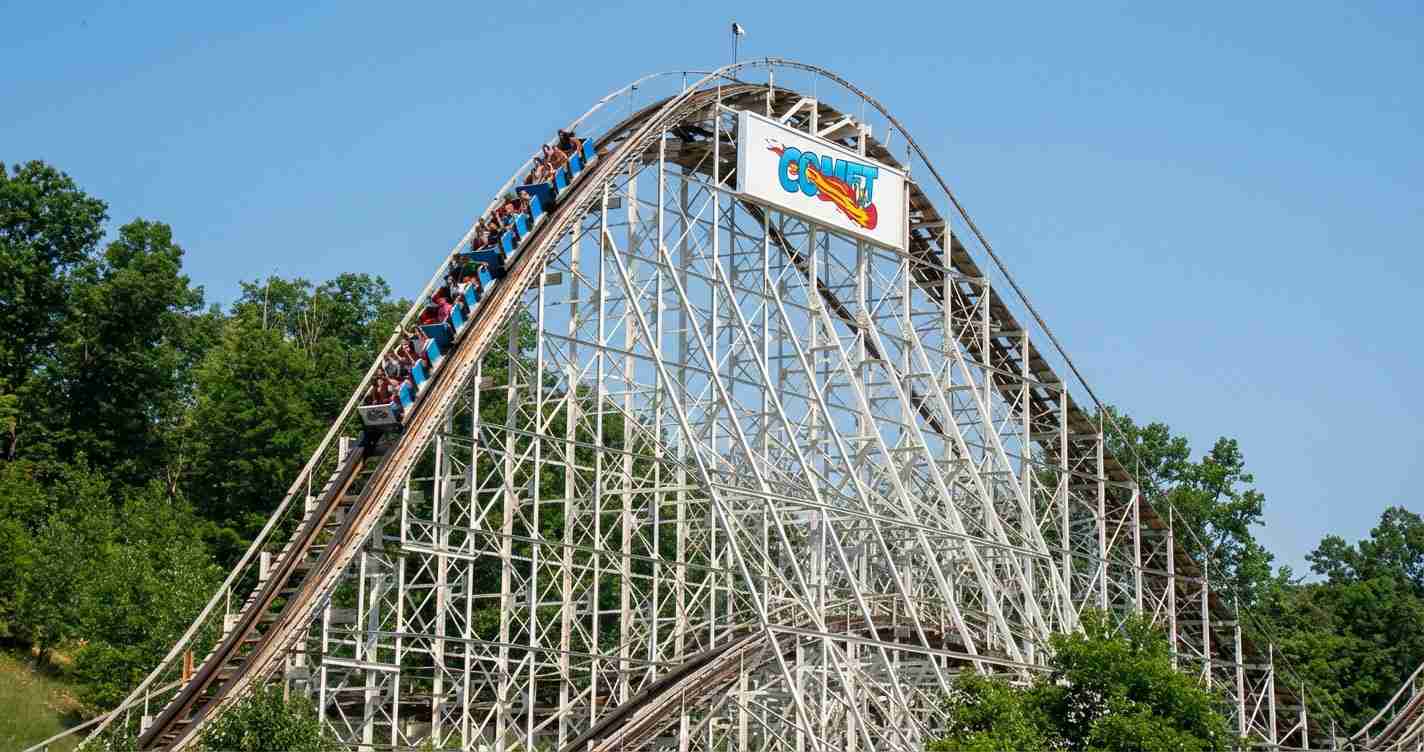
Six Flags sells 7 parks to EPR Properties for about $331 million; Valleyfair and Great Escape among sites
Six Flags announced March 5, 2026, that it sold seven U.S. and Canadian parks to EPR Properties for about $331 million — a move to streamline operations, cut debt and concentrate capital on higher-performing properties and leadership.
- Buyer: EPR Properties (definitive agreements announced March 5, 2026)
- Parks sold: Michigan’s Adventure; Schlitterbahn Waterpark Galveston; Six Flags Great Escape; Six Flags La Ronde; Six Flags St. Louis; Valleyfair; Worlds of Fun — package valued at roughly $331–342 million.
- Scale: ~4.5 million guests in 2025, ~$260 million net revenue and ~ $45 million adjusted EBITDA; proceeds earmarked largely for debt reduction.
The deal in brief
On March 5, 2026, Six Flags Entertainment Corporation agreed to sell seven regional parks in the U.S. and Canada to EPR Properties for a gross package roughly in the $331–342 million range. The group of parks hosted about 4.5 million guests in 2025, generated about $260 million in net revenue and roughly $45 million in adjusted EBITDA.
Parks included
The portfolio comprises:
- Michigan’s Adventure (Muskegon / Grand Rapids area, MI)
- Schlitterbahn Waterpark Galveston (Galveston, TX)
- Six Flags Great Escape (Queensbury, NY)
- Six Flags La Ronde (Montreal, QC)
- Six Flags St. Louis (Eureka, MO)
- Valleyfair (Minneapolis, MN)
- Worlds of Fun (Kansas City, MO)
What Six Flags says and rationale
Six Flags framed the divestiture as strategic. CEO John Reilly said the move enables the company to “concentrate our capital, leadership and operational focus on the properties that we believe generate the strongest returns and offer the greatest long-term upside.” Company materials stress proceeds — after taxes and transaction expenses — will be used primarily to reduce debt and improve leverage.
Coverage and filings that summarize the company position are available in business reporting such as Fox Business coverage.
Why EPR Properties bought the parks
EPR — an investor focused on experiential real estate — described the acquisition as a strategic add-on and its largest attractions purchase since 2017. CEO Gregory Silvers called it a “compelling opportunity to expand our attractions portfolio with high-quality experiential real estate assets in established regional markets.” The company’s underwriting centers on a master lease designed to support tenant operations and capital needs; see the EPR announcement for details.
Operators and brand transition
EPR has arranged operating partners for post-close management: six U.S. parks will be operated by a new operator tied to EPR called Enchanted Parks, while La Ronde (Montreal) will be run by La Ronde Operations, Inc., led by Kieran Burke in partnership with EPR. Industry observers also pointed to earlier trademark filings and leaks around “Enchanted Parks” as confirmation of the intended operating structure (industry filing report).
Brand licensing and season passes
The deal transfers non-Six Flags brand names to EPR, while Six Flags will license the Six Flags brand name for the acquired parks through the end of 2026. Both companies said operations should continue on regular schedules and that season passes sold for 2026 would be honored through the operating season, meaning guests should expect no immediate interruption to season pass benefits or multi-park privileges for 2026.
Financial terms and timeline
The gross package was reported at roughly $331–342 million. EPR will provide about $315 million of that amount, with tenants funding remaining working capital. EPR’s presentation notes an underwriting coverage of about 2.0x with a master lease structure. The transaction was expected to close by the end of Q1 or start of Q2 2026, subject to approvals and customary closing conditions (Fox Business, CBS6 Albany).
Key questions and investigative focus
Reporters and observers flagged several open issues worth monitoring:
- Employee impacts: Companies state operations will continue, but staffing levels, contractor arrangements and collective bargaining issues could change under new operators; company statements do not include full staffing projections.
- Capital allocation: Will EPR prioritize day-to-day park investments or real estate-oriented upgrades? EPR’s history as a real estate investor suggests asset-value focus, but operator capital plans will matter.
- Season pass value after 2026: Pass reciprocity and brand licensing are guaranteed through 2026 only; future benefits remain uncertain.
Park-by-park notes
Notable mentions in local and national coverage include Valleyfair (Minneapolis) and Six Flags Great Escape (Queensbury, NY). Reporting on specific locations is available from sources including Minnesota Public Radio and the previously cited CBS6 Albany.
Implications for Fresno, California
For Fresno, the transaction has largely indirect or minimal immediate economic impact — none of the seven parks are in California. Key local considerations:
- Direct economic impact: Minimal — local employment and tax revenues in Fresno should see no immediate change from these transactions.
- Travel and consumer choice: Fresno families traveling to out-of-state parks may face changed pricing, benefits or cross-park reciprocity after 2026 if licensing ends or operators revise passes.
- Potential reinvestment: Six Flags will retain 34 parks across 23 North American locations; freed capital could be redeployed to remaining parks (including California assets such as Six Flags Discovery Kingdom or Magic Mountain), which could affect Fresno-area visitors depending on where reinvestment is directed.
- Regional competition: EPR’s operator strategy (via Enchanted Parks) may shift marketing and cross-promotion; Fresno tourism stakeholders should monitor potential changes to promotional deals and pass reciprocity.
Practical takeaway for Fresno families: season passes for 2026 remain valid at the affected parks and operations should continue normally for the 2026 season; watch for announcements after 2026 regarding brand licensing and pass reciprocity.
Reporting notes and sources
This article draws on company announcements and reporting from national and local outlets. Primary sources include the EPR investor release, Fox Business, CBS6 Albany, Minnesota Public Radio, and industry coverage such as ThemeParkInsider.