
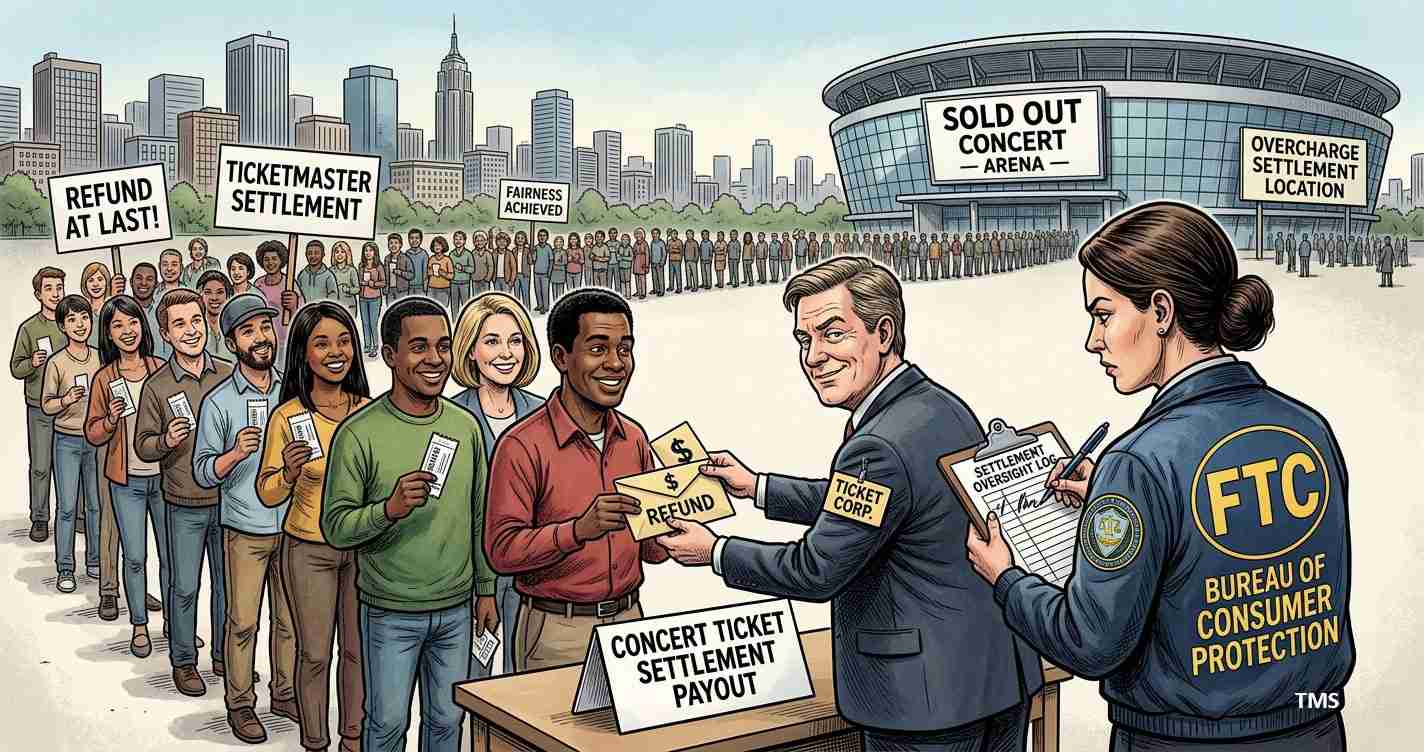
FTC says ticket platform misled buyers; settlement would require upfront total prices, $10 million refunds under new “junk fees” rule
The FTC’s new Fees Rule (16 C.F.R. Part 464), effective May 12, 2025, mandates upfront disclosure of total ticket and short-term lodging prices, and a proposed settlement would fund a $10 million redress program after alleged misleading displays in May 2025.
Key takeaways
- Upfront totals required: The FTC guidance requires advertised ticket prices to include all known, calculable mandatory fees and show the total more prominently before checkout.
- Alleged violations: The FTC alleges a major ticketing platform displayed prices exclusive of mandatory fees during May 12–14, 2025, prompting a proposed settlement and refunds.
- Proposed relief: The settlement would fund a $10 million consumer redress program and require clearer, prominent total-price displays going forward.
- Broader rule: The Fees Rule targets “junk fees” in live-event ticketing and short-term lodging and is detailed in the agency’s FTC press release.
Main
What the Fees Rule requires
The Fees Rule (16 C.F.R. Part 464) places three central obligations on sellers, resellers and platforms offering live-event tickets and short-term lodging:
- Upfront total price disclosure: Any advertised price must include all known, calculable mandatory fees. The total must be displayed more prominently than itemized fees and shown before checkout — see the FTC FAQ.
- No misrepresentation about fees: Businesses cannot mislead consumers about the nature, amount or refundability of fees across online, app, in-store or advertising channels — see the FTC press release.
- Broad scope: The rule covers primary sellers, secondary ticket platforms and intermediaries in B2C and B2B contexts for live performances seen in real time; it excludes pre-recorded events or films — see the rule FAQs.
Why the agency moved now
The FTC finalized the “junk fees” rule on Dec. 17, 2024, after a multi-year rulemaking that began with a 2022 advance notice and attracted over 12,000 public comments. The agency framed the rule as protecting consumers and preserving honest competition by stopping practices that hide the true cost of purchases and impede comparison shopping. See the FTC release and third‑party analyses such as Brushfire analysis.
Allegations in the FTC filing
In a complaint and proposed settlement filed in the U.S. District Court for the Southern District of New York, the FTC alleges that during May 12–14, 2025, certain listings on a major ticketing platform displayed ticket prices exclusive of mandatory fees, potentially misleading consumers who then saw added fees at checkout.
The proposed settlement would:
- Require the company to run a $10 million consumer redress program for eligible buyers who purchased U.S. live-event tickets between May 12 and May 14, 2025.
- Order refunds within 90 days to two groups: consumers whose total ticket price was not disclosed on the initial pricing display, and all other consumers who bought tickets during that period.
- Require clearer, more prominent disclosure of the total price on the company’s platform going forward.
FTC and company statements
Christopher Mufarrige, Bureau of Consumer Protection Director: “The Fees Rule makes it very clear that the total price of live-event tickets must be disclosed up-front to enable consumers to make fully informed purchasing decisions. Price transparency is essential to a free and competitive marketplace.”
A company spokesperson said the platform disagreed with the FTC’s view but will refund a portion of affected buyers’ fees to address the agency’s concerns, noting the transactions were limited to May 12–14, 2025.
Note on public records
As of publication, full court docket entries and independent third‑party confirmation of the complaint and settlement details were not available in public databases reviewed by this reporter. The FTC’s rule documents and background are publicly available via the FTC FAQs and the FTC press release. Industry summaries can be found at InsideClassActions and Foley.
What this means for consumers and businesses
Consumers: The rule is designed so the price shown on-screen matches what shoppers actually pay, eliminating surprise “service,” “convenience,” or “order processing” charges. That clarity should help with comparison shopping and reduce sticker shock.
Businesses: Event organizers, ticketing platforms and short-term lodging providers will need to update websites, apps, advertising, sales scripts and back‑end pricing systems to display known mandatory fees in the advertised total. The rule does not ban fees themselves but requires known fees be included in the displayed total. Industry analyses, such as the Foley analysis, note enforcement will test how firms handle complex fee structures and reseller relationships.
Enforcement context
The FTC’s active enforcement of the Fees Rule follows heightened scrutiny of the ticketing industry. The agency’s final rule and compliance materials emphasize potential civil penalties and obligations to provide consumer redress. See the FTC guidance and industry coverage at InsideClassActions.
Implications for Fresno, California
Economic impact
- Local buyers in Fresno and the Central Valley may benefit from more transparent pricing on national platforms and box offices, enabling easier comparison shopping.
- Smaller venues and promoters may face one‑time compliance costs to update displays, which could be offset if clearer pricing reduces last‑minute buyer hesitation and boosts sales.
Political and regulatory consequences
- Fresno-area elected officials advocating consumer protection may cite the FTC action when pushing for local or state measures on pricing transparency.
- The enforcement action reinforces federal standards local governments and consumer agencies can use to pressure ticket platforms into compliance.
Social and cultural effects
- Reduced checkout sticker shock may increase attendance at concerts, sports and theater events among price-sensitive residents, including families and students.
- Nonprofit arts organizations that sell tickets directly will need to ensure advertised prices include mandatory fees, aiding outreach and planning for lower-income audiences.
Practical applications for residents
- Look for the “total price” displayed before checkout; save screenshots if a business later charges undisclosed fees.
- If you suspect a violation, contact the FTC and keep receipts, screenshots and transaction details. See the FTC site for how to complain.
Reporting and sources
This article draws on the FTC rule text and guidance, the FTC press release, and industry coverage at InsideClassActions, Foley, and Brushfire. The FTC complaint and proposed settlement were described in agency filings; full court dockets and independent third‑party confirmation were not publicly available at the time of reporting.



