
More Americans Fall Behind on Car Payments as Auto Loan Delinquencies Climb
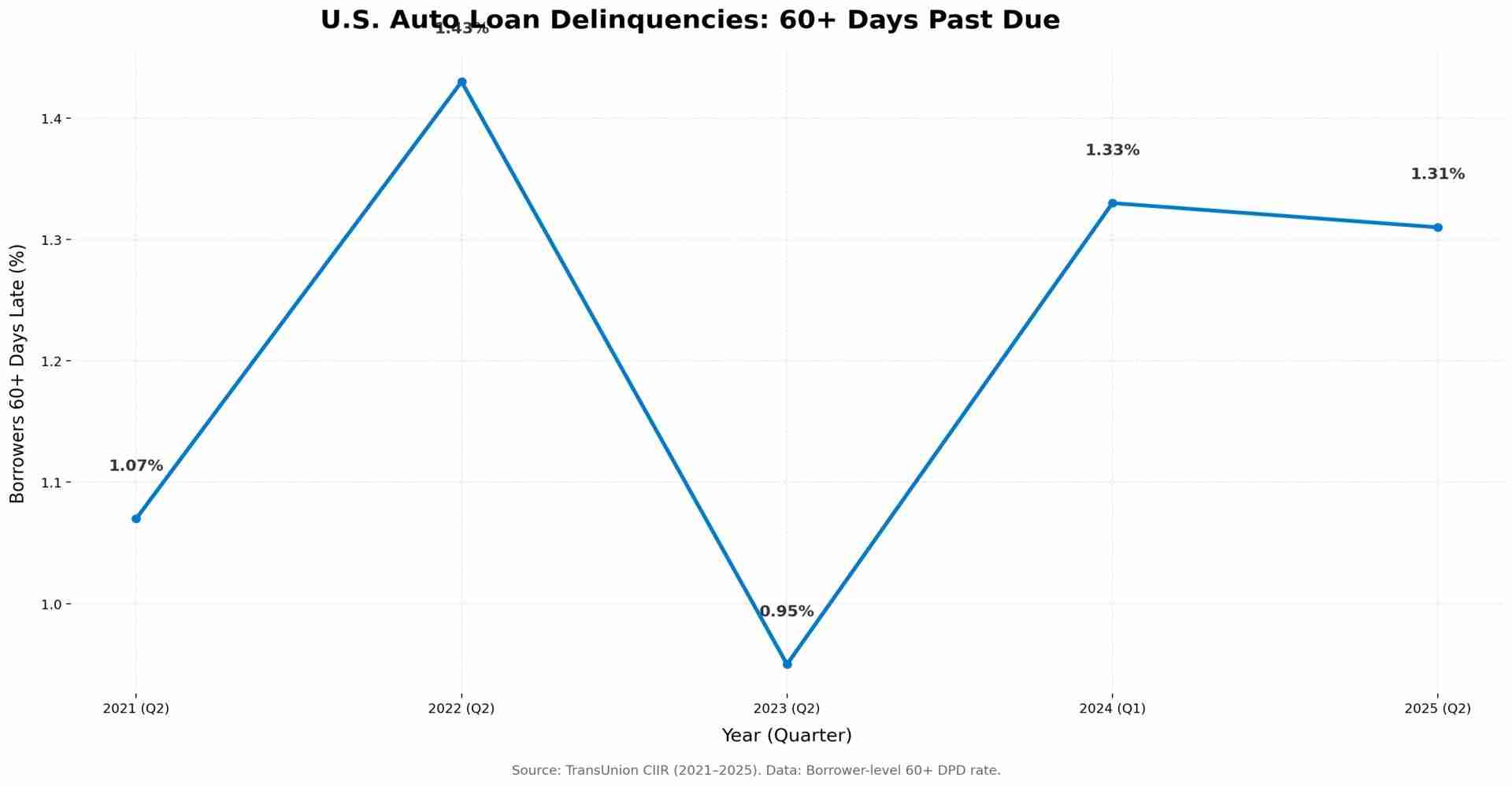
Auto loan delinquencies surged to 5.0% of outstanding loans 90+ days past due in Q2 2025, nearing post‑2008 highs as larger balances, longer terms and higher rates squeeze household budgets and chip away at credit scores.
Key takeaways
- 90+ day delinquencies: 5.0% of outstanding auto loans were 90+ days delinquent in Q2 2025 (LendingTree).
- Early-stage delinquencies (30+ days) rose to 8.0% in Q2 2025 (LendingTree).
- Credit impact: Average VantageScore fell to 701 as delinquencies climbed (VantageScore).
What the numbers show
Auto loan delinquencies in 2025 are rising toward post‑2008 levels. In Q2 2025, 5.0% of outstanding auto loans were at least 90 days past due — a year‑over‑year jump of 12.6% and close to the 2010 peak of 5.3 (LendingTree).
Early-stage delinquencies were elevated as well: 8.0% of loans were 30 days past due in Q2 2025 (LendingTree). Economists and lenders use both metrics to track household financial strain.
Why delinquencies are rising
Several forces are combining to push borrowers into arrears:
- Higher balances: The average auto loan balance rose by more than $400 year‑over‑year, increasing monthly obligations (VantageScore).
- Elevated interest rates: Many borrowers face higher rates, so monthly payments have increased even where purchase prices are unchanged.
- Longer loan terms: The average new‑car loan term is about 68.9 months, which can lower initial payments but extends exposure to shocks (LendingTree).
- Broad economic pressure: Slower real wage growth, inflation, and the resumption of federal student loan repayments have tightened household budgets (VantageScore).
Who is most affected
While most retail auto financing still serves prime and super‑prime borrowers, delinquencies are rising across credit tiers. Subprime activity is concentrated in the used‑car market, often with higher rates and stricter terms. Some borrowers turn to buy‑here, pay‑here dealers that can repossess quickly, increasing financial instability (LendingTree).
The increase in missed payments is reflected in national credit measures: VantageScore reported the average score fell to 701 from 702 as delinquencies rose (VantageScore).
Signs of a changing lending market
Lenders are reacting: new auto loan originations cooled after a 2025 peak as demand softened and underwriting tightened. Rising delinquencies can also drive higher repossession rates, which further harm borrowers’ credit and future access to affordable financing (VantageScore; LendingTree).
“Rising auto loan delinquencies are an early warning sign of stress for households and the consumer credit system,” analysts say.
The bigger picture: is this a US auto debt crisis?
Some coverage has used terms like “US auto debt crisis” as delinquencies approach post‑2008 highs. But the auto market today differs from the 2008 mortgage market: a larger share of lending still serves prime borrowers, and securitization structures and the absolute market size differ. Even so, the mix of high balances, long terms and squeezed budgets presents a meaningful risk to consumer credit health (LendingTree; VantageScore).
Local angle: why Fresno matters
Fresno is an auto‑dependent region where many residents commute by car to jobs in agriculture, construction, health care and retail. Public transit options are limited for many suburban and rural communities. That reliance makes car payments a critical part of household budgets.
Implications for Fresno, California
Economic impact
- Missed payments or repossessions can immediately affect a household’s ability to work, especially for those whose jobs require driving.
- Local businesses may see reduced consumer spending as residents reallocate income to cover arrears.
Political and policy consequences
- Rising delinquencies could push debate on transport policy, social safety nets, and expanded assistance programs.
- City and county leaders may pursue partnerships with credit counselors, nonprofits and community banks to offer relief or refinancing options.
Social effects
Repossessions increase instability: missed work, housing strain, and reduced access to care. These effects often hit lower‑income neighborhoods hardest, amplifying existing disparities.
Practical advice for Fresno residents
- Contact lenders early: Ask about hardship programs or modified payment plans to reduce repossession risk (LendingTree).
- Seek local assistance: Nonprofits, community action agencies and credit unions can provide budgeting, debt negotiation and refinancing guidance.
- Shop refinancing carefully: Longer terms may lower monthly payments but increase total interest paid over the loan life.
Data sources and reporting notes
This article draws on national data and reporting from LendingTree and VantageScore, among other public reporting. Additional coverage includes regional and national outlets such as NBC Palm Springs and AOL. A related explainer video is available on YouTube.
What to watch next
- Monthly and quarterly delinquency updates from lenders and credit‑score firms (LendingTree; VantageScore).
- Local indicators in Fresno — repossession filings, used‑car sales trends, and requests for emergency transport assistance.
- Policy actions at state or federal levels that could affect refinancing or relief programs.
Conclusion
For Fresno residents, rising auto loan delinquencies are more than a national statistic — they threaten daily mobility, employment and family stability. Addressing the trend will require coordinated action from lenders, policymakers and community organizations to keep people on the road and out of deeper financial trouble.



