
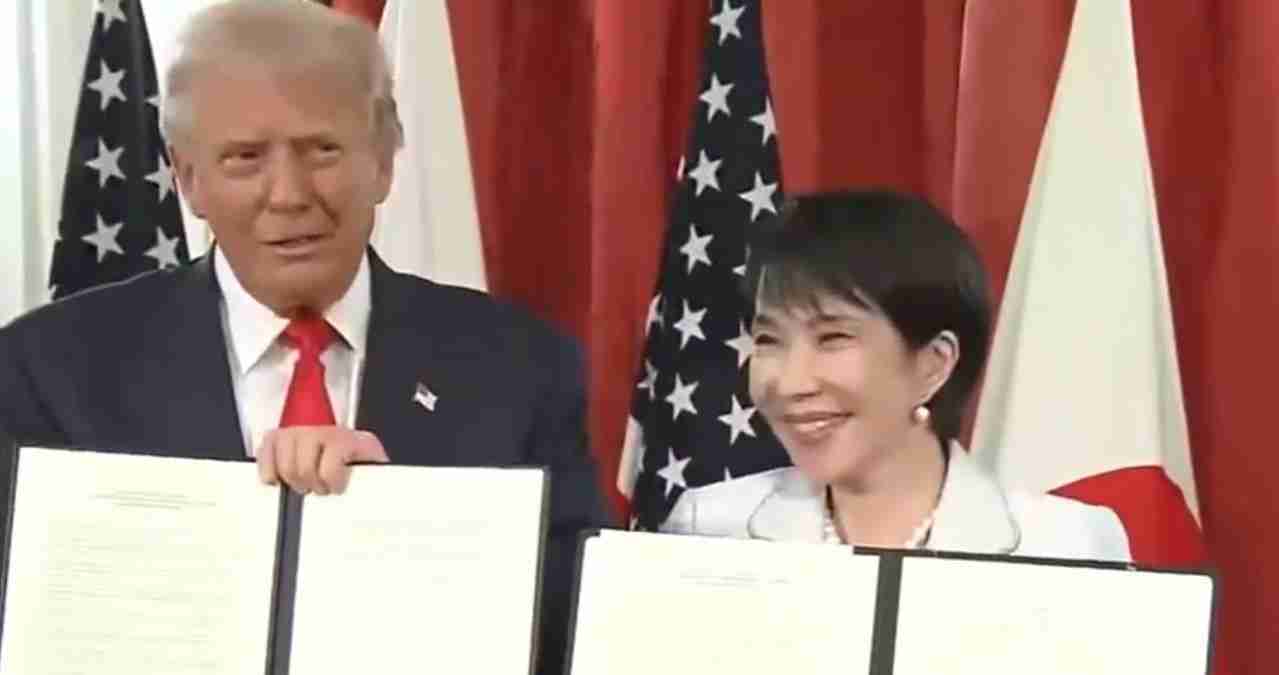
Trump and Japan’s First Female PM Sanae Takaichi Forge “New Golden Age,” Sign Critical Minerals Supply Pact
In Tokyo on October 28, 2025, President Donald Trump and Japan’s first female prime minister, Sanae Takaichi, signed landmark agreements to inaugurate a “new golden age,” securing critical minerals and trade pacts that bolster US‑Japan ties and supply chains.
- Strategic pact: A framework to secure rare earths and critical minerals, including coordinated investment, funding for mining and a Rapid Response Group to guard supply lines.
- Economic reset: A trade package pairing a 15% U.S. tariff on select imports with roughly $550 billion in new Japanese investment into the U.S.
- Broader stakes: The deals aim to diversify supply chains, accelerate domestic processing capacity, and strengthen Indo‑Pacific security cooperation.
Agreements signed: critical minerals, rare earths and trade
The centerpiece in Tokyo was a framework agreement on critical minerals and rare earth elements — materials essential for electronics, EV batteries, military systems and renewable-energy technologies. The pact commits the United States and Japan to coordinate investments, fund new mining and processing projects, and create a Rapid Response Group to detect vulnerabilities and secure emergency deliveries. See the industry implications video and the Fox Business report for details.
Officials said the pact will streamline permitting, coordinate stockpiling and reduce dependence on single-country sources — with explicit focus on the current concentration of processing in China. Coverage of the joint statements and signing outlines steps for permitting and investment coordination.
Alongside the minerals agreement, leaders outlined a trade summary pairing tariffs and investment commitments: a 15% U.S. tariff on certain Japanese imports balanced by roughly $550 billion in new Japanese investment into U.S. projects, a package framed by both leaders as the start of a “new golden age.” Read the reporting in Arab News for the financial summary.
Ceremony, symbolism and political context
The signing occurred at Tokyo’s Akasaka Palace with full ceremonial honors, underscoring the meeting’s political weight. View the formal welcome in the White House welcome ceremony and related Akasaka Palace coverage.
Sanae Takaichi: “This marks a revitalized alliance — a return to a golden age of close U.S.-Japan ties.”
Takaichi’s role as Japan’s first female prime minister added historic resonance; she used the visit to emphasize rejuvenated bilateral ties. The leaders also discussed non-trade matters such as the ongoing effort to resolve North Korean abductee cases and regional security strategy.
Strategic picture: supply chains and Asia policy
Officials framed the measures as part of a broader strategy to diversify supply chains, bolster national security, and build industrial resilience. Analysts say the combination of rapid-response mechanisms, investment pledges, and streamlined permitting could accelerate public‑private projects in semiconductors, EV batteries, and renewable-energy infrastructure. See coverage of sector impacts in the industry implications video and related reporting.
What leaders said and how they framed it
Both leaders used bold language to cast the visit as transformative. Takaichi touted a “new golden age” for the alliance, while Trump emphasized strengthening U.S. industrial capabilities and reducing geopolitical risk. Their joint statements stressed cooperation across economic, security, and Indo‑Pacific policy fronts; see the signing coverage.
Implications for Fresno, California
Economic impact: Fresno, as part of California’s logistics and agricultural heartland, could see ripple effects if Japanese firms follow through on large-scale investments in battery or processing facilities. Logistics, rail, warehousing and trucking businesses in the Central Valley may capture new work tied to U.S.-Japan projects.
Jobs and workforce: New processing plants and manufacturing lines would create demand for technicians and plant operators. Local colleges and workforce boards may pursue training programs to help residents qualify for advanced-manufacturing and clean‑tech roles.
Political and social effects: Local officials in Fresno County may court investment and highlight regional logistics strengths. At the same time, expedited permitting and new industrial projects will likely prompt scrutiny over air quality, water use and land‑use impacts — even as long‑term clean‑energy projects could improve air quality.
Practical effects: Businesses that rely on imported components could benefit from more stable supplies of parts; farmers adopting electric equipment or battery storage might see improved access to necessary technologies.
Local planning and next steps
City and county development offices in Fresno should monitor federal and state solicitations tied to rare‑earth processing, battery manufacturing, and infrastructure funding. Regional ports, rail operators and logistics firms may position themselves to capture material flows linked to these U.S.-Japan projects. For coverage of the trade and investment summary, see the Arab News summary.
Sources
- White House welcome ceremony video
- Fox Business reporting on the meeting and rare‑earth agreements
- YouTube — Akasaka Palace welcome and coverage
- YouTube — joint statements and signing coverage
- YouTube — critical minerals and industry implications
- Economic Times video coverage
- Arab News reporting on trade summary and investment
- NewsTimes coverage of the visit



