Wealthy Carmel town moves to permanently ban pickleball at Forest Hill Park after years of noise fights
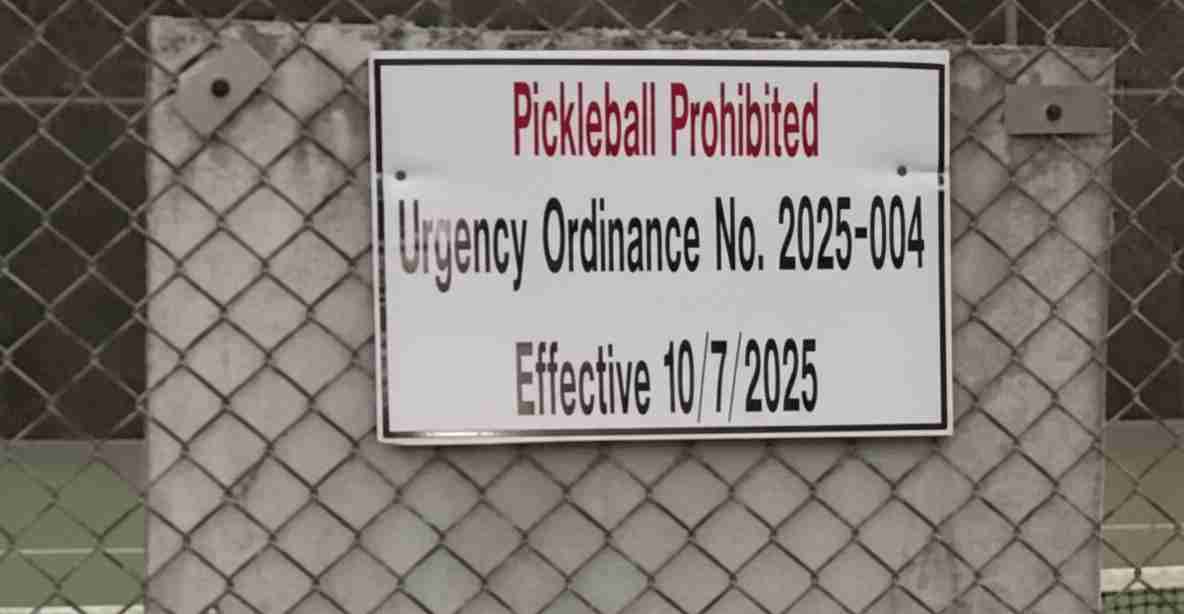
Carmel’s City Council voted unanimously in November 2025 to ban pickleball at Forest Hill Park, ending a years-long noise dispute after a temporary October 2025 ban as residents and officials cited persistent paddle-and-ball disturbance near neighborhood homes.
Key takeaways
- Council action: The council voted unanimously in November 2025 to keep a temporary ban and direct staff to draft a permanent ordinance prohibiting pickleball at Forest Hill Park, with local reporting also noted in an AOL article.
- Only public courts: Forest Hill Park is the only public site for pickleball inside Carmel city limits, concentrating play near homes.
- Compromise failed: Officials found quieter-equipment rules and monitoring systems impractical to enforce, citing persistent noise.
- Next steps: Opponents may appeal and testify in hearings before a final ordinance is adopted.
Background: how the dispute grew
Pickleball surged nationally and became a flashpoint in Carmel where Forest Hill Park — the city’s sole public venue — drew increasing players over several years. Residents said the sharp “pop” of paddles hitting plastic balls carried into yards and homes, producing a steady stream of complaints that intensified as use grew. After temporary measures failed, the city imposed a temporary ban in October 2025 and later moved toward a permanent prohibition.
The noise complaint crisis
Neighbors described pickleball noise as persistent and intrusive. During the temporary ban in October, several residents told council members the neighborhood felt noticeably quieter — a difference that strengthened calls for a long-term solution. City staff surveyed options and found the paddle “pop” traveled through the small, hilly community and resisted containment by barriers or restricted play.
“Even paddles marketed as ‘quiet’ produced disruptive noise when play intensified,” multiple residents and staff testified.
The city documented repeated complaints and concluded that quieter equipment alone would not reliably address noise impacts or enforcement challenges; the temporary ban underscored the scale of disruption to adjacent properties (source).
Failed compromises: why quieter gear wasn’t enough
Officials explored several compromises — mandating softer balls or a specific “quieter” ball-and-paddle combination, limiting hours, and installing monitoring systems — but found them impractical. Staff noted players could bring their own gear, noise varied with play intensity and weather, and monitoring raised cost and privacy concerns in a small park. After weighing those options, the council moved toward a permanent ban rather than adopt measures seen as unenforceable (report).
Council decision and next steps
At the November meeting, council members heard homeowners pleading for quiet and players urging access to public recreation. Despite competing appeals, the council voted unanimously to keep the temporary ban and direct staff to prepare an ordinance banning pickleball at Forest Hill Park permanently. Local reporting framed the action alongside broader coverage (AOL).
The ordinance process will include further hearings during which opponents can appeal the council’s action and present alternative plans or evidence. If enacted, Carmel would be the first California city to ban pickleball at a designated public park, a notable step amid the sport’s rapid growth (AMSI Res; AOL).
Community reactions: players and homeowners
Players and advocates argued pickleball promotes fitness, social ties, and public-space use. Some tried quieter paddles and lower-impact play while urging the city to accommodate both users and residents. Clubs warned removing public courts would push play to private facilities or parks not designed for the sport.
Homeowners near Forest Hill Park reported relief during the temporary ban, saying daytime and evening play — not solely late-night sessions — disrupted sleep and outdoor quiet. For many long-time residents the central issue was preserving a residential character they said was eroding as court use intensified (coverage).
Legal and enforcement questions
The decision raises legal issues: could a ban face challenge over discrimination or misuse of public property? Carmel’s approach is framed around documented noise impacts and enforcement practicality. Staff will draft the ordinance with legal input and propose enforcement mechanisms, while opponents may press city obligations to provide recreational opportunities and municipal-code specifics at upcoming hearings (source).
Context: how Carmel compares to other communities
Many cities have tried noise limits, court relocation, buffer walls, or schedules to balance interests. Carmel’s decision to pursue a permanent ban at a public park is notable and represents a first in California, according to local reporting (AMSI Res; AOL).
Implications for Fresno, California
Economic impact
- Recreation spending: Cities following Carmel might need to invest in dedicated pickleball facilities or retrofit courts, affecting budgets for surfaces, fencing, and sound mitigation.
- Local businesses: Coaching, tournaments and sports retailers in Fresno could see shifts if public play moves to private facilities.
Political consequences
- Local debates may intensify as homeowners and recreation groups press opposing demands.
- While direct copying of Carmel’s ban is unlikely, officials may cite the case when weighing code changes near residential parks.
Social effects
- Access and equity: Restricting public courts without replacements could reduce access for older adults and lower-income players.
- Community tension: Noise disputes can create lasting divisions; early mediation is advisable.
Practical applications for Fresno residents
Recommendations local planners and community groups can consider:
- Prioritize locating new courts away from dense residential areas and use buffer landscaping.
- Pilot equipment and scheduling policies with clear enforcement — and test them before broad adoption.
- Host early, facilitated meetings between homeowners and player groups to seek workable compromises prior to escalation.
Sources and further reading
– AMSI Res: Which California town just moved to ban pickleball
– AOL: Wealthy California town bans pickleball
How to get involved: Readers in Fresno who want to weigh in on local park planning or propose solutions can contact their city parks department or attend upcoming council meetings to raise concerns and suggest alternatives to park bans.