China bans US, Israeli cyber software in sweeping security directive, Beijing cites national security concerns
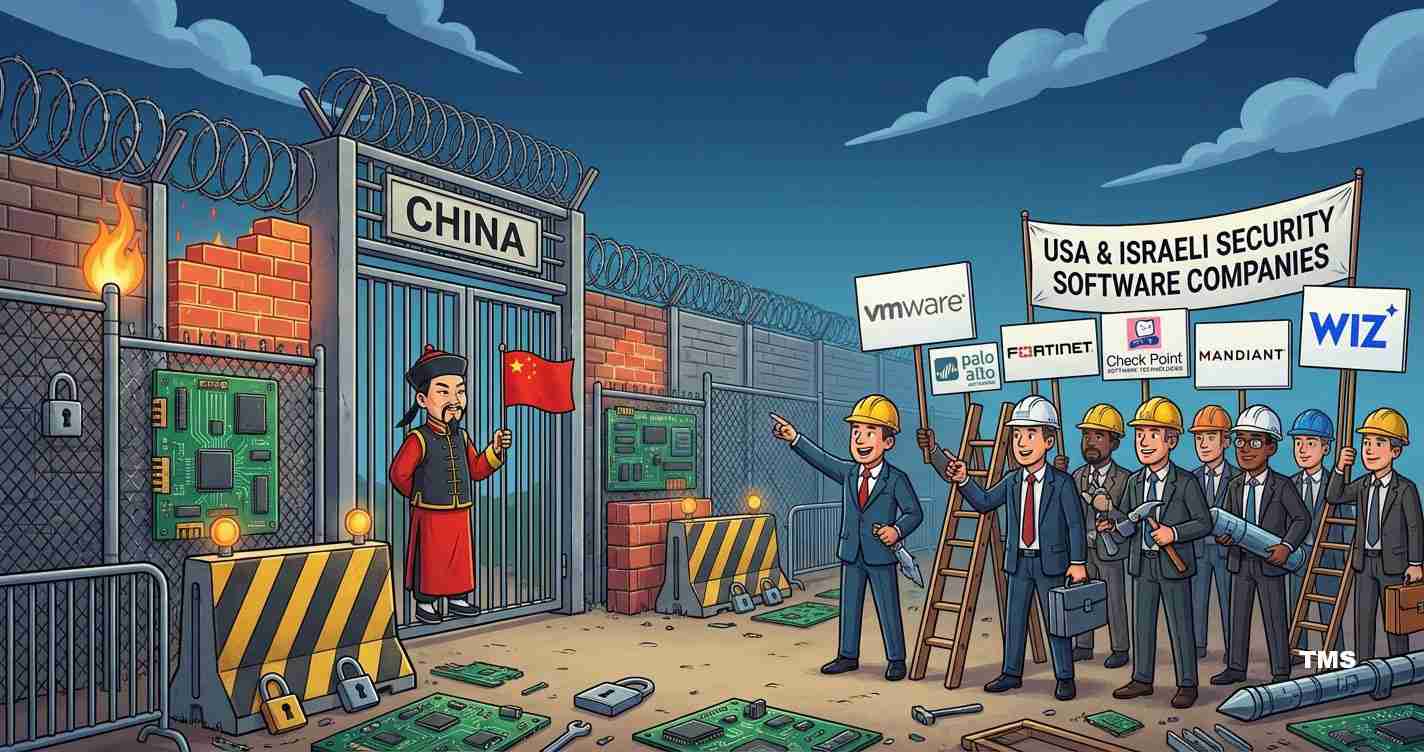
Beijing ordered domestic firms to halt use of cybersecurity products from more than a dozen U.S. and Israeli companies, saying the tools could collect and transmit sensitive data abroad and prompting a push toward Chinese-made alternatives.
Key takeaways
- Regulatory action: Chinese regulators told domestic firms to stop using security products from over a dozen U.S. and Israeli suppliers, according to Fox Business and The Jerusalem Post.
- National security rationale: Officials say the software could gather confidential information and send it overseas, a primary justification cited by Chinese authorities (The Jerusalem Post).
- Suppliers named: Companies listed include VMware, Palo Alto Networks, Fortinet, Check Point, CrowdStrike and others, with coverage tracked by multiple outlets including The Japan Times.
- Broader impact: The move accelerates Beijing’s strategy to replace Western tools with domestic alternatives in cloud, network defense and AI sectors.
Main story
What Beijing ordered and why
Chinese authorities have reportedly issued a directive instructing domestic customers to cease using certain foreign cybersecurity products. Officials contend these tools could collect confidential corporate or government data and transmit it overseas, a risk deemed unacceptable under current security rules. The Jerusalem Post reported analysts noting Beijing’s heightened concern that Western equipment might be vulnerable to exploitation or used to siphon data abroad (The Jerusalem Post).
Part of a broader push to replace foreign technology
The directive appears to be one element of a sustained effort by Beijing to reduce dependence on foreign technology and to prioritize Chinese-made alternatives in sensitive areas such as cloud computing, network defense and AI. Analysts say the aim is twofold: minimize perceived security risks and grow domestic cybersecurity champions, deepening the technological rivalry with the United States (The Jerusalem Post).
Who is affected: the companies named
News reports list more than a dozen vendors whose security products are targeted. Fox Business identified U.S. firms including VMware (owned by Broadcom), Palo Alto Networks, Fortinet, CrowdStrike, SentinelOne, Recorded Future, McAfee, Claroty, Rapid7, Mandiant (now part of Alphabet), and Imperva (owned by Thales). Israeli companies cited include Check Point Software Technologies, CyberArk, Orca Security and Cato Networks; reporting also named Wiz among those listed (The Jerusalem Post).
Note: Officials did not publish a formal public list. The companies named above were reported by multiple outlets working from regulatory guidance and industry sources, and details could change as authorities clarify the measure.
Timing and wider geopolitical context
The directive arrives amid escalating tensions between Beijing and Washington over technology, trade and national security. It follows prior Chinese efforts to bolster homegrown semiconductors and AI tools while limiting reliance on Western suppliers. Observers note the decision surfaced as Chinese special envoy Zhai Jun visited Israel and as U.S. export policy around AI chips (including recent approvals for some Nvidia shipments) drew attention to the complex interplay of trade and security (Fox Business).
How companies and markets could react
Firms named in reporting said they are reviewing developments and will comply with local laws. Suppliers with China exposure could face lost contracts, delayed deployments and pressure to support migration to other vendors. The decision could accelerate growth of Chinese cybersecurity firms and shift customers toward state-approved products, potentially affecting revenues for vendors dependent on the Chinese market (Fox Business).
“Banning foreign tools does not eliminate cyber risk — rapid substitutions can create coverage gaps, interoperability problems and added costs.”
Experts caution that replacing tools quickly requires testing, retraining and policy updates, steps that take time and money (The Jerusalem Post).
Legal and diplomatic implications
Framed as national security, the directive grants Chinese regulators broad authority over procurement for state-owned enterprises and critical infrastructure. The measure could prompt diplomatic protests, shape trade negotiations, and be used as leverage in broader tech talks. Observers note reciprocity: Washington has imposed export limits to China for security reasons, and Beijing’s actions may be seen in that strategic light (The Japan Times).
Implications for Fresno, California
Economic impact: Fresno businesses and farms with ties to China should watch for ripple effects. Local companies selling equipment, software or services to Chinese partners may see slower deals if customers pause purchases while replacing banned products (Fox Business).
Political consequences: City and county IT officials should note how international tech policy can affect municipal cyber risk and procurement. Changes in global vendor access could prompt local reviews and contingency planning.
Social and cultural effects: Withdrawals or reduced support could slow software improvements used by municipal services or regional healthcare providers, potentially affecting service delivery. Fresno’s education and tech communities may see increased interest in cybersecurity training to support domestic systems (The Japan Times).
Practical steps: Local organizations should audit cybersecurity supply chains, identify critical vendors, and plan contingencies. Cyber insurance providers and legal counsel can assist in risk mitigation (The Jerusalem Post).
Reporting, sources and next steps
This article draws on reporting from Times Media Service and coverage by major news outlets. Key background reporting is available from Fox Business, The Jerusalem Post, and The Japan Times.
Next steps for readers: Newsrooms and local leaders should monitor official Chinese guidance for any formal lists or enforcement details. U.S. lawmakers and industry groups may issue statements or policy responses. For Fresno-area organizations, immediate priorities are inventorying security tools, verifying vendor support, and updating incident response plans.