MirrorMe’s Bolt hits 22 mph in real-world test — the fastest humanoid robot of its size and a potential game changer for industry and sport
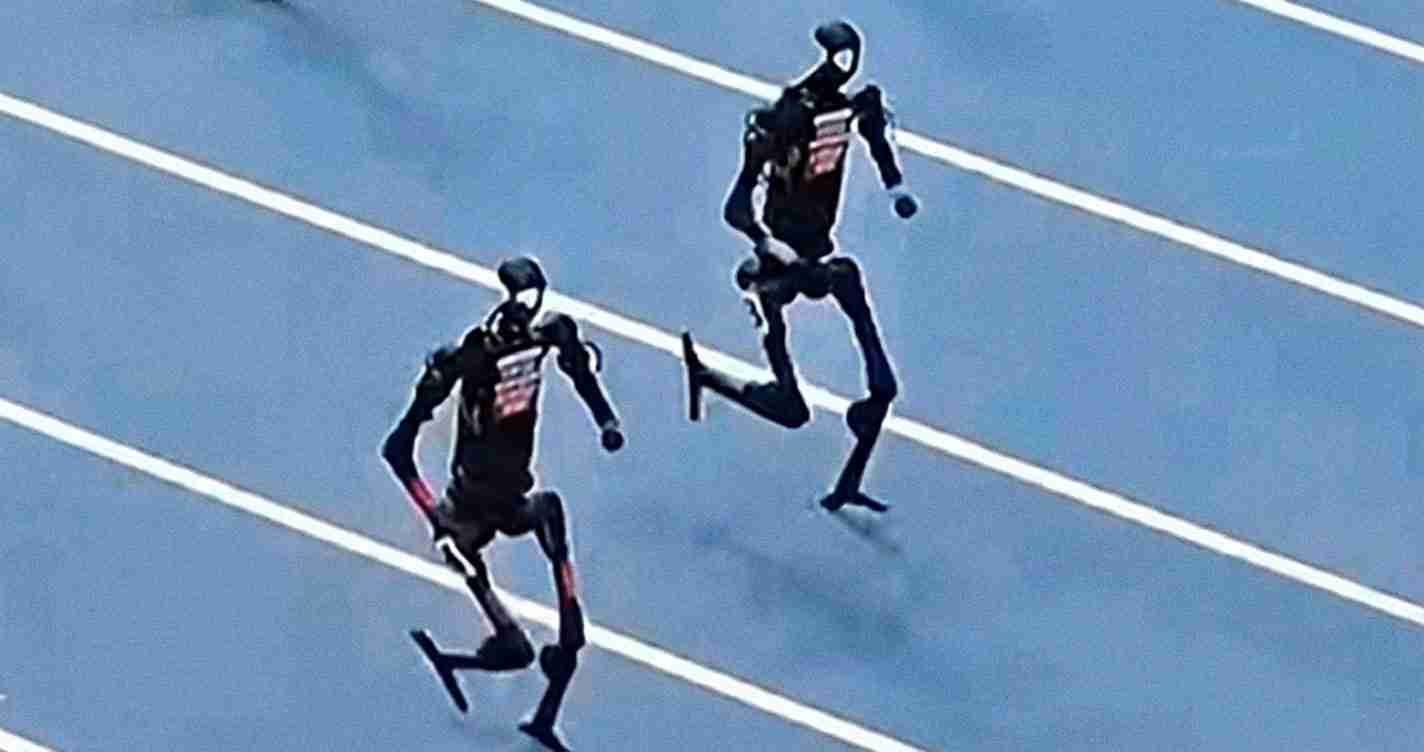
MirrorMe Technology’s full-size humanoid, Bolt, reached 10 meters per second (about 22.4 mph) in real-world treadmill and sprint tests — a company-shared feat the startup says makes Bolt the fastest humanoid of its size outside simulations.
Key takeaways
- Top speed: MirrorMe reports Bolt hit 10 m/s (~22.4 mph), often rounded to 22 mph by outlets.
- Size and design: Bolt is roughly 175 cm tall and 75 kg, the company’s “ideal humanoid form.”
- Evidence and limits: Split-screen company footage shows treadmill and sprint runs, but no independent lab verification had been reported.
- Applications: Potential uses span athletic training, industrial automation, and hazardous work — with policy and safety trade-offs.
Main content
What MirrorMe showed — video, tests and claims
MirrorMe released split-screen footage comparing Bolt running to company founder Wang Hongtao on a treadmill. The footage, presented as real testing in a controlled facility, shows Bolt maintaining a steady gait while the human runner slows. The company’s first video is available as company-shared footage and additional clips can be seen in supplementary footage.
Reported peak speed from reviewers of the clips is ~10 m/s (about 22.4 mph); some U.S. outlets rounded that to 22 mph, noting the runs appear to be performed by a physical robot rather than CGI (see coverage linked below).
Key specifications and company claims
- Model: Bolt, a full-size humanoid robot from MirrorMe Technology.
- Top speed reported: 10 m/s (~22.4 mph) (often rounded in coverage).
- Size and weight: ~175 cm (5 ft. 7 in.) and ~75 kg (165 lb.), described as an “ideal humanoid form” by the company (Fox News; Mugglehead).
- Design notes: MirrorMe attributes the performance to redesigned joints, high-performance motors, and an optimized power system that favor a high stride rate with shorter steps (Interesting Engineering).
How Bolt compares to people and other robots
Bolt’s peak speed approaches ranges seen in elite human sprinters. For context, world-class athletes can peak higher — for example, Usain Bolt reached near 12.4 m/s in his record run — but MirrorMe emphasizes Bolt’s ability to sustain speed without fatigue. The company has suggested athletic applications, calling Bolt a potential “steel sparring partner” for controlled training and motion-data collection (Fox News).
MirrorMe’s prior demonstrators include Black Panther II, which the company said ran 100 meters in 13.17 seconds on live Chinese TV, and work on quadruped platforms and partnerships with suppliers and universities (Mugglehead; Interesting Engineering).
Technical focus: speed vs. control
Engineers stress that the advance is not only raw top speed. MirrorMe highlights control systems, balance algorithms and drivetrain design that enable high-frequency strides while maintaining stability — critical for real-world use where uneven ground and obstacles exist. Future goals include improved perception, precision, and behavioral safety to operate reliably outside test tracks (Interesting Engineering).
Verification and independent review
Important caveat: the runs were shown in company footage that appears genuine, but no outside lab or third-party group had confirmed the result at the time of reporting. Independent testing is needed to assess repeatability, energy use, heat management, and safety systems — common concerns for robotics research and deployment (Fox News; Mugglehead).
“Third-party labs and peer review will be key to confirming how Bolt performs in varied environments and over repeated runs.”
Safety, ethical and policy questions
Human-sized robots moving at high speed raise policy and public-safety questions. Regulators will want clear information on perception stacks, collision avoidance, fail-safes, and rules for robot operation in public spaces. MirrorMe positions athletic training and industrial work as applications, but emergency response and hazardous-task automation are also plausible uses that require careful rules and oversight (Interesting Engineering).
Where MirrorMe fits in the robotics landscape
Founded mid-2024 but staffed by researchers with established experience, MirrorMe has focused on speed-focused humanoid platforms since 2016 by its own account. Its emphasis on matching human size and mass differentiates it from many lab-built or specialized robots. If independent validation confirms Bolt’s performance, it could change expectations for practical humanoid capabilities (Mugglehead; VnExpress).
Implications for Fresno, California
Economic impact: Fresno and the Central Valley, with large agriculture, packing and food-processing sectors, could see interest in automation that matches human size and movement. Bolt-like platforms might be adapted for repetitive field tasks, greenhouse work, sorting and packing, or hazardous jobs — potentially attracting robotics firms and suppliers.
Workforce and education: Local colleges and training programs may expand mechatronics, controls, and technician curricula. Workforce development will be important to help displaced workers transition into maintenance, supervision, or robot-tuning roles.
Political and social effects: Local leaders will balance economic incentives, zoning for testing facilities, and labor protections. Community outreach, demonstrations, and pilot programs that include worker voices can ease cultural friction in a region that values hands-on work and family farming traditions.
Practical near-term uses: Compact robotic assistants in packing houses, mobile inspection units for orchards, and remote-operated machines for hazardous cleanup after floods or fires represent realistic early deployments before any broad field rollout.
Sources and footage
- MirrorMe company footage (primary)
- Supplementary MirrorMe footage
- Fox News coverage
- MuggleHead report
- Interesting Engineering analysis
- VnExpress report
- UNILAD Tech coverage
Reporting from Beijing with Times Media Service.