
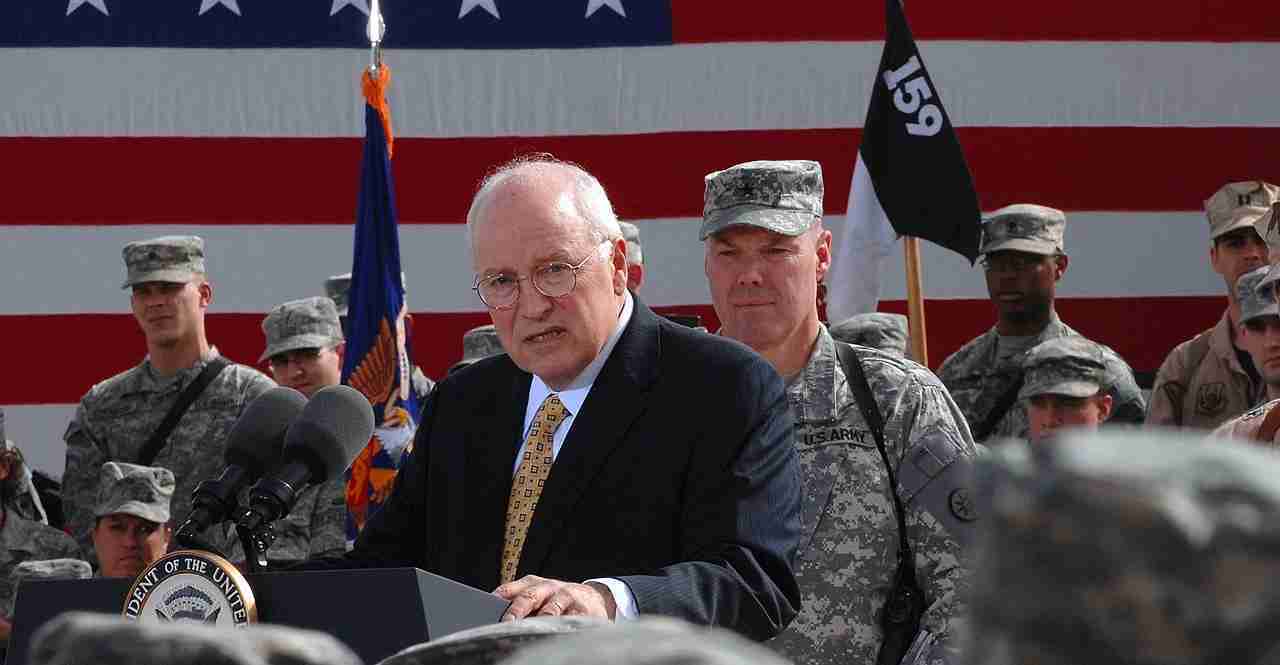
Dick Cheney dead at 84 — a political life built on gathering power and remaking the vice presidency
Former U.S. Vice President Dick Cheney died Nov. 3, 2025, at age 84, after complications from pneumonia and cardiac disease; his nearly four-decade career reshaped the vice presidency and concentrated executive power, leaving a polarizing legacy.
Key takeaways
- Death and cause: Dick Cheney died Nov. 3, 2025, at 84, with family at his side — ABC News.
- Career roles: He served as White House chief of staff, U.S. representative from Wyoming, secretary of defense and two-term vice president (2001–2009) — ABC News.
- Most powerful modern VP: Widely regarded as the most powerful vice president in modern U.S. history and a principal architect of post-9/11 policy — Wikipedia; National Review.
From Capitol Hill to the West Wing: career highlights
Dick Cheney’s path through Washington began early. He served as the youngest White House chief of staff under President Gerald Ford, a role that introduced him to the mechanics of executive power — cited in contemporary reporting by ABC News.
He won election to the U.S. House of Representatives from Wyoming and became known for close work with congressional leaders and as a policy operator — background summarized in ABC News.
Under President George H.W. Bush, Cheney served as secretary of defense and managed the military through the 1991 Gulf War — footage and analysis are available in historical clips on YouTube. His selection as vice president in 2001 marked a deliberate shift: Cheney transformed the office into an active policy hub, often described as having “the last word” in decision-making — context detailed on Wikipedia and reported by ABC News.
Cheney’s imprint on U.S. policy after 9/11
After Sept. 11, 2001, Cheney was a principal architect of the administration’s “war on terror.” He advocated for invasions of Afghanistan and Iraq and for expansive interpretations of presidential authority to permit detention, surveillance, and covert action — matters documented in both archival analysis and public records (YouTube; ABC News).
Cheney argued that statutes like parts of the Foreign Intelligence Surveillance Act and the War Powers Resolution should be interpreted to strengthen the executive branch. Supporters said such flexibility protected the nation; critics said it undermined checks and balances — see explanatory overviews on Wikipedia.
Approach to power: secrecy, coordination and a private chain of command
Cheney’s governing style emphasized central control and secrecy. He maintained multiple offices and reportedly used alternate systems for classifying information, reflecting his belief that decision-making should be concentrated among a trusted inner circle — described on Wikipedia.
When asked about the vice presidency’s role, Cheney reportedly said, “I have a different understanding with the president,” a line that captures his active view of the office.
He built relationships across the bureaucracy and military, turning the vice president’s office into a policy hub with permanent staff and direct lines to the president — a model that reshaped expectations for the office.
Legacy and controversy: sharply divided views
Supporters praise Cheney as decisive and focused, crediting him with protecting the nation and restoring presidential authority — perspectives reflected in defense commentary and endorsements (YouTube; National Review).
Critics describe him as the architect of costly wars and of policies that expanded executive power at the expense of civil liberties — controversies include the Iraq War justifications, enhanced interrogation, expanded surveillance, and debates over legal norms (YouTube; Wikipedia).
Historians suggest Cheney’s long-term significance is institutional: he transformed the vice presidency from a standby role into a working center of power with lasting procedural and organizational changes.
Personal life and final days
Cheney was married to Lynne Cheney for 61 years and had two daughters, Liz and Mary. The family’s statement celebrated his love of country, honor, kindness, and passion for fly fishing — personal details reported by ABC News.
Cause of death: Reports say Cheney died following complications from pneumonia and cardiac and vascular disease; family members were present at his passing (Wikipedia; ABC News).
Public reaction and remembrance
News of Cheney’s death prompted immediate reaction across the political spectrum. Veteran officials and allies praised his steadiness; opponents highlighted the human costs of wars and the civil liberties questions tied to his record. The discourse reflects enduring divisions over post-9/11 trade-offs (National Review).
Implications for Fresno, California
Economic impact: Direct effects on Fresno are limited; Cheney was not a California officeholder. Still, long-term federal priorities he influenced — defense contracting, homeland-security spending, and energy policy — have rippled into regional contracting and services that affect the Central Valley.
Political consequences: Local leaders and candidates in Fresno may respond in varied ways — some offering bipartisan respect, others renewing debates on executive power, war policy, and civil liberties.
Social and cultural effects: Civil liberties and immigrant-rights groups in the Central Valley may cite his role in expanding executive authority as part of calls for oversight, while veterans and security-focused constituencies may emphasize his national-security leadership. The moment may prompt forums, panels, and media coverage examining national decisions’ local impacts.



