
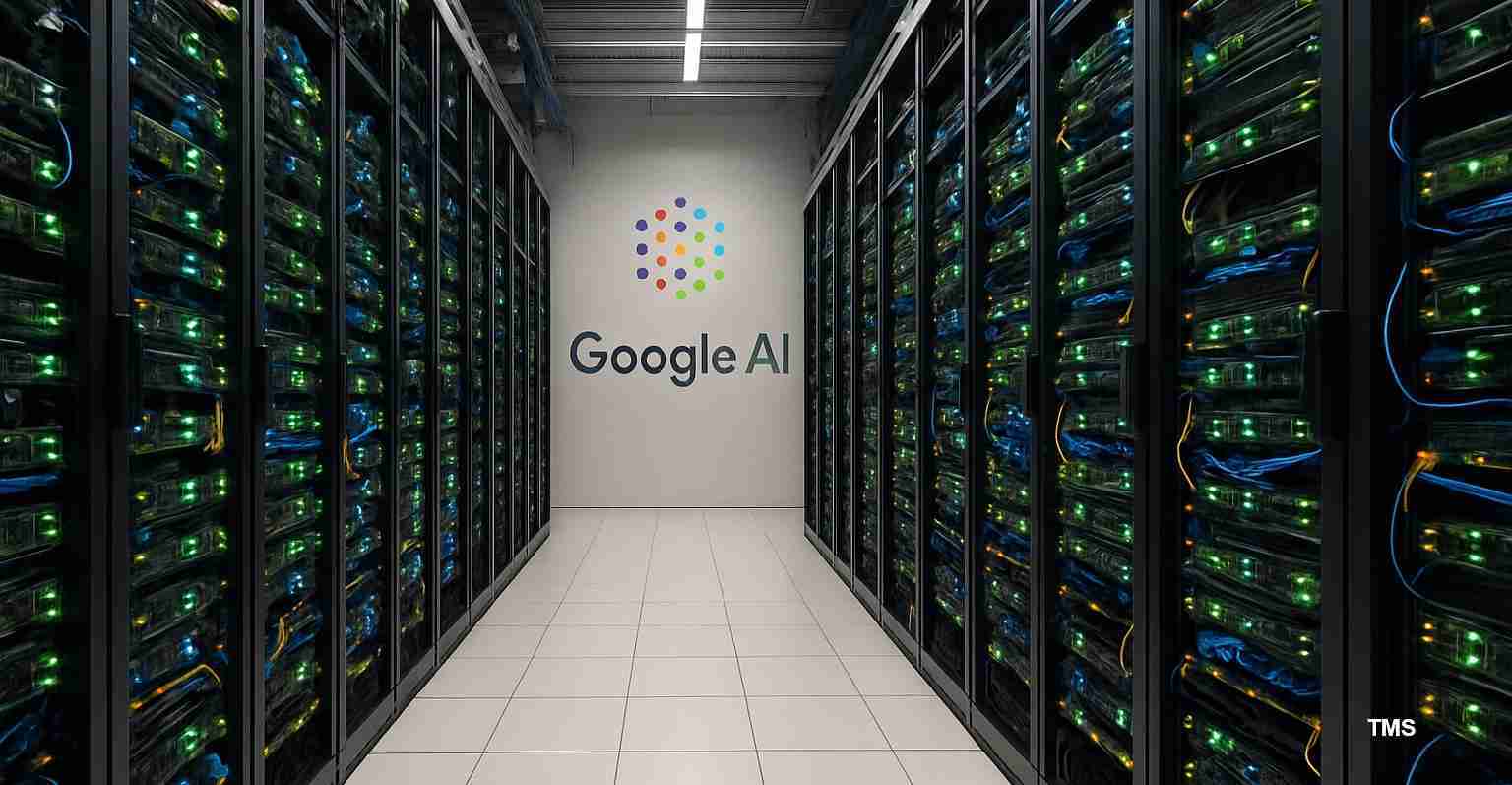
Google Announces $40 Billion to Build Three New Texas Data Centers, Citing Push for AI and Cloud Growth
Google announced a $40 billion plan to build three new Texas data centers and expand its Midlothian campus, aiming to boost Google Cloud and AI infrastructure across Haskell and Armstrong Counties while creating training and community energy programs through 2027.
- Investment: Alphabet Inc.’s Google will invest $40 billion, its largest single-state commitment.
- Sites: Two centers in Haskell County, one in Armstrong County, plus an expansion at Midlothian campus.
- Energy & community: One Haskell site pairs with a solar and battery plant and a $30 million Energy Impact Fund.
- Workforce: Commitments include training and support for more than 1,700 apprentices by 2030 and college partnerships.
What Google announced and why it matters
Overview: Google said the $40 billion will fund three new data centers in Texas and expand its existing Midlothian campus to support Google Cloud and AI services, according to the company and regional reporting by KERA News. CEO Sundar Pichai and Governor Greg Abbott framed the project as a bet on Texas’ land, power and workforce and was reported by The Texas Tribune.
This move is part of a larger race to build AI-ready infrastructure. Other companies — including OpenAI, Anthropic, Oracle and Samsung — have launched large projects in Texas, as noted in coverage by Newsmax and A News.
Where the data centers will be
Google plans two facilities in Haskell County (near Abilene) and one in Armstrong County (near Amarillo). The investment also supports Google’s Dallas Cloud region and expands its Midlothian campus in Ellis County, as reported by KERA News and KSAT.
Energy and technology features
To reduce strain on the Texas grid, one Haskell site will sit beside a new solar and battery energy plant developed with INtersect and TPG Rise Climate. Google also said the centers will use advanced air-cooling systems to improve energy efficiency, noted in a Ground News summary.
The company pledged $30 million to an Energy Impact Fund to help local groups work on energy affordability and related community projects.
Workforce development and community programs
A major part of the announcement focuses on hiring and training. Google plans to support more than 1,700 apprentices by 2030 and partner with state colleges, such as Dallas College and regional institutions, and work on Google Career Certificates, according to reporting from KSAT.
On the ground, each data center typically employs 50 to 150 people directly, while supporting jobs in construction, services and local supply chains. Industry estimates suggest roughly six indirect jobs are created for every center job (KSAT).
Economic and environmental context
The $40 billion will be invested through 2027 and is part of Google’s larger global capital expenditures push. The company is on track to spend more than $90 billion in 2025 on AI infrastructure, servers and data centers worldwide, per Newsmax. Google has also announced multibillion-dollar investments in India, Germany and the U.K., according to the same coverage.
But big data centers use a lot of power. Local leaders and environmental groups have raised concerns about grid strain, water use and land impacts; Google’s energy partnerships and efficiency measures aim to reduce those impacts, though regulators and local officials will likely monitor needs as construction proceeds (KERA News, KSAT).
Questions for further reporting
- How will local permitting and tax agreements be structured in Haskell and Armstrong Counties?
- What are the exact timelines for construction and when will hiring ramp up?
- How will the new solar and battery plant connect to Texas’ grid and to local consumers?
- Which community organizations will be eligible for the Energy Impact Fund and how will funds be allocated?
Implications for Fresno, California
Economic impact
Fresno could feel effects in several ways: the announcement underscores nationwide demand for cloud and AI skills, potentially spurring local training and job programs. Local colleges and job centers may expand certificate programs to prepare residents for remote or hybrid roles with cloud companies (KERA News).
California’s higher power costs and stricter permitting make Fresno a less likely choice for energy-heavy data centers, but the region could attract related investments in cloud services, software development and supply-chain roles (A News).
Political consequences
The announcement highlights state policy differences: Texas’ deregulated power markets and land availability are draws. Fresno leaders and California policymakers may use this example in debates on tax incentives, land use and permitting reform to stay competitive.
Social effects
Workforce programs tied to Google’s deal—apprenticeships and certificate courses—offer a model Fresno can replicate. However, rapid tech-driven job growth can widen gaps if training and hiring do not reach lower-income communities; equitable access must be prioritized.
Cultural relevance
Fresno values practical job opportunities and community ties. Programs with local hiring goals and clear community benefits will likely gain support.
Practical applications for residents
- Job training: Expand AI and cloud coursework and Google Career Certificates (KERA News).
- Business opportunities: Construction, logistics and services firms can market expertise to national data center projects.
- Energy planning: Study utility-scale renewable and storage projects as examples for meeting rising demand while protecting grid stability.
Sources and further reading
“This investment is a bet on Texas’ land, power and workforce as central to building infrastructure that can handle advanced artificial intelligence,” — CEO Sundar Pichai and Governor Greg Abbott, as reported by The Texas Tribune.



