Berkeley astronomers witness a magnetar birth in SN 2024afav, confirming the engine behind superluminous supernovae and a general-relativity “chirp”
Berkeley astronomers report witnessing the birth of a magnetar in supernova SN 2024afav, confirming that magnetars power superluminous supernovae and revealing a general-relativity “chirp” in its light curve — detailed in a Nature paper published March 11, 2026.
- Direct magnetar birth: Analysis shows the explosion created a rapidly spinning, highly magnetized neutron star that powered the supernova’s extreme brightness.
- Measured properties: The newborn magnetar spun near 4.2 milliseconds and had a magnetic field roughly 300 trillion times Earth’s — values that match magnetar-powered SLSN predictions (Berkeley News).
- GR “chirp” detected: Observers recorded brief, regular rebrightenings — a light-curve “chirp” — that the team ties to general-relativistic effects on a spinning magnetar (UC Berkeley College of Letters & Science).
- Team and method: Graduate student Joseph Farah led the analysis with collaborators including Alex Filippenko and D. Andrew Howell; results are presented in a Nature paper (published March 11, 2026).
What happened
In December 2024 the supernova designated SN 2024afav erupted about one billion light-years from Earth. Telescopes tracked its brightness over months and recorded a pattern of short, periodic rebrightenings — described by the team as a “chirp.” The observational data and models together identify the source of the extra energy as a newborn magnetar embedded in the expanding debris.
Why it matters
Superluminous supernovae (SLSNe-I) have been enigmatic since their discovery: they shine far brighter and for longer than typical supernovae. The magnetar model — first proposed by Dan Kasen (2010) and suggested independently by Stan Woosley — posits that a rapidly spinning, highly magnetized neutron star deposits rotational energy into ejecta, sustaining the glow. The SN 2024afav observations provide direct, empirical confirmation of that model, turning a long-standing theory into an observed mechanism.
The general-relativity “chirp” explained
The light curve’s small, regular bumps form a rising-and-falling pattern analogous to an audio chirp. The team shows these modulations can arise from general-relativistic interactions involving a rapidly spinning magnetar and the expanding stellar debris. That makes the chirp a signature — a fingerprint — of magnetar birth visible in optical light.
Measured magnetar properties
Model fits to the light curve yield a magnetar with a spin period near 4.2 milliseconds (over 1,000 rotations per second) and a magnetic field of order 3×10^14 gauss — roughly 300 trillion times Earth’s field. These numbers align with the predicted parameter space for magnetars capable of powering SLSNe.
Breaking down the magnetar mechanism (plain terms)
Core collapse: When a very massive star exhausts its fuel, the core collapses into a compact remnant. If a black hole is not formed, the remnant can be a neutron star about ~10 miles across but extremely dense.
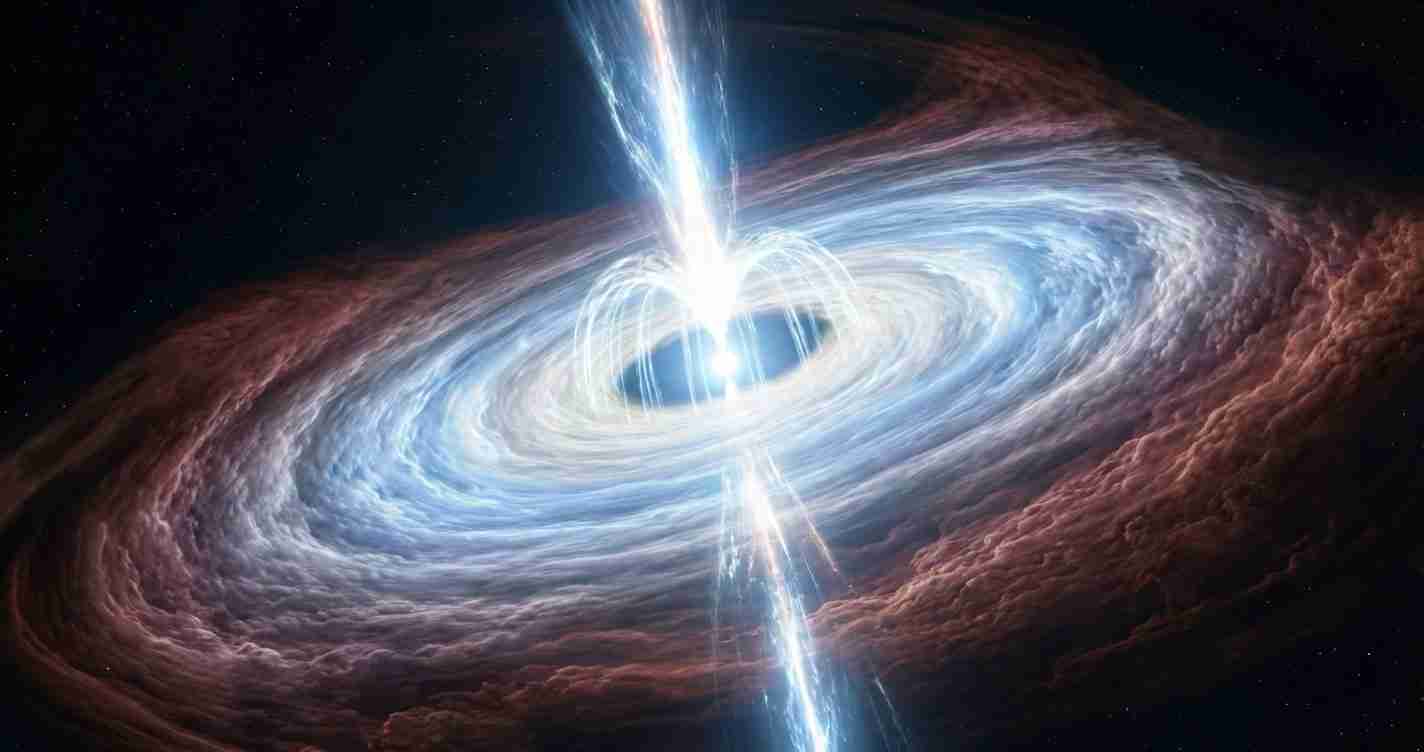
Magnetar formation: If that neutron star spins very fast and carries a very strong magnetic field it becomes a magnetar. As it spins down, magnetic torques accelerate particles that slam into the expanding ejecta, heating it and prolonging the supernova’s brightness.
In SN 2024afav the measured spin-down and field strength fit this picture, making the magnetar explanation physically compelling.
How the team reached its conclusion
The analysis combined careful photometric monitoring of SN 2024afav with theoretical models that include general-relativistic effects on a rotating magnetar. Joseph Farah (graduate student, UC Santa Barbara, Las Cumbres Observatory) led the analysis, with significant contributions from UC Berkeley faculty including Alex Filippenko, and collaborators such as D. Andrew Howell, Logan Prust, and Yuan Qi Ni. The team’s statistical tests and modeling are described in the peer-reviewed Nature paper published March 11, 2026.
“The most exciting thing I have ever had the privilege to be part of,” said Joseph Farah, who led the analysis. The team describes the chirp as a clear, testable fingerprint of magnetar birth.
What comes next for astronomers
The SN 2024afav chirp provides a template for identifying other magnetar births. Ongoing and future surveys can search for similar light-curve signatures to build a sample of magnetar-powered SLSNe. That sample will help determine how often massive stars produce magnetars, how magnetars evolve, and how magnetar physics connects to phenomena like fast radio bursts. The observation also opens a new avenue to test aspects of general relativity in extreme astrophysical environments.
Implications for Fresno, California
Economic impact: The discovery is unlikely to deliver immediate major funding to Fresno, but it raises the profile of California astronomy and could help attract research grants and partnerships to regional institutions.
Education and workforce: Local K–12 schools, Fresno State, and community colleges can use the discovery to inspire STEM interest and link classroom lessons to real research in physics, engineering, and data science.
Outreach and tourism: Museums and planetariums in the region can stage talks, exhibits, and star parties explaining magnetars and supernova science. Low-cost programs such as researcher video calls can increase community engagement.
Research partnerships: Fresno-area institutions can participate in data analysis, software development, and public engagement tied to surveys and collaborations like Las Cumbres Observatory.
Cultural relevance: The story offers a concrete example of how basic science and technical skills link to careers and community curiosity, giving Fresno residents a local framing for a major astrophysical result.
Sources and further reading
- UC Berkeley College of Letters & Science: Astronomers capture birth of a magnetar, confirming link to some of universe’s brightest exploding stars
- Berkeley News: Astronomers capture birth of a magnetar, confirming link to some of universe’s brightest exploding stars
- Smithsonian Magazine: Astronomers witnessed the birth of a magnetar for the first time
- Perplexity.ai coverage summary
- National Today summary: Astronomers witness magnetar birth
- ScienceSpings repost from UC Berkeley release
- Popular Science: First magnetar birth coverage