
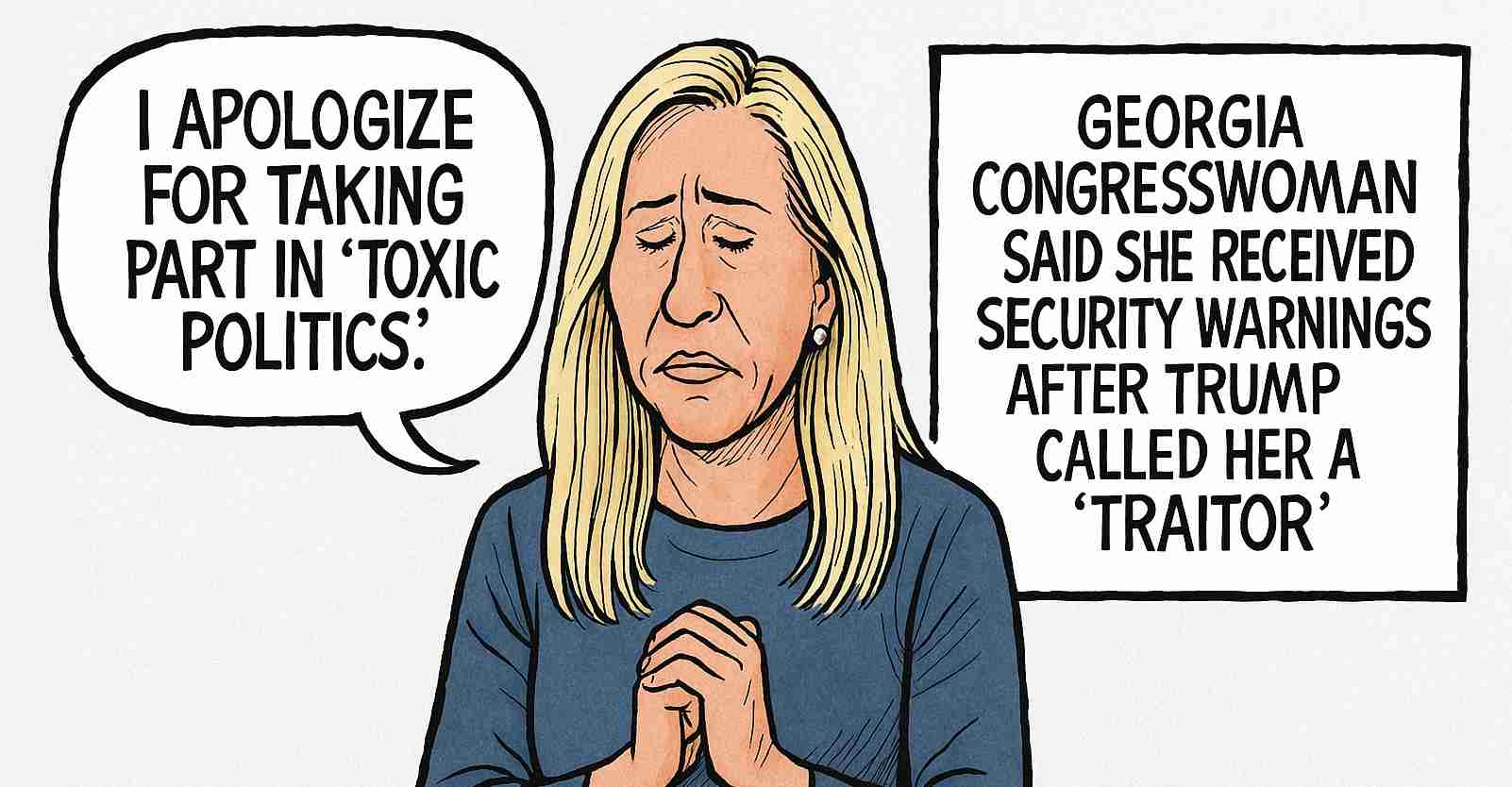
Marjorie Taylor Greene apologizes for role in ‘toxic politics’ as Trump attacks, says threats rose after feud over Epstein files
Marjorie Taylor Greene, a Republican congresswoman from Georgia, apologized for her role in “toxic politics” after a public feud with former President Donald Trump, saying his criticism on Truth Social coincided with increased security threats.
- Public apology: Greene said on CNN’s State of the Union that she is “sorry for taking part in the toxic politics” and will try to be kinder.
- Security concerns: She reported private security warnings and an uptick in death threats after criticism from former President Trump on Truth Social.
- Core dispute: The clash centers on Greene’s push for the public release of Department of Justice files related to Jeffrey Epstein — a transparency effort she defended as supporting survivors (Justice Department archives).
- Mixed alignment: Greene says she still supports the broader goals of the Trump administration while pressing for document release and survivor rights (Office of Congresswoman Marjorie Taylor Greene).
Apology on national TV
On Nov. 16, 2025, Representative Marjorie Taylor Greene appeared on CNN’s State of the Union and offered what she described as a humble apology for contributing to divisive public discourse.
“I would like to say, humbly, I’m sorry for taking part in the toxic politics. It’s very bad for our country,” Greene told host Dana Bash, adding that she wanted to “put down the knives in politics.”
Greene framed the apology as personal responsibility: “I’m only responsible for myself and my own words and actions,” she said. Her office described the comments as an attempt to reset her public image amid rising pressure from both critics and allies.
Security warnings and threats after Trump’s posts
Greene told CNN and later posted on social media that private security firms had contacted her with warnings about heightened threats. She directly linked the surge in hostile attention to criticism from former President Trump on Truth Social, where he called her “Wacky Marjorie,” accused her of constant complaining and suggested he might back a primary opponent.
“Egged on” by top-level posts: Greene said those posts “egged on” people who want to harm her, and that private security alerts and pleas from family members — including her daughter’s request to “pray for my mom’s safety” — followed the exchanges.
Her congressional office confirmed she has taken additional security precautions but declined to disclose operational details for safety reasons (Office of Congresswoman Marjorie Taylor Greene).
Roots of the Trump-Greene feud
The dispute traces to Greene’s vocal demand for the full public release of Department of Justice materials related to Jeffrey Epstein. Greene argued transparency would help survivors seek justice and prevent powerful figures from being shielded by secrecy — a position that put her at odds with Trump and his allies.
Greene’s stance: “I will not apologize for that,” she told reporters. “The country deserves transparency in these files and I don’t believe that rich powerful people should be protected if they did anything wrong.” The Justice Department’s public releases and archives provide the context for lawmakers’ calls for disclosure (Justice Department archives).
Political fallout and shifts in tone
Observers said Greene’s televised apology marks a notable tonal shift from her prior combative style. In recent months she has crossed party lines on some policy matters, drawing concern from segments of conservative leadership that view her moves as departures from party orthodoxy.
Despite the split with Trump on the Epstein files issue, Greene emphasized continued support for the Trump administration’s broader goals. She framed her advocacy for document release as driven by survivor rights and accountability rather than partisan gamesmanship.
Analyst perspective: “This is a sign of how fractured political alliances have become,” said a GOP strategist unaffiliated with Greene. The public nature of intra-party fights can raise personal risk and political stakes.
Reporting and source notes
This article draws on Greene’s Nov. 16 interview on CNN’s State of the Union, posts on Truth Social, and public records related to Epstein-related materials from the Justice Department archives. Additional material came from statements on the Office of Congresswoman Marjorie Taylor Greene.
Implications for Fresno, California
Economic impact
- Security costs: Increased threats to public figures can boost demand for private security services; Fresno-based firms, venues and vendors could see more local contracts.
- Fundraising and tourism: High-profile disputes may reduce attendance at events featuring national figures, affecting local fundraisers and conventions.
Political consequences
- Voter sentiment: Moderate Fresno voters may react negatively to extreme partisan rhetoric, increasing appeal for candidates who emphasize civility and problem solving.
- Local races: Central Valley campaigns may distance themselves from controversial national figures and focus on pragmatic issues like water, housing and jobs.
Social effects
- Civic discourse: Local groups and media may host discussions on political violence, public safety and social media’s role in escalating disputes.
- Safety concerns: Residents and event organizers may reassess safety plans for rallies and public appearances amid heightened anxiety.
Cultural relevance
Messages about transparency — such as Greene’s push for the Epstein files release — may resonate with Fresno voters who value accountability. At the same time, appeals for kinder public discourse could find support among community leaders seeking less division.
Practical applications for residents
- Check organizers’ security and timing when attending political events; venues may add screenings or change locations.
- Follow local coverage that connects national disputes to community impacts.
- Engage in civic channels to push for transparency and accountability at the local level.
Sources and links for further reading
- CNN — State of the Union (interview transcript and video)
- Truth Social (posts by Donald Trump)
- U.S. Department of Justice — Archives (Epstein-related materials)
- Office of Congresswoman Marjorie Taylor Greene
- Times Media Service (parent publication)
Reporting by Times Media Service.



