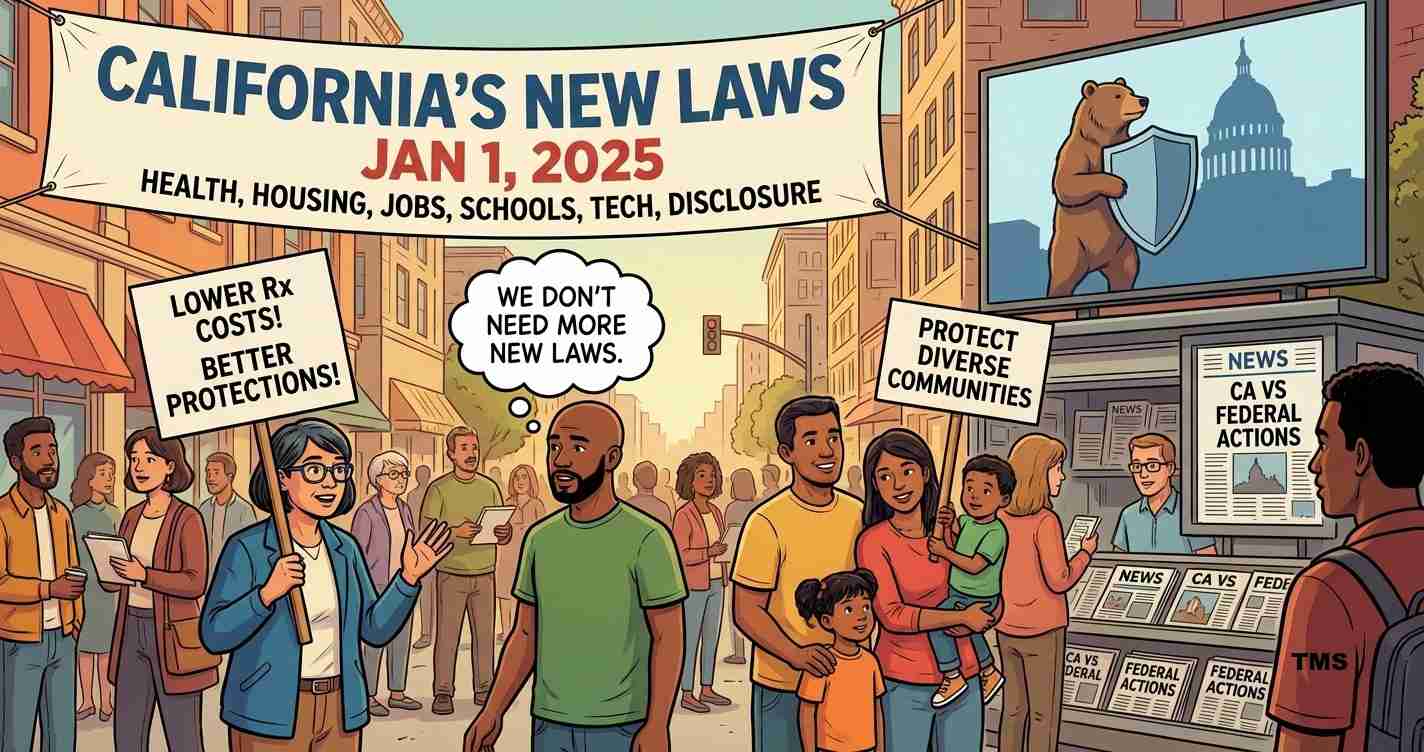
New California laws for 2026 take effect Jan. 1, expanding IVF coverage, tenant protections, transit housing and workplace reporting
Effective January 1, 2026, California enacted laws expanding IVF access, bolstering tenant protections for Social Security delays, enabling transit-oriented housing, increasing employer pay-data reporting, expanding the CARE Act and tightening consumer and AI-related rules statewide.
- Expanded fertility coverage: State law broadens insurance access to in vitro fertilization — see CalMatters.
- Tenant protection for benefit delays: Landlords cannot evict tenants who miss rent because of delayed, reduced or terminated Social Security benefits — see ABC7.
- Transit-oriented housing: Up to nine-story residential buildings allowed within half a mile of frequent transit in eight counties — see ABC7.
- Pay-data reporting: SB 464 increases employer reporting and enforcement; 2026 reports due May 12 — see KTVU.
Healthcare and reproductive rights
IVF coverage expansion: One of the headline changes requires broader insurance coverage for in vitro fertilization, intended to lower financial barriers for couples and individuals seeking assisted reproduction. The law phases in per health-plan rules and regulatory guidance; insurers and consumers should watch implementation notices and benefit updates from carriers. CalMatters
Housing and tenant protections
California’s 2026 housing measures aim to increase supply near transit and provide targeted tenant protections.
Eviction protection tied to Social Security delays
Landlords are barred from evicting tenants who cannot pay rent because federal Social Security payments were delayed, reduced or terminated through no fault of the renter. The statute aims to prevent housing loss while federal benefit issues are resolved. ABC7
Transit-oriented housing expansion
A statewide law allows higher-density residential buildings — up to nine stories — within a half-mile of frequent bus routes, rail lines or subway stations in Alameda, Los Angeles, Orange, Sacramento, San Francisco, San Mateo, San Diego and Santa Clara counties. The state law can override some local zoning to speed construction near transit, while local governments retain design and permitting roles. ABC7
Consumer rules: plastic bags and platforms
Single-use bag ban: Shoppers must bring reusable bags or buy bags made from recycled paper at checkout to reduce plastic waste; retailers should prepare signage, checkout updates and compliance plans. ABC7
AI and platform rules: The package includes measures touching artificial intelligence safeguards and food delivery platform rules, but several provisions require administrative rules or clearer effective dates — businesses should monitor agency rulemaking and guidance. CalMatters; ABC7
Workplace rights and pay transparency
SB 464 ramps up employer reporting and enforcement on pay equity. Private employers must submit employee pay data in new job-category formats with demographic breakdowns that are kept separate from personnel files. The California Labor Commissioner has expanded authority to pursue penalties when disparities are identified. Reports for 2026 are due May 12, 2026. Employers should consult payroll and HR vendors on secure data handling and compliance. KTVU
Mental health services: CARE Act expansion
SB 27 expands the CARE Act eligibility to include adults with bipolar I disorder with psychotic features, providing targeted behavioral health care and housing supports through voluntary agreements or court-ordered plans. Counties and courts will coordinate implementation to identify eligible residents and deliver services aimed at reducing crisis cycles and homelessness. California Courts newsroom
Areas needing clarification
Several laws include broad mandates that rely on agency regulations for enforcement details. For example, AI protections and some food delivery platform provisions need rulemaking to clarify compliance timelines and enforcement mechanisms. Businesses and local regulators should watch for guidance documents and potential litigation. CalMatters; ABC7
Implications for Fresno, California
Statewide changes will have varied local effects in Fresno depending on funding, county actions and local planning decisions.
Economic impact
Although Fresno is not among the eight counties targeted for immediate nine-story transit-oriented housing, state incentives and shifting priorities may influence regional planning, grant applications and zoning reforms. Increased housing supply statewide could help rent pressures, but direct infrastructure and funding will depend on local action. ABC7
Political consequences
Local officials will need to explain how state laws affect city services, planning and budgets. Housing approvals, homelessness programs and public-safety discussions may become focal points in local races.
Social and community effects
The CARE Act expansion could increase county involvement in intensive treatment and housing supports. Fresno County behavioral health agencies, nonprofits and service providers should prepare for increased referrals and coordination with courts. California Courts newsroom
Cultural relevance and community response
IVF coverage expansion may particularly resonate with Fresno families facing high fertility treatment costs. Community health centers and insurers should update outreach and benefit explanations so consumers can confirm coverage, prior authorization and network requirements. CalMatters
Practical applications for residents and businesses
- Renters: If you miss rent because Social Security payments were delayed, keep documentation and contact tenant legal aid or county housing offices for guidance. ABC7
- Employers: Review SB 464 requirements now and prepare to collect required pay and demographic data for the May 12, 2026 reporting deadline; consult payroll/HR vendors on secure handling. KTVU
- Shoppers and retailers: Bring reusable bags or be prepared to buy recycled paper bags; retailers should post notices and update checkout systems. ABC7
- Health consumers: Contact your insurer to confirm IVF coverage, prior-authorization requirements and network rules. CalMatters
Reporting and next steps
Governor Gavin Newsom announced the laws as part of the state’s focus on public safety, affordability, transparency and accountability. Implementation will involve state agencies, counties, courts and local governments. Residents and organizations should watch for agency rulemaking, guidance memos and outreach materials that explain enforcement, funding and timelines. CalMatters; ABC7; KTVU; California Courts newsroom
Quick action: Keep documentation for benefit interruptions, consult employers on SB 464 readiness, check insurer notices for IVF coverage and monitor agency rulemaking for AI and platform rules.