
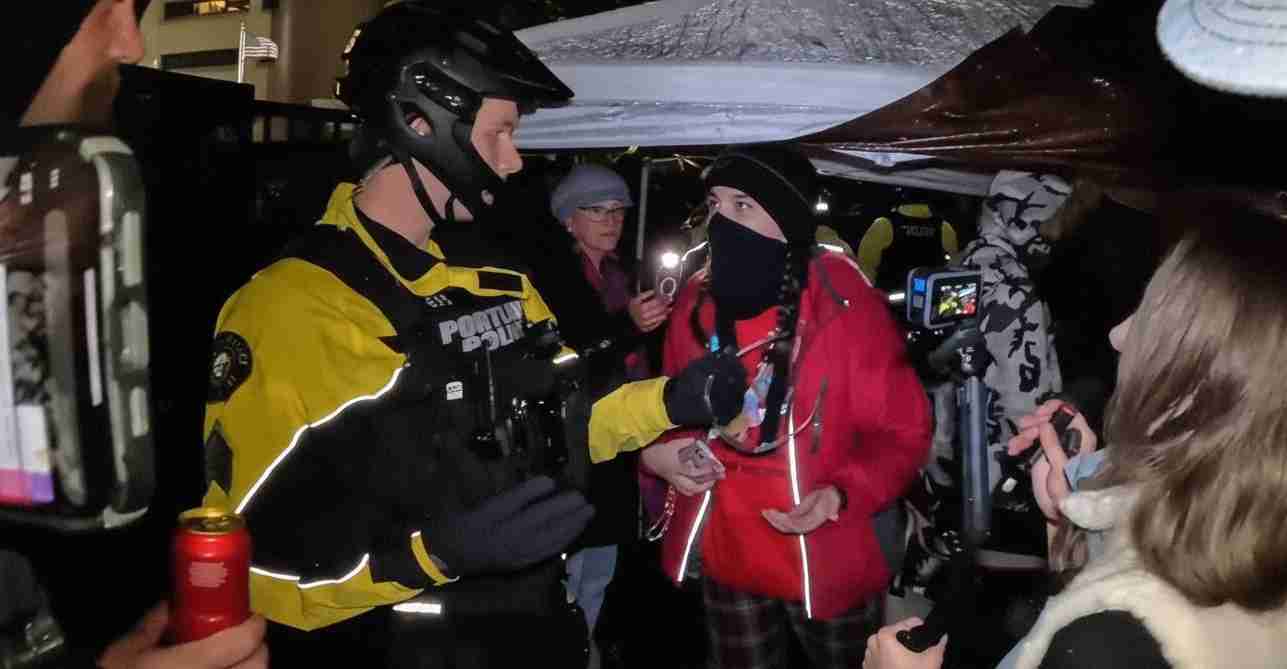
Portland police clear ICE protest encampment; warn of stepped-up enforcement amid use of undercover informants
Portland police dismantled a months-long encampment outside the South Portland ICE facility, ordered tents removed and warned of increased enforcement, while acknowledging use of undercover informants that monitored demonstrations and sparked legal and political scrutiny.
- Encampment cleared: Officers removed tents and structures after roughly four to five months; Video footage documented the confrontation.
- Undercover monitoring: The Portland Police Bureau confirmed use of undercover informants (not federal agents) to observe protest activity; reporting by KATU details police statements.
- Federal response and legal fallout: Federal officers used crowd-control munitions at times and the Trump administration announced an investigation; a judge also issued a temporary restraining order regarding the Oregon National Guard (OPB, OPB).
Encampment removal and immediate events
The encampment outside the South Portland ICE facility had been active for about four to five months. Protesters established tents, banners and makeshift structures that drew continuous demonstrations and a strong police presence.
Portland officers ordered tents removed and dismantled remaining structures on site. Independent footage shows confrontations between officers and demonstrators during the clearance; see Video footage of the removal.
Police officials cited incidents — including a reported assault on a journalist near the facility — as part of their rationale for the clearance and an announced plan to increase enforcement. Local reporting and live footage documented scenes before, during and after the police operation.
Undercover informants: what police acknowledge and what questions remain
PPB acknowledged using undercover informants to monitor protest activity and said those operatives were not federal agents. Police framed the tactic as a *preventive* measure to identify people allegedly planning criminal acts while allowing lawful protest. KATU’s coverage summarizes police statements.
“Informants were used to monitor activity and identify potential criminal planning,” police said while emphasizing that the operatives were not federal agents.
Court filings tied to arrests reference undercover observers, suggesting evidence gathered influenced charging decisions. Critics warn that such tactics can chill free speech and undermine public trust, especially when agencies do not explain recruitment, direction or oversight of informants. Advocates call for transparency and clear legal safeguards to protect constitutional rights.
Arrests, legal filings and movement of cases
Multiple arrests occurred during protest events, with charges ranging from property damage to more serious allegations tied to confrontations. Video summaries and court documents reference undercover presence at demonstrations; see a video summary that reviews arrests and filings.
Those court records are being reviewed in ongoing proceedings and could shape outcomes in pending cases. Some arrests attracted national attention, and federal officials described parts of the protests as violent — complexity that elevated the situation into a broader political dispute.
Federal law enforcement response and political context
Federal officers sometimes used tear gas, smoke canisters and pepper balls during crowd-control actions near the ICE facility, intensifying debate about the roles of federal versus local law enforcement when protests center on federal property. Reporting details these deployments (OPB).
The Trump administration announced a full investigation into Portland police actions after certain arrests, while a federal judge issued a temporary restraining order blocking attempts to place the Oregon National Guard under federal command, keeping authority with state and local officials for now (OPB).
Local voices and public reaction
Protesters described the encampment as a sustained protest against federal immigration enforcement; organizers said it highlighted what they view as harsh policies. City and federal officials emphasized public-safety concerns where clashes escalated or journalists were harmed. Scene footage and analysis reflect these competing narratives.
Community advocates demand transparency about informant use, arguing that secretive monitoring risks eroding trust with communities of color and immigrant residents. Legal experts note undercover monitoring can be lawful to prevent crime but must be narrowly tailored and accompanied by safeguards.
What this could mean for future protests and policing
Police warnings of stepped-up enforcement indicate a more proactive posture: increased patrols, quicker interventions on rule violations, heightened surveillance and continued use of undercover monitoring. Law enforcement signals an emphasis on identifying people they believe plan criminal acts, not only reacting after violence occurs.
Civil liberties groups caution that stronger enforcement may suppress lawful demonstration. Police counter that their stated aim is to permit lawful protest while preventing crime. How authorities balance safety and free expression will shape whether future protests remain peaceful or escalate.
Broader context
The Portland encampment is part of a national pattern of immigration-related protests that have led to encampment clearances, undercover monitoring and, at times, federal intervention. National analysis places Portland in a larger trend of similar tactics across cities (Analysis).
Sources and reporting
This report draws on local news reporting, video footage, court documents and regional coverage, including:
- reporting and footage of the encampment removal
- KATU’s coverage of undercover informants and police statements
- video summaries of arrests and legal filings
- reporting on federal responses and restraining orders (OPB)
- coverage of federal investigation and political reaction (OPB)
- national analysis of immigration protests
- additional scene footage
Implications for Fresno, California
Fresno residents and organizers should closely monitor Portland developments because tactics used there — including undercover informants and stepped-up enforcement — could influence local protest planning and law-enforcement responses.
Practical considerations:
- Nonprofits and immigrant-rights groups may expand legal observer programs and volunteer training.
- Organizers could increase communication with police and media to protect journalists and attendees.
- Community briefings and transparent policies on monitoring can help preserve public trust.
Local officials in Fresno may face political pressure from both public-safety advocates and civil-liberties defenders as similar incidents elsewhere shape public debate and possible policy changes. Legal outcomes from Portland may set precedents for intergovernmental coordination and the limits of federal intervention.
For residents and organizers: review safety plans, strengthen legal support, and prioritize transparent community engagement to protect both the right to protest and public safety.


