
Federal judge blocks Trump National Guard Portland deployment, citing 10th Amendment in permanent injunction
U.S. District Judge Karin Immergut issued a permanent injunction blocking former President Donald Trump from federalizing National Guard troops for deployment to Portland, finding the move unconstitutional under the 10th Amendment after suits by Portland, Oregon and California officials.
Key takeaways
- Permanent injunction: Judge Karin Immergut issued a permanent injunction finding the federalization and deployment unconstitutional and in violation of the 10th Amendment (full coverage).
- Who sued: The city of Portland and the states of Oregon and California challenged the plan as an infringement on state sovereignty (reporting).
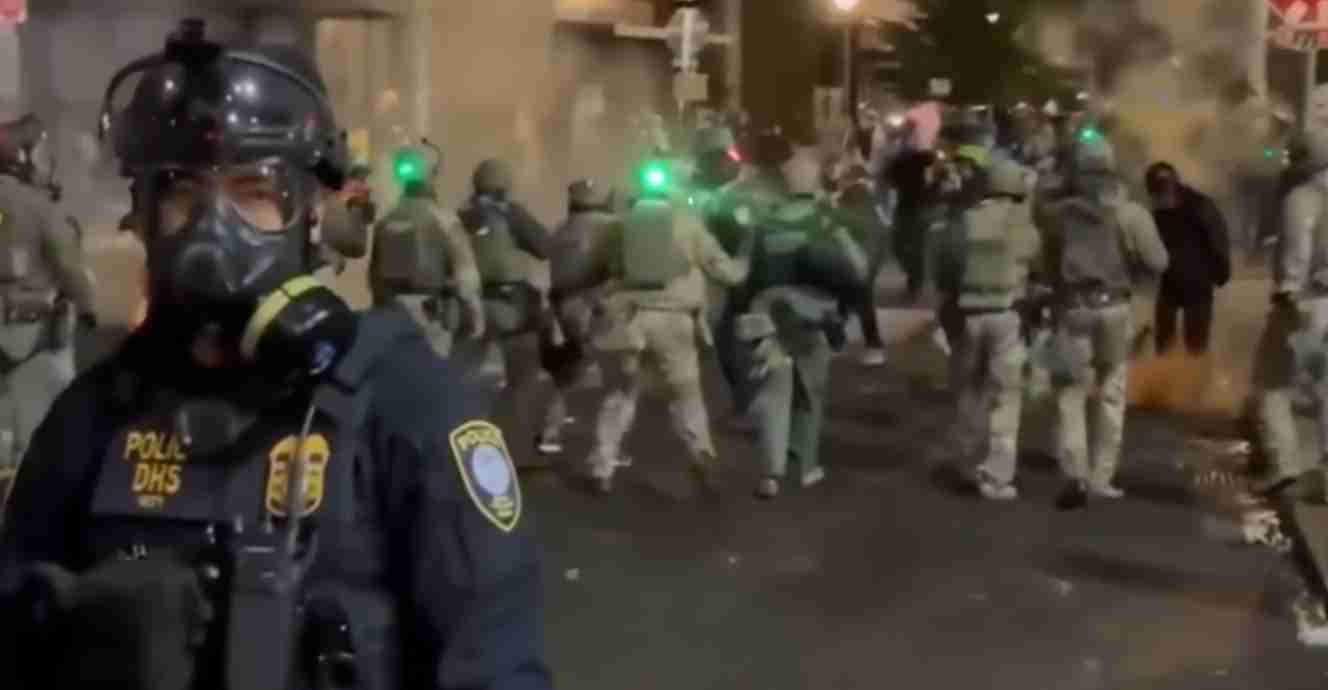
- Facts on the ground: The court found protests were largely peaceful after an early period of unrest and that local law enforcement could handle the situation (case notes).
- Appeal expected: The Trump administration is expected to appeal, likely to the 9th U.S. Circuit Court of Appeals (OPB coverage; KLCC timeline).
Background: Trump National Guard Portland push
In the weeks before the lawsuit, the Trump administration sought to federalize National Guard troops from Oregon and California and send them to Portland in response to protests outside the Immigration and Customs Enforcement facility. President Trump described Portland as “war ravaged” and “under siege,” saying he would “provide all necessary Troops.” Local leaders, including Portland city officials and state attorneys general, pushed back, arguing the move risked escalating tensions and infringed on state control (reporting; KLCC coverage).
The legal challenge
The case reached U.S. District Court where Judge Karin Immergut—who was appointed to the bench by former President Trump—heard arguments and reviewed evidence about the protests and the claimed need for federalized forces. The court’s order runs more than 100 pages; Immergut’s review focused on whether the factual record supported federal action and whether federalizing state Guard forces without clear legal justification violated constitutional limits (order summary).
Key elements of the ruling
- Facts on the ground: Judge Immergut found that, apart from a brief period of violence, protests at the ICE facility were “predominately peaceful” and incidents were “isolated and sporadic.” She concluded Portland’s law enforcement retained capacity to manage the events (case notes).
- Legal basis: Although the court gave “great deference” to the President’s determinations, it found the record did not show rebellion or serious interference with law enforcement sufficient to justify federalization under the Constitution or the Insurrection Act (order excerpts; India Today summary).
- 10th Amendment analysis: The opinion emphasizes the 10th Amendment’s reservation of powers to the states; Immergut found federalizing state National Guard units without states’ consent or clear legal justification violated state sovereignty (analysis).
Scope and limits of the injunction
The injunction is permanent and effective immediately, blocking the specific plan to federalize and deploy Guard units to Portland as proposed by the administration. Judge Immergut clarified this is not a blanket ban on all future Guard deployments; any future federal action must be supported by factual conditions on the ground and meet constitutional and statutory standards (case text).
Legal context and precedent
The ruling follows earlier temporary restraining orders and extensions that prevented federalized troops from deploying while courts reviewed legal claims. The court scrutinized federal characterizations of the Portland situation and found inconsistencies with the evidence, contributing to a broader national debate over when the federal government may use military force or federalize state Guard units in response to civil unrest (KLCC reporting; international summary).
Reactions from officials
Oregon Attorney General Dan Rayfield praised the ruling as “a check on presidential power,” underscoring legal limits on federal military intervention in cities. Portland Mayor Keith Wilson and California Attorney General Rob Bonta also lauded the decision and signaled continued vigilance and possible further litigation (reporting).
“A check on presidential power,” said Oregon Attorney General Dan Rayfield, praising the court’s affirmation of state sovereignty and legal limits on federalization.
Implications for Fresno, California
The ruling has practical and political implications beyond Oregon. Below are areas of likely local impact in Fresno:
Economic impact
- State-federal tensions over Guard deployments can affect California’s budget planning for the Guard and emergency response.
- If federalization is restricted, California may absorb greater costs for extended state deployments during unrest; Fresno’s local agencies could see budget pressure if funds are shifted to statewide security needs.
Political consequences
- The ruling reinforces state control over California’s National Guard, a point likely to resonate in Fresno where officials favor clear lines between state and federal responsibilities.
- Local leaders may press the state to clarify protocols that protect community safety while preserving state authority.
Social effects
- Community groups in Fresno that organize protests may view the ruling as a safeguard against unexpected federal intervention, possibly reducing fear of federalized troops at local events.
- Greater emphasis may be placed on local law enforcement–community relations and de‑escalation strategies.
Cultural relevance
Fresno’s diverse communities value local governance and civil liberties; the decision may be seen locally as upholding democratic norms that limit top-down federal responses to civic unrest.
Practical applications for residents
- The National Guard is more likely to remain under state control during demonstrations or emergencies unless clear, legally justified grounds for federal intervention exist.
- Residents should expect coordination between city, county and state authorities for public safety rather than sudden federal deployments.
- Local emergency planners and community organizations may review procedures for protests, crowd safety and communication between law enforcement and community leaders.
Next steps in the case
Legal experts expect an appeal to the 9th U.S. Circuit Court of Appeals, which will scrutinize the 10th Amendment analysis and the factual threshold required for federalization of state Guard units. If appellate rulings conflict or the issue has national importance, the case could reach the U.S. Supreme Court. State and local officials in Oregon and California say they will remain vigilant to prevent unauthorized federal military involvement while protecting public safety (OPB; KLCC).
Reporting and source documents
Local public radio and reporting provided detailed coverage and excerpts from the court’s order (local public radio and reporting). Other outlets tracking the litigation timeline and prior temporary orders include KLCC and international summaries (India Today). A brief report of related legal actions is available at Tasnim News.


