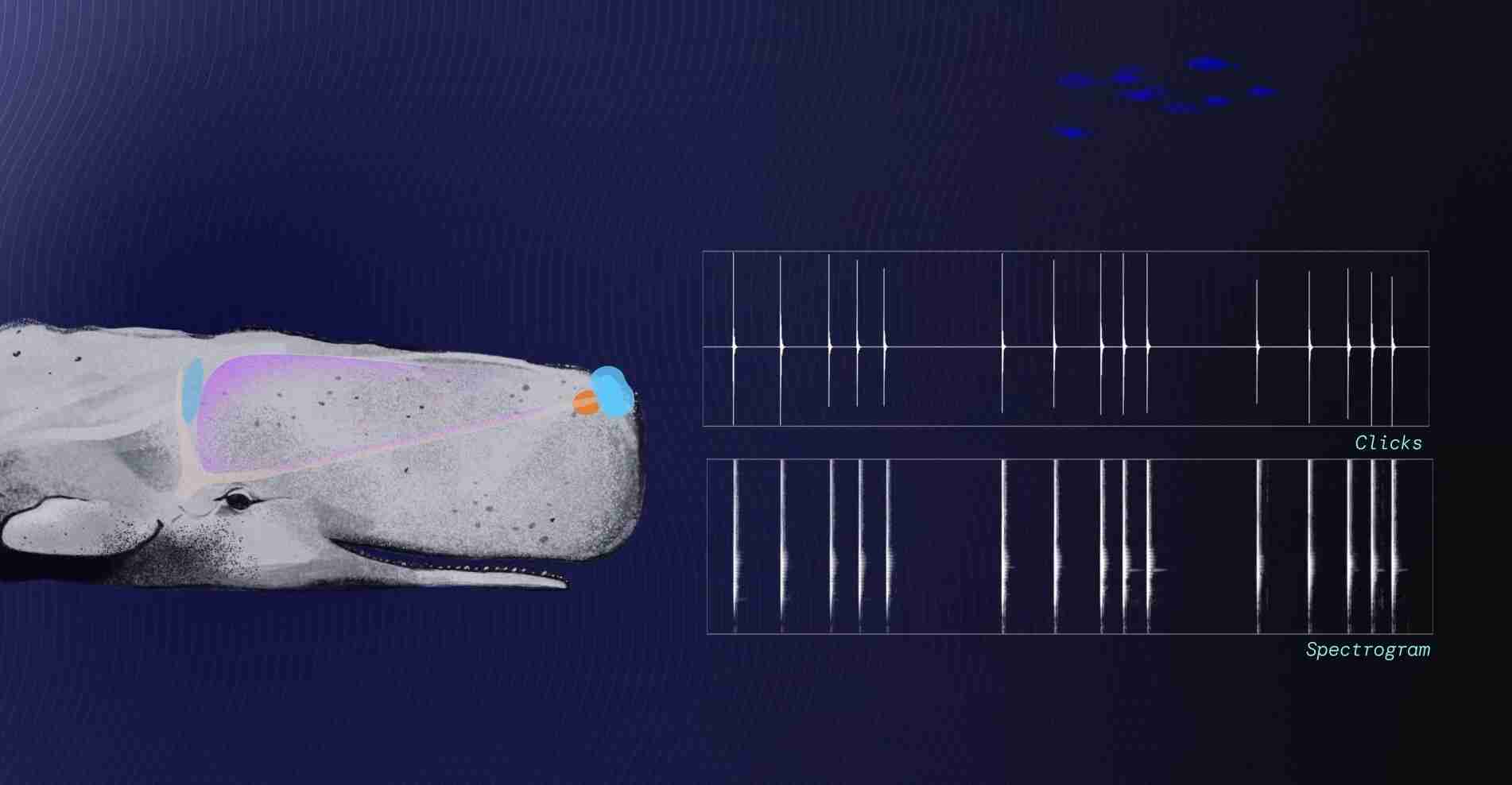
UC Berkeley and Project CETI find sperm whales make vowel-like sounds, reshaping ideas about animal language
New collaborative research from UC Berkeley and Project CETI finds sperm whales produce controlled, vowel-like and diphthong-like acoustic patterns—paralleling human ɑ- and i-vowels—and reveals a structured sound system that challenges prior views of whale communication.
Key takeaways
- Vowel-like sounds: Researchers report sperm whale calls include sounds closely resembling human vowel qualities, not just clicks — UC Berkeley/Project CETI.
- Structured patterns: The team identified vowel-like and diphthong-like patterns paralleling human ɑ- and i-vowels and found whales appear to produce these sounds intentionally — UC Berkeley.
- AI + linguistics: Generative Adversarial Networks (GANs) revealed structure, while human linguists interpreted spectral patterns — UC Berkeley.
- Complex repertoire: The team found 156 distinct click patterns and vowel-like combinations, suggesting a layered sound system with implications for cognition, law, and conservation — Project CETI/Audacious Project.
How the study was done
The research combined long-term field data, linguistic theory, and machine learning. For years Project CETI collected recordings of sperm whale social groups using tags, buoys, aerial drones and ship-based equipment. That dataset supplied the raw audio for analysis.
UC Berkeley linguistics professor Gašper Beguš led the analysis. The team applied Generative Adversarial Networks (GANs) to detect repeated structures in vast audio collections—patterns hard for humans to spot unaided. Crucially, human linguists then examined GAN outputs and compared spectral shapes of whale calls to human vowel shapes.
“The match was striking enough that researchers described whale sounds using human phonetic labels such as ɑ and i.”
What the sounds mean
Researchers found sperm whales produce controlled pulses forming vowel-like and diphthong-like patterns. These are not random clicks; whales appear to select and shape sounds in ways that parallel how humans form vowels with a vocal tract, implying voluntary vocal control.
The team identified 156 distinct click patterns and vowel-like combinations, describing them as evidence of a sound system. In human languages, sound systems organize basic units into larger meaningful structures. Repeated, structured patterns in whale calls suggest layers of organization that could support complex meanings or social functions.
How AI and linguistics worked together
Project CETI’s recordings are massive. The researchers used GANs to discover latent patterns and generate hypotheses about sound categories. GANs are powerful because they learn to mimic training audio and expose underlying structure.
However, machine output required human validation. Linguists matched GAN-generated spectral patterns to human vowel categories and tested whether differences were meaningful rather than artifacts. This collaborative approach—field work from Project CETI, Berkeley linguistic analysis, and AI tools—enabled advances beyond earlier click-timing studies.
Why this matters
If sperm whales use vowel-like sounds in structured ways, scientists must rethink assumptions about animal cognition and communication. The findings challenge the notion that whale sounds are simple signals with fixed meanings, suggesting instead a potential for richer, language-like organization.
Legal and ethical questions: Professor Beguš and colleagues note these results raise questions about moral and legal distinctions if non-human animals show capacities once thought uniquely human. That could influence conservation policy, research regulations, and human interactions with whale populations.
Implications for Fresno, California
Economic impact: Fresno’s tourism and education sectors connect to California’s broader environmental interests. New findings could boost science tourism and public interest in marine research, bringing visitors and program opportunities to local universities, museums, and aquariums.
Political consequences: Local leaders and voters may revisit environmental and conservation priorities ahead of elections. Evidence suggesting higher animal cognition could sharpen debates over funding for research and marine protection.
Social effects: Fresno families and schools might integrate the findings into STEM outreach, citizen science, and summer programs. The Project CETI example—combining biology, linguistics, and AI—offers an interdisciplinary model for workforce development.
Cultural relevance: The research prompts community conversations about stewardship and ethical obligations toward intelligent animals, engaging faith leaders, civic groups, and local media.
Practical applications: Policymakers could support marine science education at Fresno State and local districts. Partnerships with organizations such as Project CETI may produce internships, training, and outreach that connect Central Valley students to marine research.
Sources and further reading
No claims about a full translation of sperm whale language have been made by the researchers. UC Berkeley and Project CETI frame this work as an important step toward understanding the structure and possible meaning of whale vocal systems — UC Berkeley.