
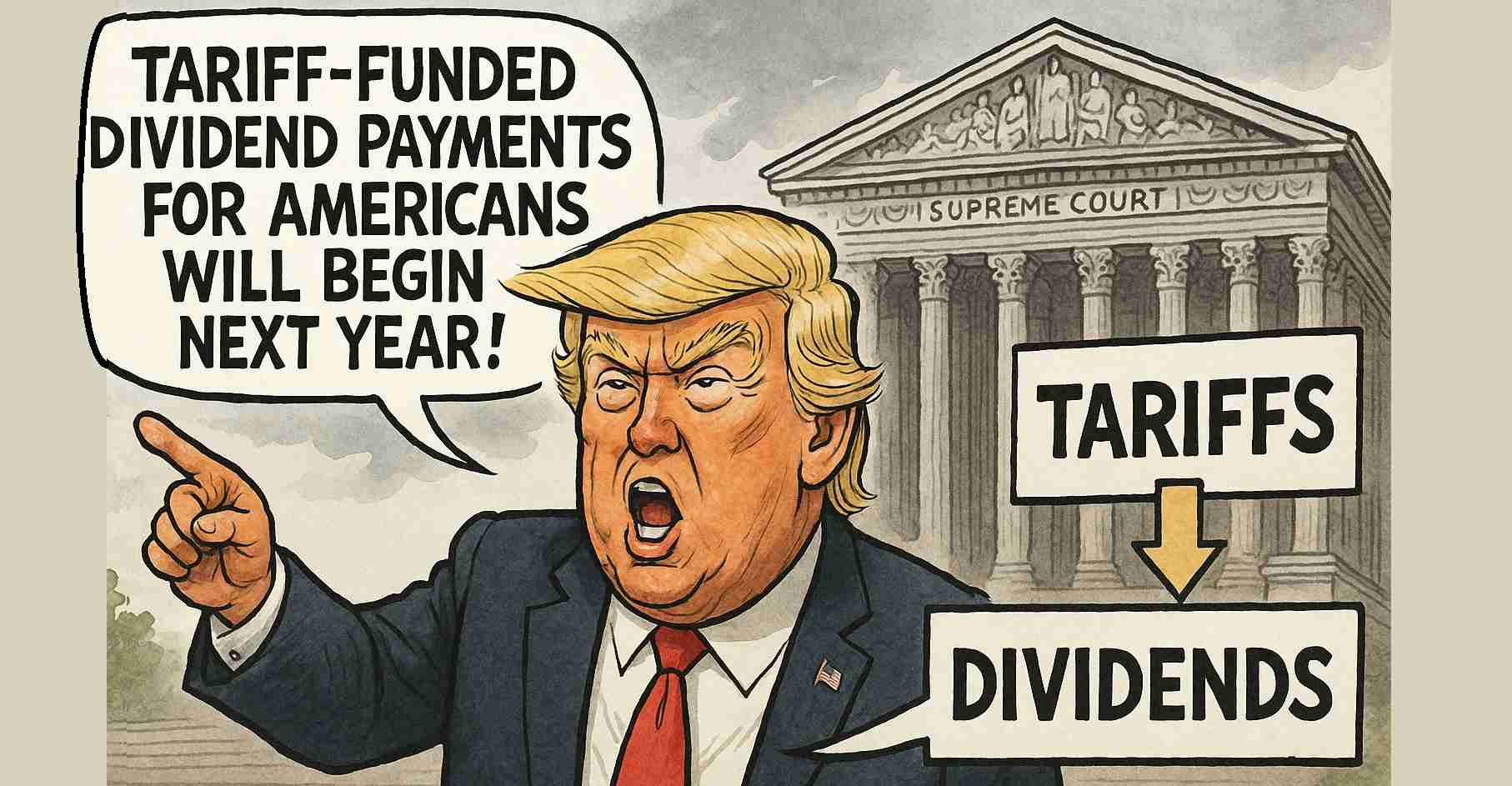
Trump says tariff-funded dividend payments could start in 2026, promising “hundreds of millions” to households
Former President Donald Trump announced in November 2025 that, if re-elected, tariff revenues would fund direct dividend-like payments to households starting by mid-2026, promising “hundreds of millions” in distributed funds amid legal and economic uncertainty.
- Proposal: Tariff-funded “dividends” to be paid directly to households beginning in 2026.
- Timing & amount: Trump pledged the first checks next year and a fuller rollout by mid-2026; he cited “hundreds of millions” without per-household figures.
- Legal hinge: The U.S. Supreme Court’s review of presidential tariff authority could shape feasibility and timing.
- Economic debate: Supporters tout offsetting costs; critics warn tariffs raise consumer prices and revenue may be volatile.
What Trump announced
In campaign remarks and a public statement in November 2025, Trump said a second term would bring a plan to return tariff revenues directly to households as dividend-like checks. He framed the payments as compensation for price increases caused by tariffs and said they would make foreign exporters “pay for the privilege” of access to U.S. consumers. He repeatedly described the pool as “hundreds of millions of dollars” and promised a first round of checks next year with a fuller rollout by mid-2026.
How the tariff-funded payments would be structured — what we know and what we don’t
Trump called the payments “dividends” intended for “every American household,” but the announcement lacked specifics on:
- Eligibility rules and per-household amounts
- Payment frequency and administrative authority
- Which federal agency would manage receipts and disbursements
Tariffs are collected by U.S. customs authorities and typically flow into federal accounts. Historically, tariff revenue has been allocated to the general budget or targeted relief; creating a durable dividend program would need a detailed legal and administrative framework that has not been provided.
Legal backdrop: executive authority over tariffs at the Supreme Court
The proposal arrives while the Supreme Court is weighing cases related to presidential trade authority. Court rulings could either reinforce broad unilateral power to set tariffs or limit that scope, directly affecting how quickly and extensively a tariff-funded payment scheme could be implemented without new congressional action. Legal scholars emphasize the Court’s decisions will be decisive for whether large-scale tariff expansions and revenue uses can proceed under executive power alone.
Economic arguments and expert skepticism
Economists note that tariffs act like taxes on imports and tend to raise costs for U.S. importers, who usually pass them on to businesses and consumers. Key concerns include:
- Higher shelf prices that can offset any dividend payments
- Volatility of tariff revenues if trade volumes fall or retaliation occurs
- The misleading scale of “hundreds of millions” when divided across roughly 120 million households, producing modest per-household amounts absent much larger receipts
Analysts warn the net effect could be negative for many households if price increases exceed distributed checks and if retaliatory tariffs damage U.S. exports.
Supporters, critics and the political case
Supporters — trade hawks and some populist conservatives — argue the plan would put cash directly into American pockets and make foreign exporters shoulder trade access costs, providing a visible political benefit. Critics include mainstream economists, business groups, and trade experts who caution about higher costs, reduced competitiveness, and potential retaliation that could hurt U.S. exporters and workers.
Historical precedents and comparisons
There are U.S. examples of resource-funded dividends — notably the Alaska Permanent Fund — but using federal tariff receipts as a steady funding stream for nationwide household payments would be unusual. In prior years, some tariff revenue was redirected for targeted relief (for example, to assist farmers affected by retaliatory trade measures), but scaling that to a universal dividend differs substantially in complexity and legal footing.
How payments might affect prices, trade and the budget
Even proponents acknowledge tariffs function as a tax on imported goods. If a dividend offsets only part of higher costs or is distributed unevenly, some households may be worse off. Economists also emphasize the risk that retaliatory tariffs and reduced imports could shrink tariff receipts, making the revenue base unreliable for sustained payments.
Implications for Fresno, California
Local effects in Fresno would be mixed and depend on tariff scope, affected trading partners, and administrative choices.
Economic impact
- Consumer costs: Fresno families could see higher prices on electronics, clothing and some foods.
- Farmers and agribusiness: Retaliatory tariffs could harm export markets crucial to Fresno’s agricultural economy — dividend checks may not fully compensate lost revenue.
- Local jobs and businesses: Higher input costs for processors and manufacturers could squeeze margins and hiring, affecting small businesses reliant on imports.
Political consequences
- Voter sentiment: Direct payments could appeal to some voters, but agricultural risks and cost pressures make the policy a double-edged sword in the Central Valley.
- Local officials: Fresno and California leaders may seek exemptions or targeted relief if tariffs expand; congressional members could face pressure from both constituents and industry.
Social and community effects
- Household budgets: Low- and middle-income families could see short-term relief from modest checks, but net effects depend on price changes for staples.
- Cultural relevance: Trade disruptions could affect availability of specialty imports, local food supply chains and small businesses serving diverse communities.
Practical applications for Fresno residents
- Watch for details on eligibility and timing — without rules, planning is difficult.
- Prepare for potential price shifts by monitoring regularly purchased goods and considering contingency plans.
- Follow Supreme Court and federal developments that will determine how quickly any payments could begin.
Reporting and sources
This report is based on the Times Media Service summary of Trump’s November 2025 announcement and public statements attributed to the former president, with context drawn from public sources on trade policy and federal revenue collection.



