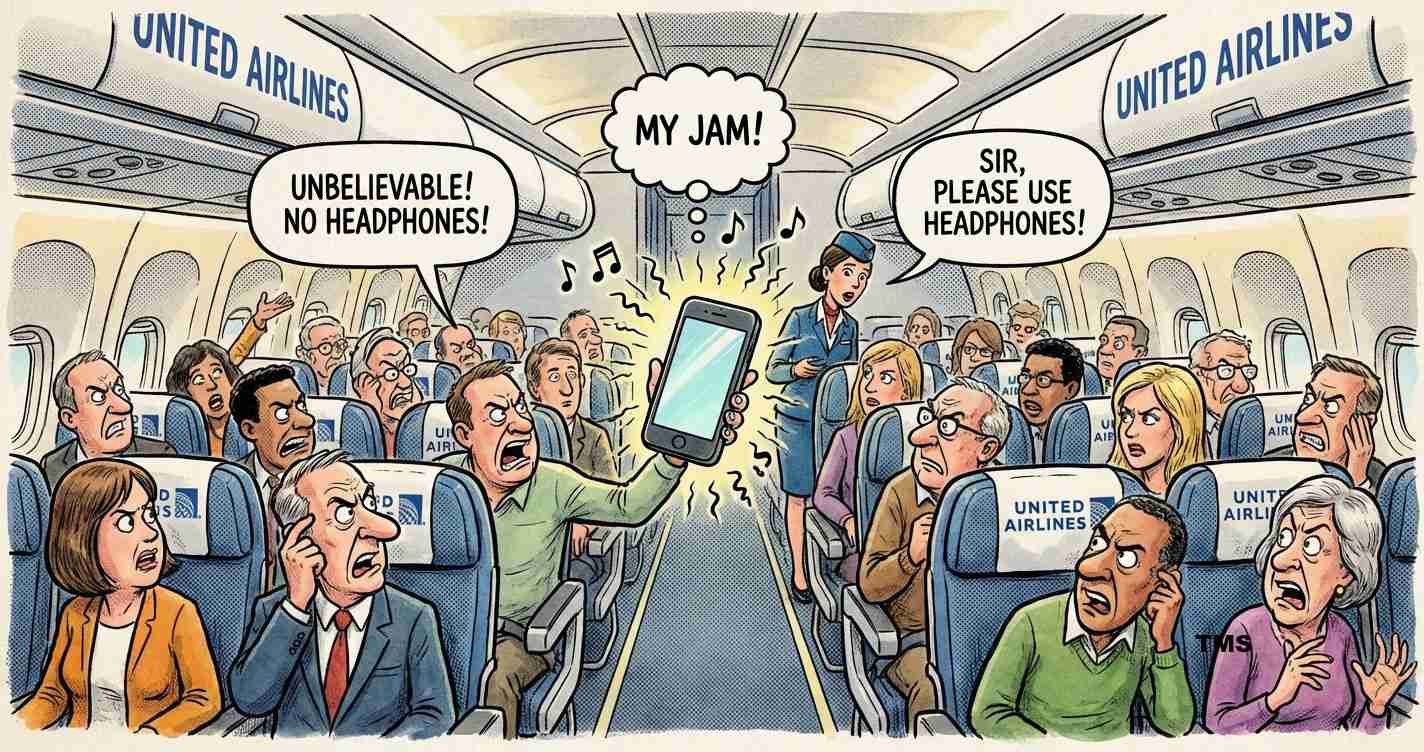
United makes headphone use enforceable under Rule 21 — passengers who blast videos could be denied boarding or removed
United Airlines updated its Contract of Carriage effective Feb. 27, 2025, requiring passengers to wear headphones for any in‑flight audio or video; violations under Rule 21 can lead to denied boarding, removal, reimbursement claims, and permanent bans.
- What changed: United added explicit headphone language to Rule 21, making failure to use headphones a reason to refuse transport (CBS News, Fox News).
- Effective date: The amendment took effect Feb. 27, 2025 (CBS News, Fox News).
- Consequences & accommodations: United may deny boarding, remove passengers mid‑flight, seek reimbursement for related costs, or impose permanent bans; basic wired earbuds will be available free onboard for those who forget theirs (CBS News, Fox News).
What United added and why it matters
United has converted a long-standing cabin courtesy into formal contract language by inserting a headphone requirement into Rule 21 — Refusal of Transport. The new line specifies that passengers must wear headphones when their device is playing audio or video, placing that expectation alongside grounds like refusing crew instructions or disruptive conduct. The update was reported and reviewed by CBS News and Fox News.
United told reporters it has long encouraged headphone use and that its Wi‑Fi guidelines already referenced headphones. The airline said increased in‑flight device usage — tied in part to its Starlink internet expansion — made codifying the guidance appropriate, giving clearer expectations for passengers and crews (Fox News).
Enforcement powers and possible penalties
How strictly Rule 21 will be applied is still developing. The Contract of Carriage grants United broad authority, including the ability to:
- Refuse boarding for noncompliance;
- Remove passengers mid‑trip if issues persist or safety is affected;
- Pursue reimbursement for costs tied to delays or disruptions caused by enforcement; and
- Impose permanent bans in extreme or repeated cases (CBS News, Fox News).
Customer service steps and crew actions
United has built in mitigations to avoid abrupt removals: flight attendants will offer basic wired earbuds free of charge to passengers who forget headphones. Etiquette experts and travel commentators expect crews to use warnings and de-escalation first.
Jacqueline Whitmore, author and etiquette expert, told media outlets attendants will likely ask passengers to comply before escalating to removal; she noted parents sometimes let children watch videos without headphones, which can prompt warnings (Fox News).
Scott Keyes, travel writer and analyst, said the change aligns with most travelers’ expectations and gives crews clearer backing to enforce cabin courtesy (CBS News).
Comparison with other airlines
United appears to be the first major U.S. carrier to place a headphone requirement directly in its refusal-to-transport policy. Other carriers typically include headphone guidance in customer service or etiquette pages — for example, Delta asks customers to use earbuds or headphones but does not list headphone refusal as formal grounds for removal. United’s move elevates a widely expected courtesy into a rule that can carry penalties (Fox News).
Public reaction and social media
Online reaction has been largely favorable: social users, including many on Reddit, praised the clarity and potential enforcement, saying noisy device audio is a frequent cabin annoyance. Some commenters suggested extending the expectation to airport lounges and gate areas. Reports noted applause in some cases when pilots called out speakerphone video or phone calls as examples of growing impatience with public audio disruptions (Fox News).
Enforcement so far and open questions
As of published reports, there were no publicly confirmed removals solely for failing to wear headphones under the new rule. Removal decisions remain infrequent and usually follow repeated warnings or involve safety concerns. Enforcement patterns may evolve as crews and operations teams integrate the updated language into standard practice (CBS News, Fox News).
Legal and customer rights context
Putting headphone requirements in the Contract of Carriage changes the legal footing of in‑flight etiquette. A written contract gives crew members clearer authority to act; passengers retain the right to dispute enforcement through airline complaint channels or legal and regulatory routes. The change is an internal airline regulation rather than a government rule (CBS News).
Implications for Fresno, California
For Fresno travelers, the headphone rule applies on any United‑operated segment — including connections through hubs such as San Francisco or Denver. Practical implications:
- Local travelers and connections: United-operated segments on Fresno trips will follow Rule 21; expect consistent application at larger connecting hubs.
- Business and leisure travel: Pack earbuds or headphones, especially if you stream video or take work calls.
- Airport and gate etiquette: The Contract of Carriage governs the carrier’s flights, not airport terminals, but travelers may feel pressure to keep audio private when boarding.
- Families and accessibility: Flight crews may remind parents about headphone use for children; passengers with hearing or medical needs should be prepared to explain accommodations. United will offer basic wired earbuds onboard (Fox News).
- Practical tips: Pack inexpensive wired earbuds in carry‑ons and check with United ahead of travel if you have specific needs.
Sources and reporting
- CBS News: United Airlines can remove passengers who don’t wear headphones, contract of carriage update says
- Fox News: Passengers refusing to wear headphones on flights could be kicked off aircraft
United confirmed the contract update to media outlets as it expands in‑flight Wi‑Fi via Starlink, which the company says will increase device use and prompted clearer in‑flight entertainment rules (Fox News).