
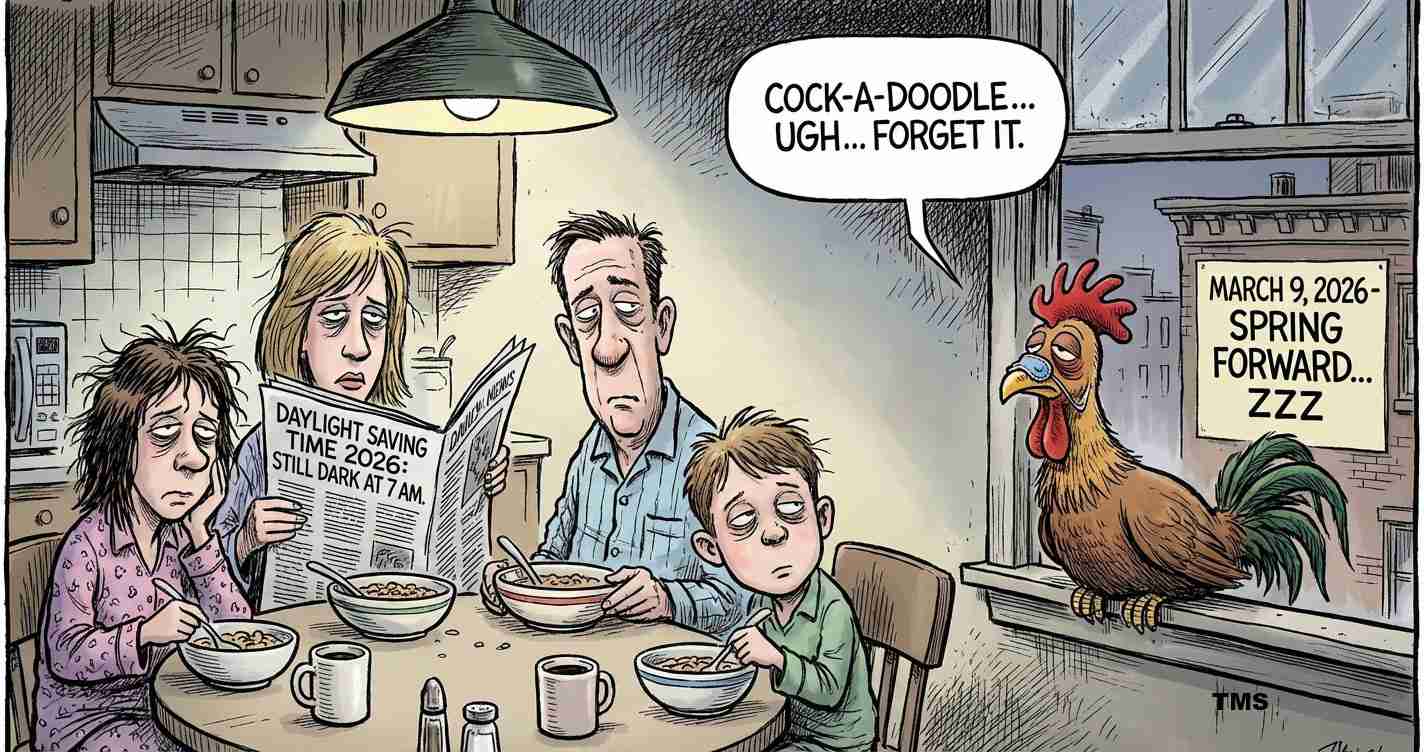
Spring your clocks forward: Daylight Saving Time 2026 starts March 8 across most U.S. states, including California
Daylight Saving Time 2026 begins Sunday, March 8 at 2:00 a.m. local standard time, when most U.S. clocks, including California’s, spring forward one hour to maximize evening daylight; the period ends Nov. 1, 2026 nationwide.
Key takeaways
- Start: DST begins Sunday, March 8, 2026, at 2:00 a.m.; clocks move to 3:00 a.m. (Time and Date — U.S. time changes).
- End: DST ends Sunday, Nov. 1, 2026, at 2:00 a.m., when clocks fall back to 1:00 a.m. (Time and Date — U.S. time changes).
- Exceptions: Hawaii and most of Arizona do not observe DST; the Navajo Nation in northeast Arizona does (Time and Date — U.S. time changes).
Main content
What changes on March 8, 2026
On Sunday, March 8 at 2:00 a.m. local standard time, clocks in most U.S. states will jump ahead to 3:00 a.m. — the annual “spring forward” shift that moves sunrise and sunset roughly one hour later by the clock. This shortens that calendar day by one hour and shifts more daylight into the evening. Electronic devices that connect to the internet typically update automatically; wall clocks, oven clocks and older devices may require manual adjustment (Time and Date — U.S. time changes; California Daylight Saving Time 2026).
Why Daylight Saving Time still exists
Daylight Saving Time was created to better align daylight hours with when people are most active outdoors — shifting an hour of daylight from morning to evening with the aim of reducing household artificial lighting and energy use during warmer months. The modern U.S. schedule follows the Energy Policy Act of 2005, which standardized DST from the second Sunday in March to the first Sunday in November (Wikipedia — Daylight saving time in the United States).
Health, safety and daily routines
The one-hour time loss can disrupt sleep and short-term routines. Sleep experts warn of increased tiredness, reduced concentration and slightly higher accident risks for days after the switch. Employers, schools and transit agencies often note small dips in productivity and adherence the following week. Conversely, longer evening daylight can improve commute safety, encourage outdoor exercise and extend business hours for foot-traffic–dependent shops (California Daylight Saving Time 2026; Time and Date — U.S. time changes).
Tip: Shift sleep schedules by 15–20 minutes a few nights before to ease the transition.
History and California’s role
The U.S. has used forms of DST intermittently since World War I. The current start and end dates have been in place since 2007 under the Energy Policy Act of 2005. In California, historical ballot measures such as Proposition 12 (1949) and Proposition 7 (2018) gave the state legislature authority to pursue permanent daylight time, but federal approval is required for a nationwide permanent switch; no federal change has been enacted as of 2026 (Wikipedia — Daylight saving time in the United States).
Where DST is not observed
Hawaii and most of Arizona opt out of DST. Arizona’s exception is primarily to avoid shifting daylight into very hot evening hours, which can increase cooling costs. The Navajo Nation in northeast Arizona does observe DST to remain consistent across its multi-state territory. Travelers should verify local time differences when crossing into or out of those areas (Time and Date — U.S. time changes).
Daylight Saving Time versus standard time
• Standard time (winter): California is on Pacific Standard Time (PST, UTC−8); sunrise and sunset occur earlier by the clock.
• Daylight Saving Time (spring–fall): California moves to Pacific Daylight Time (PDT, UTC−7), shifting sunrise and sunset about one hour later by the clock (California Daylight Saving Time 2026).
Astronomical and meteorological timing
The vernal equinox (the astronomical start of spring) occurs on March 20, 2026, at 10:46 a.m. EDT. Meteorological winter ends Feb. 28. That means DST will begin well before the astronomical first day of spring, and residents will notice incrementally longer daylight each day leading to the equinox (Wikipedia — Daylight saving time in the United States).
Practical tips for the switch
- Gradual sleep shift: Move bedtime earlier by 15–20 minutes a few nights before March 8.
- Set clocks: Change manual clocks before bed Saturday night or rely on internet-connected devices to auto-update at 2:00 a.m. Sunday.
- Safety checks: Use the time change to check smoke alarm and carbon monoxide detector batteries.
- Plan travel: Expect slight transit and schedule disruptions Sunday morning; confirm early flights and appointments in advance (Time and Date — U.S. time changes).
Policy and public debate
Debate continues: proponents cite extended evening recreation and potential energy savings; critics point to health impacts and mixed evidence on net energy benefits. California’s ballot history shows public interest in permanent DST, but federal law must change for a nationwide permanent shift. The science on energy savings is mixed and region-dependent (Wikipedia — Daylight saving time in the United States; California Daylight Saving Time 2026).
Implications for Fresno, California
Economic impact
Local businesses that benefit from evening foot traffic — restaurants, retailers and parks — may see increased customers after work hours once clocks spring forward, helping evening commerce. Agricultural work often follows sunlight rather than the clock, so farmers’ harvest timing is less affected, though transport and labor schedules could shift slightly (California Daylight Saving Time 2026).
Political consequences
Fresno voters and officials may renew discussion of permanent DST or standard time in future campaigns; any state push for permanent daylight time requires federal approval, so local advocacy is likely the immediate route (Wikipedia — Daylight saving time in the United States).
Social effects
Families with school-age children should prepare for darker mornings for several weeks after the switch, affecting morning commutes and routines. Parks and community programs can use the extra evening daylight for events and youth activities, potentially improving community well-being.
Cultural relevance
Fresno’s outdoor culture — evening walks, youth sports and after-work activities — benefits from later sunsets. Residents who value post-work outdoor time will notice the extra evening light through spring and summer.
Practical applications for residents
- Check alarms, ovens, wall clocks and vehicle clocks the night before March 8.
- Employers and schools in Fresno may consider flexible scheduling the week after to reduce fatigue-related incidents.
- Commuters: evening sunsets will be later, but early-morning starts will be darker until sunrise shifts later by the clock.



