6-million-year-old Antarctic ice found in Allan Hills shatters records — trapped air offers direct window into Earth’s ancient climate
Scientists recovered roughly 6-million-year-old ice and trapped air from the Allan Hills Blue Ice Area in East Antarctica — the oldest directly dated ice and atmospheric samples, offering unprecedented, directly dated snapshots of Earth’s climate during the Miocene–Pliocene transition.
- Oldest directly dated ice and air: roughly 6 million years, verified by direct argon-isotope dating in trapped bubbles (PNAS paper).
- Location: Allan Hills Blue Ice Area, East Antarctica — surface exposure by winds and ice flow enabled sampling (Oregon State University report).
- Climate signal: oxygen isotopes indicate ~12°C cooling in East Antarctica across the sampled interval, linking Pliocene warmth to more modern, cooler conditions (University of Maine summary).
- Team and program: led by Sarah Shackleton (Woods Hole) and John Higgins (Princeton) under the NSF-funded Center for Oldest Ice Exploration (COLDEX).
Oldest ice, oldest air: why this matters
The Allan Hills samples are exceptional because they contain microscopic bubbles of ancient atmosphere sealed when the ice formed. Those bubbles provide direct measurements of past greenhouse gases and atmospheric chemistry rather than proxy inferences. By pushing the ice‑core record from ~800,000 years to snapshots reaching back ~6 million years, researchers gain new, testable data about how Earth’s climate operated during the Miocene and Pliocene.
“These trapped air bubbles are a direct window into ancient atmospheres — a rare and powerful scientific resource.”
How the team dated the ice
Dating the Allan Hills ice required a novel, direct approach. The COLDEX researchers measured a long‑lived isotope of the noble gas argon inside tiny air bubbles preserved in the ice. Because argon isotopes are chemically inert and not subject to biological alteration, they act as a reliable clock tied to the ice itself. The method allows an age to be assigned to the ice directly rather than relying solely on surrounding sediments or models — see the PNAS article for the full methodology and data.
Climate findings from oxygen isotopes and air chemistry
Oxygen isotope ratios extracted from the Allan Hills ice show a sustained cooling of about 12°C (22°F) in East Antarctica across the sampled interval — a major regional shift consistent with a global move from warmer Pliocene conditions toward climates more like today’s. The trapped air also offers the chance to directly measure ancient greenhouse gas concentrations and aerosols, giving modelers empirical targets for testing climate sensitivity and ice‑sheet response hypotheses (University of Maine summary; Oregon State report).
Who led the research and how it was done
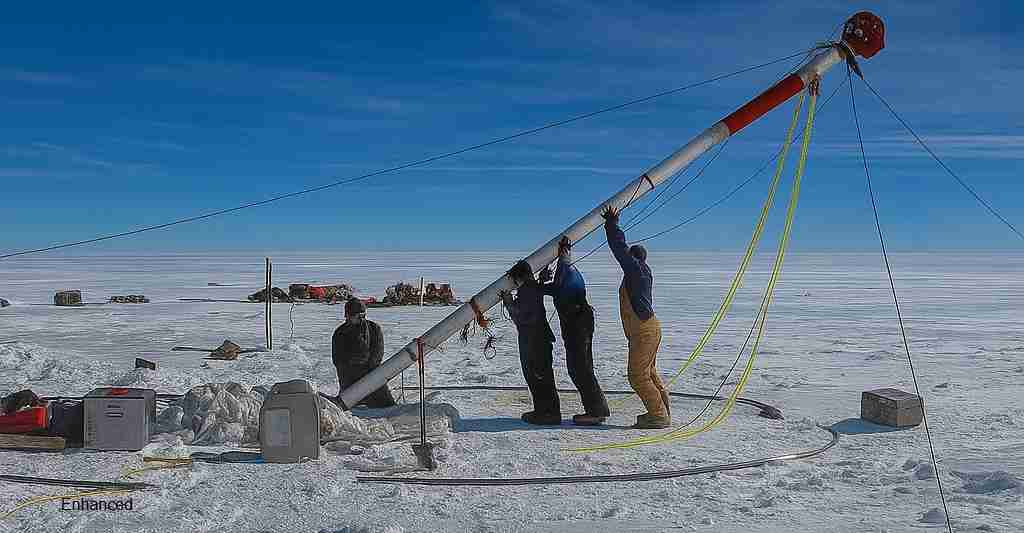
The research was led by Sarah Shackleton of the Woods Hole Oceanographic Institution and John Higgins of Princeton University, within the NSF-funded Center for Oldest Ice Exploration (COLDEX), a consortium of 15 U.S. institutions. Field teams sampled exposed, ancient ice in the Allan Hills Blue Ice Area where katabatic winds and ice flow concentrate very old ice at or near the surface, enabling collection without deep drilling. Samples were returned to specialized laboratories for gas and isotope analyses described in the PNAS publication.
Limits and caveats: snapshots, not a continuous record
Researchers emphasize these are high‑value snapshots rather than an uninterrupted 6‑million‑year continuous record. The Allan Hills samples provide discrete, directly dated moments in climate history that are already reshaping understanding and validating models, but further expeditions and sampling are needed to fill gaps and build higher‑resolution sequences.
Next steps and research plans
COLDEX plans return expeditions to the Allan Hills between 2026 and 2031 to search for older ice and assemble a longer series of snapshots. Ongoing lab analyses will reconstruct past greenhouse gas concentrations, aerosol loads and ocean heat content tied to the ice samples, improving constraints on drivers of natural climate shifts and model projections for future change (PNAS paper).
Implications for Fresno, California
Findings from six‑million‑year‑old Antarctic ice inform local planning in several practical ways:
- Water planning and agriculture: improved understanding of past climate responses helps water managers and farmers in Fresno County and the Central Valley refine long‑term planning, drought risk assessment and model inputs for future water availability (Oregon State report).
- Sea‑level and flood risk: direct measurements of past ice‑sheet behavior under warmer periods improve sea‑level projections that affect statewide conveyance, drainage and protection investments tied to Central Valley water infrastructure (PNAS research).
- Local policy and planning: Fresno officials can use refined model guidance to update general plans, emergency response, and infrastructure priorities.
- Agriculture and the economy: more confident projections influence planting decisions, insurance and investments in water‑efficient technologies that support farm resilience (University of Maine summary).
- Education and outreach: the discovery offers teaching and partnership opportunities for Fresno schools, colleges and extension services to build climate literacy and local science capacity (PNAS article).
Practical message: use improved science to inform investments — update water planning, bolster emergency preparedness, support farm‑level adaptation and translate findings into actionable local plans (University of Maine summary).
Sources and further reading
- Oregon State University: “Six‑million‑year‑old ice discovered in Antarctica offers unprecedented window into warmer Earth”
- University of Maine Climate Change Institute: “Ice core analysis reveals cooling period 6M years ago”
- Proceedings of the National Academy of Sciences (PNAS), October 28, 2025 — original research article
- Short video summary