Yellowstone’s Echinus Geyser Roars Back: Rare acidic geyser eruption sparks scientific scramble
Yellowstone’s Echinus Geyser erupted in February 2026 after nearly six years of dormancy, producing brief acidic blasts that reached 20–30 feet and prompting scientists to intensify monitoring of its unusual chemistry and plumbing systems broadly.
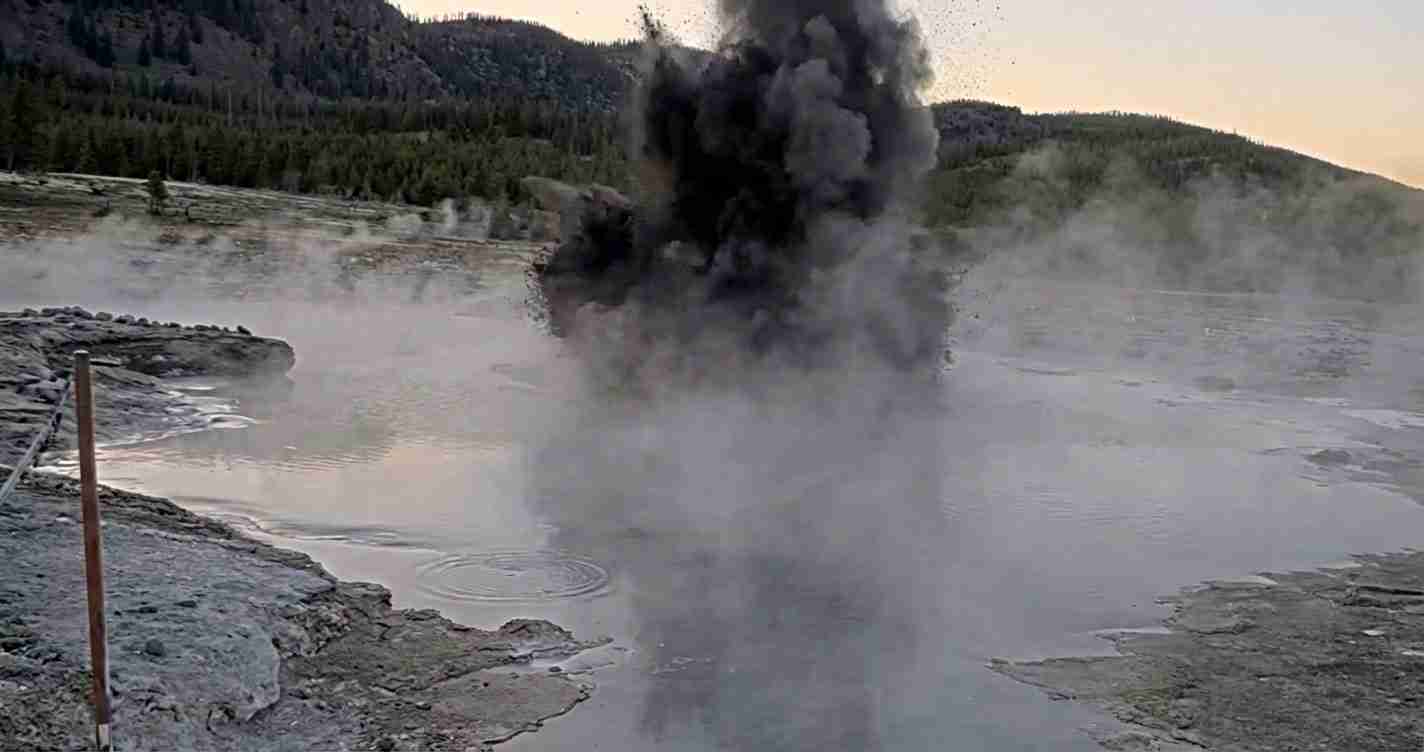
- Rare return: Echinus resumed eruptions on Feb. 7, 2026, then produced multiple bursts and a rapid-cycle phase on Feb. 16.
- Acidic, hot, and distinctive: Pool pH ~3.3–3.6 and temperatures near 176.5°F (80.3°C) with red mineral rims and spiny silica cones.
- Short-lived cycles: Eruptions lasted ~2–3 minutes, 20–30 ft high, with pool-level drops and ~1-hour refills—about 40 eruptions counted in February.
- Monitoring and safety: USGS and park teams continue temperature, timing and chemistry monitoring; visitors must obey boardwalk rules.
Main coverage
What happened in February 2026: timeline and behavior
Return to activity: Echinus’s activity resumed unexpectedly on Feb. 7, 2026. Park staff and visitors observed additional bursts on Feb. 9, 12 and 15. On Feb. 16 the geyser shifted into a rapid cycle, erupting every two to five hours for several days.
Observers and scientists counted roughly 40 eruptions in February. Each eruption typically lasted about two to three minutes and reached roughly 20–30 feet, though historical maxima reached about 75 feet. After each burst the pool level dropped sharply and then refilled over ~1 hour, a pattern consistent with limited water/heat cycling rather than a large sustained recharge.
Video documentation of the February eruptions is available from a YouTube video of eruptions, and media outlets recorded the event as it unfolded.
Why Echinus is different: acidic water and unique minerals
Echinus is notable for its acidic thermal pool (pH roughly 3.3–3.6, similar to orange juice or vinegar) and high temperatures (about 176.5°F / 80.3°C). The acidity arises when acidic gases mix with neutral groundwater, producing bright red mineral borders composed of iron, aluminum and arsenic. The cone and nearby rocks are coated in spiny silica deposits—early explorers named it Echinus because the formations resembled a sea urchin.
Unlike many acidic geysers that slowly dissolve their plumbing rock, USGS researchers state Echinus’s acid is not concentrated enough to erode its conduits, making it a rare large, enduring acidic geyser (U.S. Geological Survey (Yellowstone Volcano Observatory)).
Possible cause: a “clogged” or changed hydrothermal plumbing
Scientists monitoring Yellowstone suggest the February activity likely reflects changes in the geyser’s hydrothermal plumbing. Partial blockages or rerouted flow can let pressure build and then release in sudden eruptions; such shifts may “reawaken” a geyser for days to months. Officials emphasize these are working hypotheses based on monitoring and historical patterns.
The Yellowstone Volcano Observatory and park scientists have kept thermal monitors in place to watch for temperature anomalies and better understand the movement of heat, water and gas through the system (U.S. Geological Survey (Yellowstone Volcano Observatory)).
History and past patterns of activity
Echinus was once more predictable and popular. In the late 20th century it erupted often enough that benches and viewing areas were built for visitors. Activity began to decline in the early 2000s after a secondary water source diminished. The geyser had a brief active run in 2017–2018, and the February 2026 phase resembled that earlier interval in timing and intensity.
Historically, active phases last a month or two before the feature returns to dormancy. The USGS indicated continued eruptions into the summer season were “not too likely” based on past patterns, while leaving room for uncertainty if underground conditions change.
What scientists are monitoring now
Park and USGS teams monitored temperature spikes, eruption timing and water chemistry using instruments near the geyser. By late February 2026 the visible eruptions had stopped, but some temperature anomalies persisted—leaving open the possibility of short-lived returns to activity. Scientists say routine monitoring is critical because Echinus’s acid-rich water and high heat make it a sensitive indicator of hydrothermal changes.
Coverage and public safety
Yellowstone officials reminded the public that thermal areas are dangerous. Acidic hot springs like Echinus can cause severe burns and emit gases that are harmful at close range. Because eruptions and pool-level changes can be sudden, park staff stressed that visitors must stay on boardwalks and obey posted signs and ranger guidance while visiting Norris Geyser Basin.
Implications for Fresno, California
Economic impact
- Travel and tourism: Fresno-area travelers may show renewed interest in Yellowstone, potentially increasing bookings for flights, tours and related services.
- Outdoor businesses: Retailers of gear, cold-weather apparel and cameras could see short-term demand increases as visitors prepare for park trips.
Political consequences
- Public lands funding: Local leaders may cite high-profile park events when advocating for conservation and visitor-service funding.
- Emergency planning: Park safety messaging about boardwalks and thermal hazards can inform Fresno’s outreach models for outdoor recreation safety.
Social effects
- Education and engagement: Schools, museums and community groups in Fresno can use the Echinus story to teach geology and chemistry.
- Visitor behavior: Increased interest may change regional travel flows and create demand for safety and planning resources in the Fresno media market.
Cultural relevance
Echinus’s dramatic return resonates with communities that value outdoor life. Photographers, writers and artists in Fresno may draw inspiration from the geyser when connecting regional audiences to national landscapes.
Practical applications for Fresno residents
- Travel planning: Check park conditions and the USGS before booking; winter travel requires layers, winter tires and flexible plans (U.S. Geological Survey (Yellowstone Volcano Observatory)).
- Safety messaging: Use Yellowstone reminders to reinforce rules about staying on marked trails and obeying warning signs at local hot springs and trails.
- Science engagement: Host talks or screenings about hydrothermal features to boost public science literacy.
Reporting note
Park and USGS scientists emphasized that while February’s activity was striking, such events are part of normal hydrothermal variability. Monitoring continues as researchers work to refine understanding of intermittent eruptions in acid-water geysers like Echinus.