Artemis II rollout begins at Kennedy as NASA moves closer to first crewed lunar mission in decades
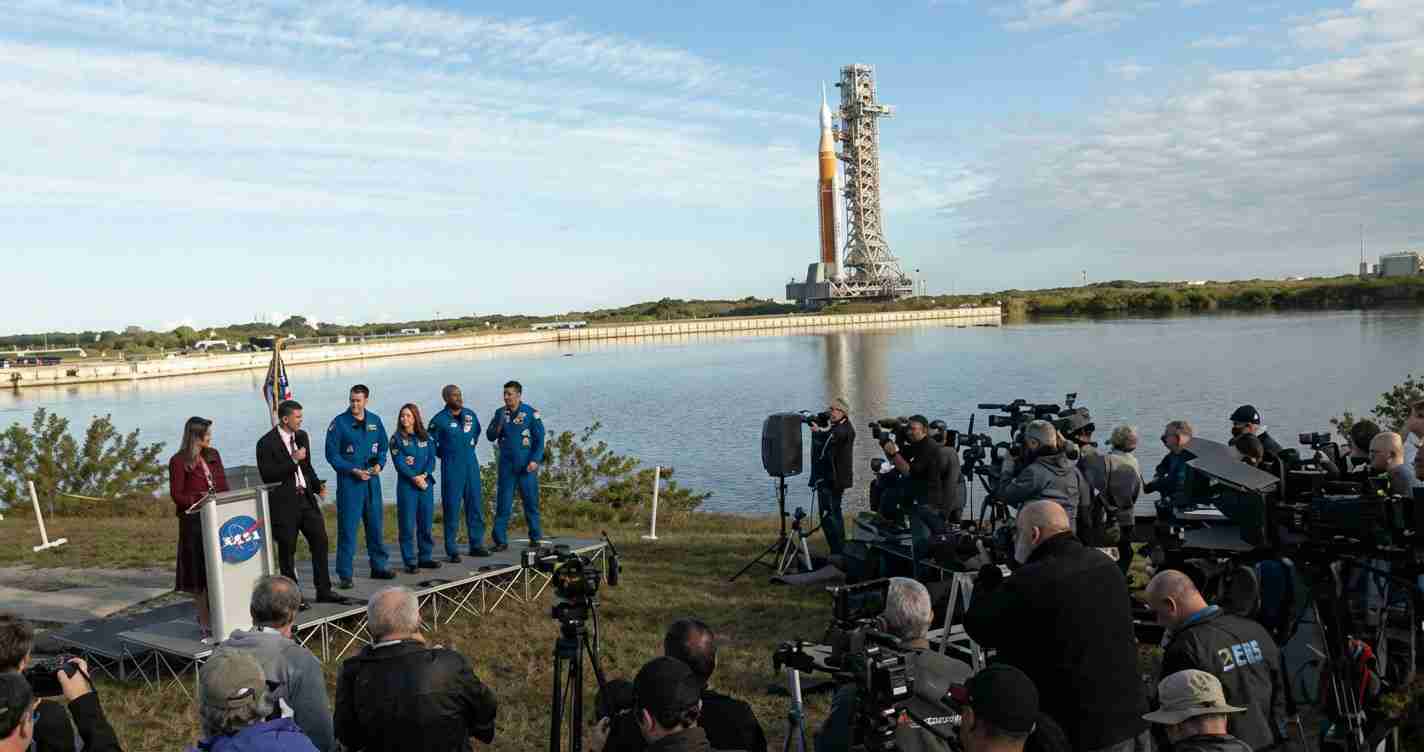
On Jan. 17, 2026, NASA rolled the Artemis II Space Launch System and Orion spacecraft to Launch Complex 39B at Kennedy Space Center, beginning final pad preparations and wet dress rehearsals ahead of a targeted Feb. 6 crewed lunar mission.
Key takeaways
- Rollout completed Jan. 17: the SLS and Orion moved from the Vehicle Assembly Building to Pad 39B; see the Artemis II rollout timeline.
- Final rehearsals under way: NASA plans a wet dress rehearsal on Feb. 2 and is targeting a Feb. 6 launch window; read final steps underway for Artemis II.
- Crew and mission: Commander Reid Wiseman, Pilot Victor Glover, Mission Specialists Christina Koch and Jeremy Hansen will fly Orion on a roughly 10‑day deep‑space mission that will travel farther than any human flight before it (rollout details; Artemis II overview).
Rollout and pad arrival: what happened and why it matters
At dawn on Jan. 17, the 322-foot-tall SLS rocket — mounted on its mobile launch platform — began the slow, four‑mile trek from NASA’s Vehicle Assembly Building (VAB) to Launch Pad 39B. The crawler‑transporter‑2 carried the stack along the crawlerway at a pace measured in feet per minute; the journey, lined with smooth river rock to protect the crawlerway, took roughly 11 hours, with arrival at 6:42 p.m. EST. For full timeline details see the Artemis II rollout.
Short stops and checks: the rollout included scheduled pauses for hardware checks and a retract of the crew access arm — standard steps that let teams verify systems and address minor issues without rushing the operation. The controlled pace reduces stress on the vehicle and gives technicians time for on‑the‑spot adjustments.
Why the rollout is a milestone
Moving the stacked SLS and Orion to Pad 39B shifts Artemis II into its final phase of ground testing, systems integration and launch rehearsals. At the pad technicians will perform checks that cannot be done inside the VAB — verifying pad interfaces, ground support equipment and flight umbilicals — and enabling the full wet dress rehearsal scheduled for Feb. 2. Those pad checks are essential gating items before crewed flight.
Wet dress rehearsal and launch windows
The wet dress rehearsal is a near‑real countdown that includes loading propellant into the core stage and testing cryogenic handling and fueling operations. NASA plans to include additional tests beyond the Artemis I flow; the rehearsal’s success is a key gating item for the targeted Feb. 6 launch. See NASA’s final steps summary for schedule details.
Primary launch opportunity: Feb. 6 at 9:41 p.m. EST, with follow-up opportunities on Feb. 7, 8 and 10 and additional windows in March and April. Launch windows depend on orbital mechanics, spacecraft constraints (solar power and consumables), and ground systems status; NASA emphasizes dates remain subject to change.
Crew, mission profile and human factors
Crew: Commander Reid Wiseman, Pilot Victor Glover, and Mission Specialists Christina Koch and Jeremy Hansen (Canadian Space Agency). This flight will not land on the Moon; instead, Orion will arc beyond the lunar far side — roughly 7,500 kilometers beyond — then return to Earth on a mission planned for about 10 days. See rollout coverage and the Artemis II overview.
Onboard life support, radiation protection and long‑duration cabin operations will be tested under real conditions. Engineers will evaluate crew procedures for deep‑space operations, feeding lessons into Artemis III planning.
Technical unknowns and schedule risks
Although the rollout was smooth, several risks remain: the wet dress rehearsal may reveal vehicle or ground‑system issues; weather at Kennedy can constrain fueling operations; pad and vehicle consumables (nitrogen, power) and solar geometry may limit dates. NASA cautions that Feb. 6 depends on resolving any issues encountered during final checks and rehearsals (rollout report; agency update).
What this means for the Artemis program
Significance: A clean rollout and successful wet dress rehearsal would provide a major confidence boost for NASA’s return‑to‑the‑Moon campaign. Artemis II is a crewed flight test designed to prove systems and procedures rather than land on the surface; success would move the program closer to Artemis III, which aims to return humans to the lunar surface for the first time since 1972 (detailed coverage).
Implications for Fresno, California
Economic impact
Though the rollout occurred in Florida, Artemis II has ripple effects across the U.S. economy, including Fresno. Local precision shops, manufacturers and logistics firms may win subcontracts; rural airports and trucking companies sometimes support parts movement. These opportunities can create small but meaningful revenue streams for area businesses.
Workforce and education
The mission highlights national demand for engineers and technicians. Fresno State and community colleges can use Artemis milestones to boost recruitment in engineering, robotics and avionics, and to promote internships and partnerships that feed students into aerospace career paths.
Political and civic engagement
Local officials can leverage Artemis as an example of high‑tech federal investment to promote workforce development, apprenticeships and grant‑funded training programs. Artemis provides a platform for nonpartisan discussions on economic diversification and STEM funding priorities.
Social and cultural effects
Artemis II can inspire civic pride and elevate interest in science and technology across the Central Valley. Expect higher engagement in school science fairs, robotics clubs, museum exhibits and public viewing events timed with launch windows.
Practical applications for residents
Advances driven by Artemis missions — in satellite imaging, Earth observation and communications — can benefit Fresno agriculture through improved crop monitoring, water management and disaster response, as well as better logistics and navigation services.
How local institutions can connect
- Schools and colleges: partner with NASA outreach and promote internships and scholarships.
- Businesses: monitor federal contracting portals for subcontract opportunities in components, testing and logistics.
- Civic leaders: use mission milestones to advocate for STEM workforce training and funding.
Tracking the timeline and how to follow updates
Fresno residents can follow NASA’s Artemis updates and trusted space outlets for the latest on the wet dress rehearsal and any launch date changes. Key resources include NASA’s final steps page and coverage from outlets like NASASpaceflight and Space.com. Local libraries and science centers may host viewing events as windows approach.
“Artemis II is a flight test with people aboard; it is designed to prove spacecraft systems and operational procedures, not to land on the Moon.”
As NASA completes pad integration and rehearsals, the schedule will clarify whether Artemis II can meet the targeted Feb. 6 launch or will move to a later window. For Fresno, the mission is more than a distant spectacle — it’s a chance to connect residents, institutions and businesses to a national effort with potential local benefits.