Artemis II lunar flyby launches — NASA crewed mission sends four astronauts on 10-day trip around the Moon
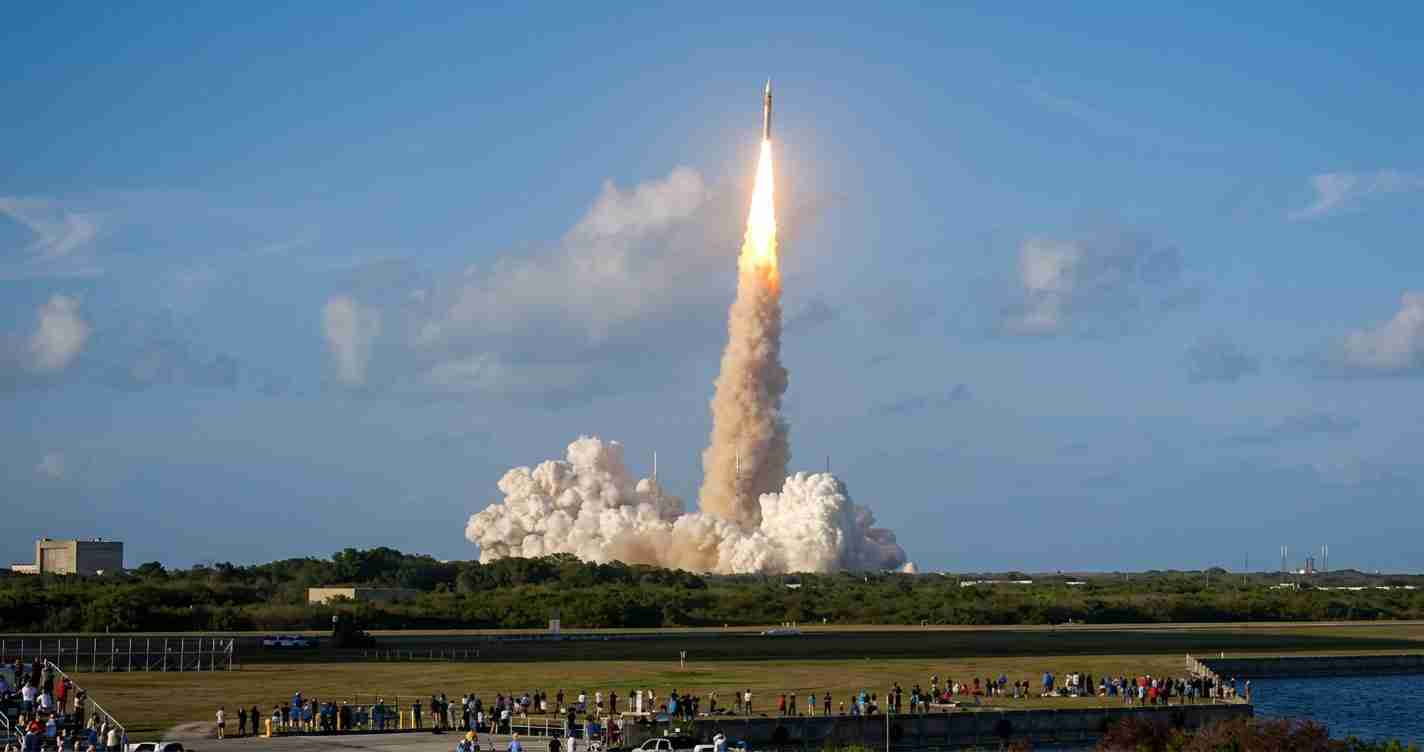
Artemis II launched April 1, 2026, from Kennedy Space Center, carrying four astronauts on a 10-day lunar flyby to test NASA’s SLS rocket and Orion systems, and marks the first woman and person of color beyond low Earth orbit.
- Launch: April 1, 2026, 6:35 p.m. EDT from Kennedy Space Center — see NASA live updates.
- Mission: 10-day lunar flyby on a free-return trajectory — see Artemis II (Wikipedia).
- Crew: Reid Wiseman (commander), Victor Glover (pilot), Christina Koch (mission specialist), Jeremy Hansen (Canadian Space Agency) — details at Artemis II (Wikipedia).
- Distance: About 248,655 miles (400,171 km), farther than humans have flown since Apollo — see NASA live updates.
What happened at launch
The Space Launch System rocket reached supersonic speed and lifted the Artemis II crew into space in about eight minutes. After main-engine cutoff, the core stage separated and fell back to Earth while an upper stage placed Orion into a high Earth orbit for on-orbit checks.
Over roughly one day, astronauts performed system checks on Orion. If the tests proceed as planned, Orion will depart for the Moon on the second day of the mission. See live coverage and a mission overview at NASA live updates and the mission overview.
Commander Reid Wiseman told reporters minutes after liftoff: “We have a beautiful moonrise, we’re headed right at it.”
The launch had been delayed earlier this year by hydrogen fuel leaks and a helium flow problem on the upper stage; engineers fixed those issues in the run-up to the April liftoff (see launch delay background).
Mission goals and timeline
Artemis II is fundamentally a test flight. Its job is to prove the Space Launch System (SLS) and Orion systems operate safely with people aboard before Artemis missions attempt crewed lunar landings. Systems under evaluation include life support, navigation, communications, and propulsion for deep-space operations.
The outbound trip takes about three days. Around day six, Orion will swing around the Moon and reach its apogee — roughly 400,171 kilometers (248,655 miles) from Earth — and fly near 8,000 kilometers above the lunar surface. During that pass Orion may pass into lunar shadow, producing a brief solar eclipse view for the crew. Track progress via the NASA live updates and NASA tracking tools.
Who is on the crew — historic firsts
The four-member team reflects international partnership and historic diversity: Reid Wiseman (commander), Victor Glover (pilot), Christina Koch (mission specialist), and Jeremy Hansen (Canadian Space Agency, mission specialist) — roster details: Artemis II (Wikipedia).
Historic milestones: Victor Glover is the first person of color to travel beyond low Earth orbit, and Christina Koch is the first woman to do so. Online shorthand has circulated as “first woman person of color space,” but the mission milestones are more precisely the first woman and the first person of color to go beyond low Earth orbit. Planetary scientist Lindy Elkins-Tanton called the crew a “spectacular team” that combines complementary expertise.
Voices from the launch
Paul Byrne, a planetary scientist at Washington University in St. Louis who watched liftoff from about 17 kilometers away, told Science News he was still shaking from the adrenaline: “This is a historic moment. Hopefully it will simply be the first step in a long, long journey in which we see humans return to the moon to stay.”
Technical systems under test
SLS is a heavy-lift rocket built to send Orion and crews beyond low Earth orbit. Flight performance during ascent, stage separation, and the upper-stage burn will be measured closely. Orion — the crew capsule named Integrity for this mission — carries life support, avionics, and deep-space hardware. Data from Artemis II will inform hardware and software updates for Artemis IV and V, which planners expect to include crewed lunar landings in 2028 (see Artemis II (Wikipedia) and the Kennedy Space Center event page).
How people can follow the mission
NASA provides live updates, a mission blog, and near–real-time tracking tools. For play‑by‑play coverage and mission milestones see NASA live updates. The Artemis Real-time Orbit Website and the NASA mobile app provide ongoing orbital positions for Orion.
Implications for Fresno, California
Economic impact
Aerospace and tech spillover: Fresno and the Central Valley may see indirect economic benefits as national space investment expands. Local suppliers, manufacturing firms, and IT companies could pursue contracts tied to Artemis follow-on missions.
Workforce and education funding: Federal attention often increases grants and research funding at universities. Fresno State and local community colleges could gain internships, partnerships, and STEM program support that connect students to aerospace careers.
Political consequences
Local officials may use national space milestones to press for regional investment. Fresno leaders could lobby state and federal representatives for workforce development dollars, business attraction, and STEM education funding tied to Artemis activities.
Social effects
Inspiration and outreach: The crew’s diversity can resonate across Fresno’s communities, giving teachers and youth organizations a visible example of representation in science and engineering.
Community engagement: Public viewing events, planetarium shows, and school assemblies can build local pride and create pathways for students into STEM careers. Libraries, museums, and districts can leverage NASA education resources.
Cultural relevance and practical applications
Representation matters: Seeing a woman and a person of color on a crewed mission underscores progress in who represents the nation in space — a point educators and community leaders can emphasize as role modeling for inclusion.
Education and jobs: Expect announcements of internships, scholarships, and local training programs tied to federal space work. These programs will build skills in manufacturing, computing, and engineering useful beyond aerospace.
Tourism and events: While launches occur in Florida, national excitement can spur Artemis-themed programming at Fresno museums, science centers, and planetariums.
Relevant sources and further reading
- Artemis II (Wikipedia)
- NASA — Artemis II live launch day updates
- Kennedy Space Center — SLS/Artemis II event information
- Artemis II mission video coverage
Follow-up: Reporting in Fresno will track education, workforce, and partnership announcements tied to Artemis, preserving facts and sources above while monitoring new local opportunities.